Harnessing Custom Health Data to Revolutionize Healthcare Experiences in 2026
The digital age has fundamentally transformed how people approach their health and wellness. With a staggering 72% of potential medical purchasers beginning their journey with an online search, the healthcare landscape has become increasingly patient-driven. For B2B healthcare companies, this shift presents a golden opportunity. If you’re not leveraging custom health data to deliver personalized experiences from the very first interaction, you’re missing a crucial chance to populate your pipeline with high-quality leads.
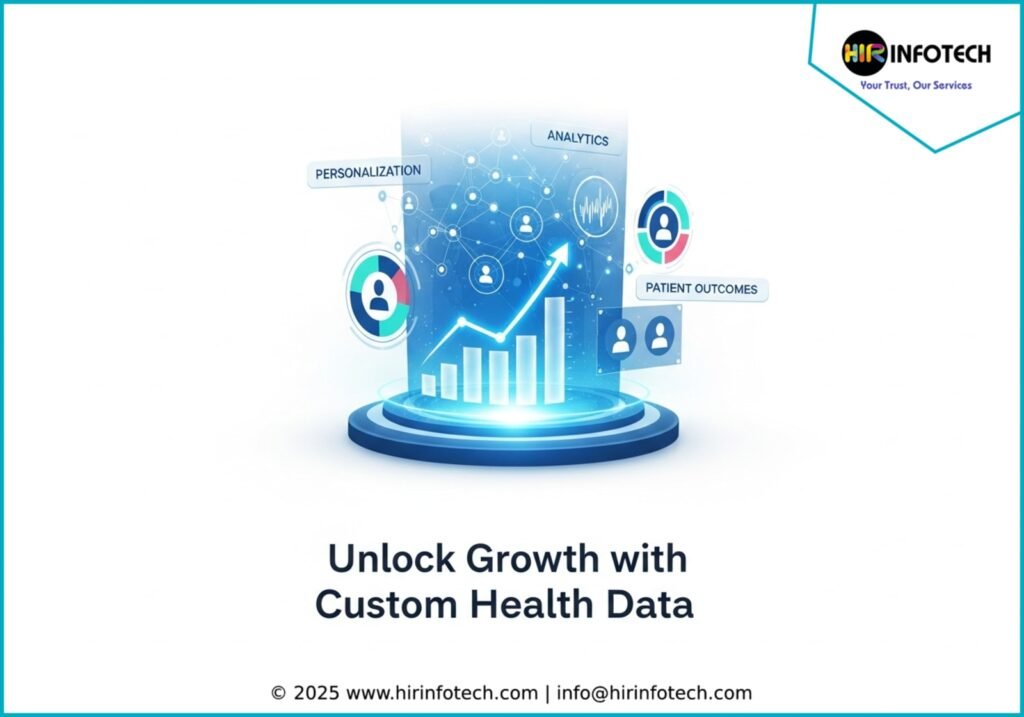
In the competitive healthcare sector, your company’s value is ultimately measured by its ability to enhance patient involvement and satisfaction, improve health outcomes, and drive down costs. High-quality healthcare data is the bedrock of this value proposition. In fact, companies that effectively use data to enrich the customer experience can see retention rates increase by up to five times. The question is no longer if you should use data, but how you can use it to create a meaningful impact. This post will explore how your organization can harness the power of custom health data to create personalized healthcare experiences that resonate with your audience and drive business growth in 2026 and beyond.
At its core, a data-driven approach in healthcare means using collected and analyzed information to make informed decisions. It’s about moving beyond guesswork and relying on concrete facts to optimize every facet of your operations, from patient care to marketing strategies.
1. Focus on a Smaller Crowd: The Power of Segmentation
The foundation of any successful data-driven B2B marketing strategy is segmentation, and the healthcare industry is no exception. Segmentation is paramount to the success of your marketing campaigns and your ability to extract actionable insights from the data you collect. The more precisely you can identify and segment your target audience, the more effective your content and outreach will be.
With timely access to consumer data, your healthcare company can target customers with unprecedented precision based on a variety of factors, including:
- Geography: Tailor your messaging to specific regions, considering local health trends and regulations.
- Specialty: Address the unique needs and challenges of different medical specialties.
- Affiliation: Customize your approach based on whether you’re targeting a large hospital network or a small independent clinic.
Beyond these broad categories, you can develop detailed buyer profiles based on:
- Motivations: What drives their purchasing decisions? Is it cost-effectiveness, cutting-edge technology, or improved patient outcomes?
- Pain Points: What are the biggest challenges they face in their daily operations?
- Needs: What specific solutions are they actively seeking?
- Demographics: What are the key characteristics of your ideal customer?
By precisely identifying and segmenting your target customers, you can develop highly specialized content that speaks directly to the market segments that need your products or services. This targeted approach ensures your marketing efforts are not only more efficient but also significantly more impactful. For more information on how data analytics can revolutionize patient targeting, read this insightful article on the role of data-driven marketing in modern healthcare.
2. Provide Customized Communications: Connecting at the Right Time
In today’s information-saturated world, people are far more receptive to communication that is directly relevant to their needs. Data-driven paid search advertising campaigns, informed by a deep understanding of your healthcare target demographic, allow you to optimize your ad targeting for maximum lead generation and a higher return on your advertising spend.
Targeted content also enables you to connect with healthcare professionals at the perfect moment—before they have a chance to engage with your competitors. Imagine being able to follow up a sales call with information that directly addresses the questions and concerns raised during the conversation. Or, consider the impact of offering a tailored discount on the specific products or services they’ve shown interest in. This level of personalization is only possible with access to and analysis of custom data.
Through customized data, you can:
- Pinpoint their problem spots: Understand their challenges and offer targeted solutions.
- Send highly targeted emails: Deliver relevant content that nurtures leads and builds relationships.
- Boost website traffic: Drive qualified leads to your website with personalized messaging.
3. Better Patient Care: The Ultimate Goal
Ultimately, the goal of any healthcare solution is to improve patient care. By providing healthcare professionals with customized data, you empower them to deliver better outcomes. When you offer personalized products and services to healthcare experts, they, in turn, can provide the most effective treatments based on the specific medical needs of their patients. This not only leads to enhanced patient satisfaction but also fosters long-term customer loyalty.
Data analytics in healthcare allows for a shift from reactive to proactive care. By identifying patterns and predicting health trends, providers can intervene earlier and offer more personalized treatment plans. This proactive approach is a cornerstone of modern, patient-centric healthcare. Discover more about how data analytics is transforming patient care in this comprehensive guide on healthcare data analytics.
4. Recognize Their Lifetime Value: A Strategic Marketing Investment
For B2B marketers, understanding the lifetime value (LTV) of a customer is crucial for making effective marketing investments. Customer data allows you to calculate this value, providing insights into how specific audience segments respond to your products and which customers are likely to require your services in the future. Armed with this knowledge, you can approach them with targeted strategies that foster long-term relationships and maximize profitability.
By focusing on high-LTV customer segments, you can allocate your marketing resources more efficiently, ensuring that your efforts are directed towards the most promising leads. This strategic approach not only improves your return on investment but also helps you build a sustainable and profitable customer base.
5. Real-Time Evaluation: The Power of Agility
While analyzing the results of past marketing strategies is essential for future planning, the ability to evaluate and adapt in real-time is a game-changer. Custom data allows you to monitor your current campaigns as they unfold. This real-time feedback loop enables you to make immediate, data-driven optimizations, leading to significantly better results.
For example, if you notice that a particular ad variation is outperforming others, you can instantly allocate more of your budget to it. This level of agility is what separates successful data-driven marketing from traditional approaches and is a key advantage in the fast-paced healthcare industry.
6. Predictive Analysis: Proactively Meeting Needs
A deep dive into your customers’ past behaviors can help you predict their future actions. By anticipating their needs, behaviors, and trends, you can proactively develop personalized solutions that meet their specific requirements. This forward-thinking approach, known as predictive analytics, is revolutionizing healthcare marketing.
Predictive models can identify patients at high risk for certain conditions, allowing for targeted preventive care campaigns. In the B2B space, predictive analytics can forecast which companies are most likely to be in the market for your solutions, enabling you to reach out with the right message at the right time. For a deeper understanding of this topic, explore this article on predictive analytics in healthcare.
By embracing these data-driven strategies, your B2B healthcare company can create a more personalized, effective, and ultimately more successful marketing approach. The future of healthcare is data-driven, and the time to harness its power is now.
Frequently Asked Questions
1. What is personalization in healthcare?
In the context of the customer, personalized healthcare means being treated as an individual with a unique health history and set of circumstances. It involves receiving relevant information without hassle and achieving better health outcomes as a result.
2. How does culture affect health?
Culture has a significant impact on health. It influences how individuals perceive their health and illness, what they believe causes disease, how they promote their own well-being, how they experience and communicate pain, where they seek medical help, and the types of treatments they choose.
3. What are the two main types of data in healthcare?
Healthcare data can be categorized as either structured or unstructured. Structured data is standardized and can be easily shared between different health information systems. Unstructured data, on the other hand, is not organized in a predefined manner and can be more challenging to analyze.
4. Why is data-driven marketing crucial for healthcare companies in 2026?
The healthcare landscape is increasingly digital and patient-centric. Data-driven marketing allows companies to understand patient and provider behavior, personalize communication at scale, and achieve measurable growth. It’s no longer an advantage but a necessity for staying competitive and relevant.
5. How can web scraping benefit the healthcare industry?
Web scraping enables the automated and scalable extraction of vast amounts of data from various online sources. This can be used for clinical trial monitoring, drug safety surveillance, medical literature reviews, and competitive analysis, providing valuable insights for healthcare professionals and researchers.
6. What is E-E-A-T and why is it important for healthcare content?
E-E-A-T stands for Experience, Expertise, Authoritativeness, and Trustworthiness. It’s a set of guidelines Google uses to assess content quality, especially for topics that can impact a person’s well-being, like health. Creating content that demonstrates high E-E-A-T is crucial for ranking well in search results and building trust with your audience.
7. How can data analytics improve operational efficiency in healthcare?
Data analytics can help healthcare organizations optimize their operations by identifying inefficiencies and streamlining processes. For example, it can be used to forecast patient demand, manage staffing levels, reduce wait times, and optimize resource allocation, leading to both cost savings and improved patient experiences.
Ready to Unlock the Power of Your Data?
In the evolving world of healthcare, leveraging custom data is no longer just an option—it’s the key to providing exceptional, personalized experiences. At Hir Infotech, we specialize in providing cutting-edge data solutions, including web scraping and data extraction, tailored to the unique needs of the healthcare industry. Let us help you transform your data into actionable insights that drive growth, enhance patient care, and solidify your position as a leader in the B2B healthcare market.
Contact us today to schedule a consultation and discover how our data solutions can revolutionize your business.
#HealthcareData #PersonalizedHealthcare #DataSolutions #B2BHealthcare #DigitalHealth #HealthcareMarketing #DataAnalytics #FutureOfHealthcare