Effective Data Enrichment Methods for Business Expansion in 2026
We all have a solid understanding of data enrichment. But before delving into enrichment procedures, we must first understand why it is so essential for business growth.
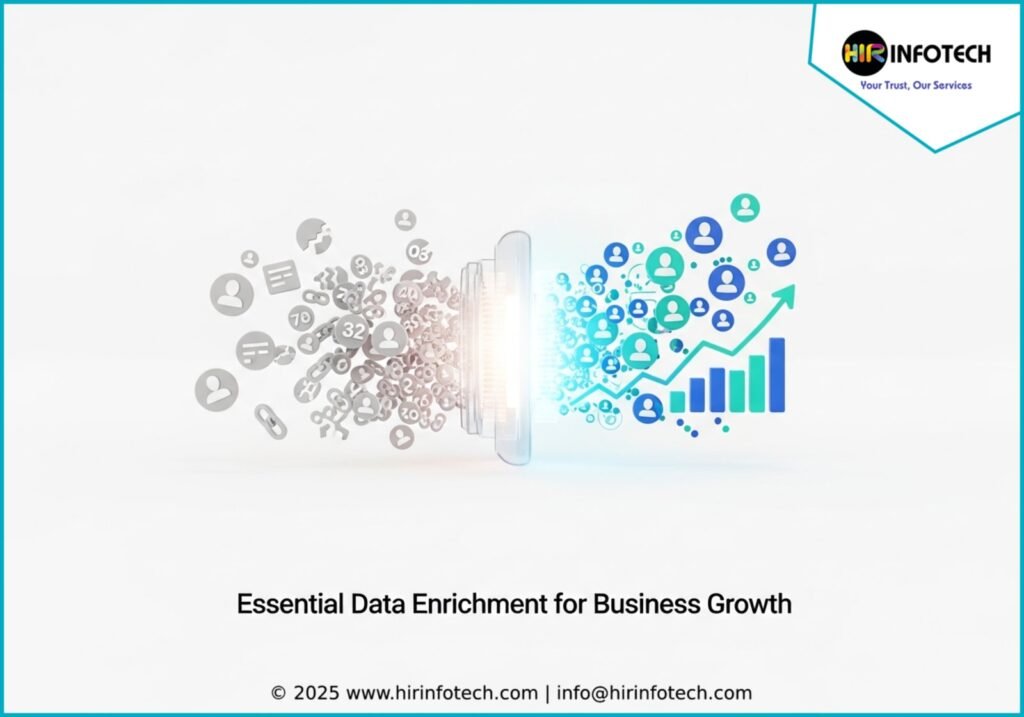
Data enrichment shields businesses from data deterioration caused by redundant and outdated information. It allows companies to improve the value and quality of their datasets while uncovering valuable insights. By enabling intelligent automation, data enrichment techniques reduce the time and effort needed for data management.
Brands can leverage data enrichment to provide personalized services and enhance the overall customer experience. This not only boosts client satisfaction but also reduces customer churn. Furthermore, it can lead to significant cost savings by consolidating redundant data, minimizing errors, and automating data access while maintaining up-to-date customer profiles.
How Can Data Enrichment Help an Enterprise?
Data enrichment empowers companies to make better decisions by providing them with more reliable and comprehensive data. It’s not just about increasing the quantity of your data; it’s about elevating its quality. This involves both adding to your existing data points and verifying their accuracy. Validating and enhancing your data can help you identify fresh opportunities you might have otherwise missed.
In 2026, the importance of high-quality data cannot be overstated. With the rapid advancements in artificial intelligence and machine learning, clean and enriched data is the fuel that powers these innovative technologies. According to a report by Forrester, organizations that prioritize data quality are better positioned to leverage AI for a competitive advantage.
Growth-Driven Data Enrichment Strategies
To truly harness the power of your data, you need to implement effective enrichment strategies. Here are some growth-driven approaches to consider:
1. Maintaining Uncompromising Data Quality
Data enrichment is not a one-time project; it’s an ongoing commitment. As customer needs and market dynamics shift, your data must be regularly updated and refined. A powerful method for augmenting your data is by scraping information from various online sources. However, poor data collection practices can lead to inaccurate conclusions that may go unnoticed for a long time, potentially resulting in significant business losses. Therefore, it is crucial to ensure that your data quality meets high standards and is consistently updated.
Your data enrichment efforts can utilize several types of data:
- First-party data: This is information you collect directly from your customers, such as through website forms or purchase history.
- Second-party data: This is another company’s first-party data that you acquire directly from them.
- Third-party data: This is data aggregated from various sources by a data provider and made available for purchase.
For consumer-facing businesses, first-party data is an invaluable asset that comes directly from your clients and provides the most accurate insights into their behaviors and preferences.
2. Optimizing Data Normalization and Transformation for a Streamlined Data Pipeline
After verifying and cleaning your data, the next step is to integrate it with your existing database. This process often involves extracting, transforming, and loading (ETL) datasets to update all your production systems. Normalization and transformation are a critical part of this process, which can be broken down into three steps:
- Extraction: Data is extracted from its source database.
- Transformation: The extracted data is improved, converted, and standardized. This may involve correcting inconsistencies, converting data types, or structuring it in a way that is suitable for analysis.
- Loading: The transformed data is now ready to be loaded into the target database or system for use.
Before beginning the extraction process, it’s essential to examine your Data Lake and other database systems. You also need to determine if the data requires correction and if any additional information is needed. While organizations may have access to large volumes of data, not all of it will be meaningful. Data enrichment, through processes like data extraction, standardization, and transformation, ensures that your data is fit for its intended purpose.
3. Cleaning Up Data Duplicates, Outliers, and Redundancies While Mapping Data Points for Accuracy
Another crucial phase of data enrichment is extrapolation. Data engineers can apply fuzzy logic and other advanced techniques to extract more value from raw data. A significant part of this process is data cleansing, which includes identifying and dealing with duplicate data. One of the most challenging types of duplicates to detect is probabilistic duplication. These are data fields that represent the same entity but have slight variations in spelling, phone numbers, or email addresses. Regular and comprehensive record matching is necessary to identify whether these records refer to the same entity. Therefore, accurate data matching is of utmost importance. Data with higher precision consistently represents the same real-world entity.
Simultaneously, you must deduplicate your data. When an entity’s information is updated, a new record may be accidentally created, leading to duplicates. Data deduplication involves removing these duplicate or unnecessary data records. For data enrichment to be effective, duplicates must be eliminated, and records must be thoroughly cleansed.
4. Periodic Data Repository Monitoring and Improvement
Data enrichment is a continuous process because information is constantly changing. Details about an entity, such as a customer’s address or job title, can change over time. Outdated data can hinder business operations and lead to missed opportunities. For instance, customer shopping patterns evolve, and your marketing strategies need to adapt accordingly. To ensure the long-term quality of your data, it should be continuously cleaned and validated. Over time, consistent data matching and deduplication will significantly improve the accuracy of your datasets.
Another key strategy is data monitoring. This involves actively controlling the quality of your data and ensuring it aligns with your business requirements. While updating your data, you might also consider purchasing access to other databases to find additional customer information to append to your own. This can provide a more holistic view of your customers and enable more effective personalization.
5. Tagging Data Clusters for Customized Messaging
Effective data segmentation is a cornerstone of personalized marketing. Data should always be tagged and categorized to allow for targeted messaging. By “tightening” your data sets to focus on specific groups, the benefits of your data enrichment best practices will be amplified. Before you can segment your data, you must clearly define your target market and your business objectives. This will help you determine which marketing operations will benefit most from the improved data, allowing you to fulfill contextually relevant marketing and campaign goals.
After segmenting your audience, it is crucial to connect all your marketing and sales tools to leverage this data effectively. A well-integrated data ecosystem ensures that your enriched and segmented data can be used across all customer touchpoints, from email campaigns to social media advertising.
For more in-depth information on data-driven marketing strategies, you can refer to this insightful article from McKinsey & Company.
Frequently Asked Questions (FAQs)
1. What is an example of data enrichment?
Consider a scenario where your company is planning to offer a new credit card. To assess the creditworthiness of potential customers, you could enrich your existing customer data with third-party data such as credit scores or home values for homeowner insurance premiums. Another common example is enriching customer data with demographic information, such as age, income, and location, to enhance targeted marketing efforts with personalized messaging.
2. What are data enrichment tools?
Data enrichment tools are applications designed to integrate third-party data with your existing database. These tools allow businesses to gain deeper insights into their records for various purposes, including targeted advertising, lead scoring, data compliance, and fraud detection. Some popular data enrichment tools in 2026 include ZoomInfo, Clearbit, and Apollo.io.
3. Why is data enrichment essential for business growth?
Data enrichment is essential for business growth because it improves the quality and completeness of your data, leading to more informed decision-making. It enables you to gain a deeper understanding of your customers, which is crucial for personalizing your marketing and sales efforts. According to a study by Gartner, organizations that actively manage their data quality see a significant improvement in business outcomes. High-quality, enriched data allows you to identify new market opportunities, improve customer retention, and ultimately drive revenue growth.
4. How does data enrichment impact AI and machine learning?
Data enrichment plays a pivotal role in the success of AI and machine learning initiatives. These advanced technologies rely on high-quality, comprehensive data for training and making accurate predictions. Enriched data provides more features and context for machine learning models, leading to more accurate and reliable outputs. For example, in a predictive lead scoring model, enriching lead data with firmographic information like company size and industry can significantly improve the model’s ability to identify high-potential leads.
5. What are the key challenges of data enrichment?
While data enrichment offers numerous benefits, it also comes with its own set of challenges. One of the primary challenges is ensuring the quality and accuracy of the third-party data you are using. It is crucial to source your data from reputable providers. Another challenge is the cost associated with purchasing third-party data and implementing data enrichment tools. Additionally, data privacy and compliance with regulations like GDPR and CCPA are critical considerations that must be addressed throughout the data enrichment process.
6. How do you measure the ROI of data enrichment?
Measuring the return on investment (ROI) of data enrichment involves tracking key metrics that are impacted by improved data quality. This can include metrics such as improved lead conversion rates, increased customer lifetime value, reduced customer churn, and higher marketing campaign ROI. By comparing these metrics before and after implementing data enrichment initiatives, you can quantify the financial impact on your business. For a deeper dive into calculating data enrichment ROI, this resource from Forbes provides a comprehensive guide.
7. What are the ethical considerations of data enrichment?
Ethical considerations are paramount in data enrichment. It is essential to be transparent with your customers about the data you are collecting and how you are using it. You must also ensure that you are complying with all relevant data privacy regulations, such as GDPR and CCPA. Sourcing data from ethical and reputable providers is also crucial to avoid using data that has been collected without proper consent. Building and maintaining customer trust should be a top priority in all your data enrichment efforts. To learn more about ethical data practices, you can visit the International Association of Privacy Professionals (IAPP) website.
Unlock Your Business Potential with Hir Infotech
Ready to take your business to the next level with powerful data solutions? At Hir Infotech, we specialize in providing high-quality web scraping, data extraction, and data enrichment services to mid and large-sized companies. Our team of experts can help you unlock the full potential of your data, enabling you to make smarter decisions, personalize your customer experiences, and accelerate your business growth.
Contact us today to learn more about our data solutions and how we can help you achieve your business objectives.
#DataEnrichment #BusinessGrowth #DataSolutions #DataQuality #LeadGeneration #MarketingStrategy #HirInfotech