Website Data Extraction: The Ultimate 2026 Guide for Business Growth
In today’s hyper-competitive business world, looking beyond the obvious is no longer a choice—it’s a necessity. The key to unlocking innovative ideas and staying ahead lies in harnessing new technologies. One of the most powerful methods for gaining a competitive edge is through automated web data extraction, also known as web scraping. This technology provides automated access to vast amounts of structured web data, offering invaluable insights, especially from public websites that lack a dedicated API or provide limited data access.
As we move into 2026, the reliance on data for strategic decision-making has intensified. Businesses are increasingly data-hungry, leveraging automated data collection to navigate volatile markets and gain an advantage. This guide will demystify web data extraction, exploring its applications, benefits, and the latest trends, all in a way that is easy for a non-technical audience to understand. We will delve into how your company can use this powerful tool to drive growth and innovation.
What is Web Data Extraction?
Web data extraction, or web scraping, is the automated process of collecting structured data from websites. Think of it as a high-speed, automated version of copying and pasting information from a website. While you could manually copy data, web scraping employs intelligent automation to gather millions or even billions of data points from the vast online landscape. This process transforms unstructured information on web pages into organized, usable data.
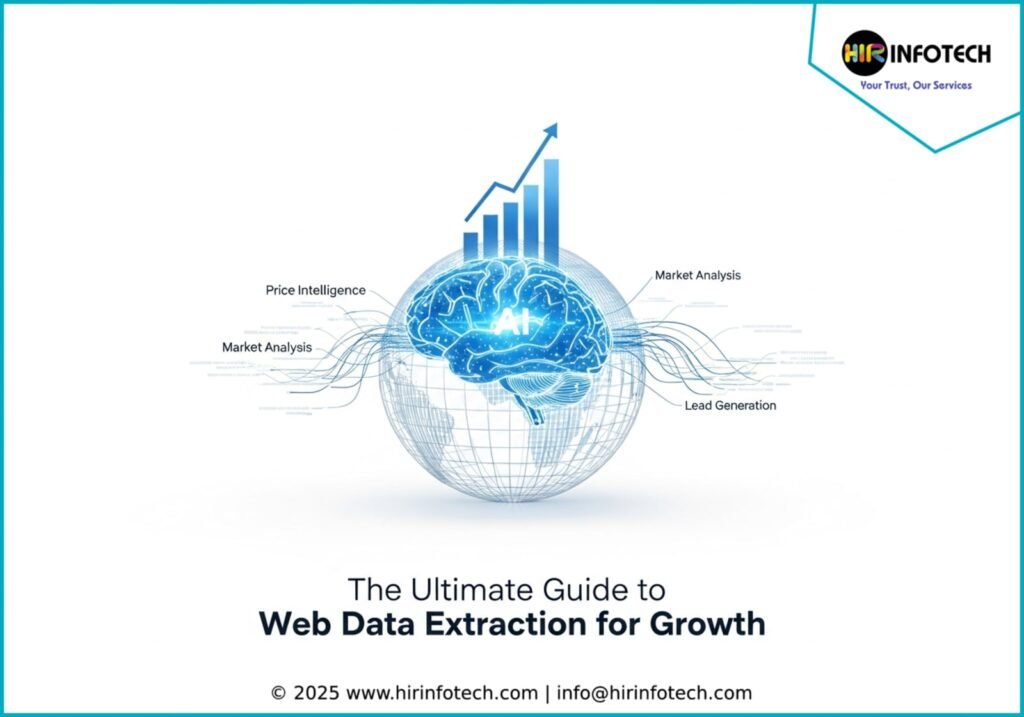
Businesses and individuals use data extraction to make informed decisions by harnessing the immense amount of publicly available web data. Common applications include lead generation, market research, and price intelligence. One of the most significant advantages of web data extraction is its ability to fuel groundbreaking business applications. Companies are using web-scraped data to enhance every facet of their operations, from high-level executive strategies to the delivery of personalized customer services.
The Power of AI in Web Scraping
The future of web scraping is intrinsically linked with Artificial Intelligence (AI). By 2026, AI-powered data extraction is set to replace manual scraping, with scrapers becoming self-learning. AI and automation will facilitate the extraction of clean, structured, and deduplicated data, even from websites with anti-bot protections and CAPTCHAs. AI offers a potent solution for data quality, as machine learning algorithms can automatically identify and correct anomalies, duplicates, or outliers in real-time. This ensures that the data feeding into business intelligence, pricing models, and decision-making systems is reliable.
This integration of AI not only enhances data accuracy but also boosts efficiency. AI can operate 24/7, scaling effortlessly as scraping demands grow. As AI continues to become more ingrained in data analytics, it simplifies the web scraping process itself, making it a more accessible and powerful tool for businesses. This evolution is particularly crucial in an economic landscape where price transparency and competitiveness are paramount. For more on the intersection of AI and data, see this insightful article from Forbes.
Key Uses of Web Data Extraction
1. Price Intelligence
One of the primary applications of web data extraction is price intelligence. In the fiercely competitive e-commerce landscape, businesses extract product and pricing information from competitor websites to gain a strategic advantage. This data is then converted into actionable intelligence, enabling companies to make unparalleled pricing and marketing decisions. Price intelligence makes it easy to monitor the competition, and web scraping provides the foundational data for this crucial activity.
Applications of price intelligence include:
- Adaptive Pricing: By feeding competitor data into AI algorithms, companies can adjust their prices in near real-time to optimize revenue and market share.
- Tracking Product Trends: Monitoring the popularity and pricing of products across the market helps in identifying and capitalizing on emerging trends.
- Monitoring Competitors: Keeping a close watch on competitors’ pricing strategies allows for proactive adjustments to stay competitive.
- Boosting Sales: Competitive pricing and timely promotions, informed by scraped data, can significantly increase sales and market share.
2. Market Analysis
Effective market research is the bedrock of any successful business strategy, and it must be based on the most accurate and current information available. Web scraping provides large volumes of high-quality, insightful data that can be used for comprehensive business intelligence and market analysis. Data is the foundation of accurate information, and web scraping is the most efficient way to gather it.
Key areas of market analysis powered by web scraping:
- Research and Development: Understanding market needs and gaps through data analysis can guide new product development and innovation.
- Market Trend Analysis: Identifying and analyzing market trends allows businesses to adapt their strategies and stay ahead of the curve.
- Optimizing Market Entry: For companies entering new markets, scraped data provides crucial insights into the competitive landscape and consumer behavior.
- Market Sizing and Valuation: Accurate data helps in assessing the size and value of a market, informing investment and expansion decisions.
- Competitor Monitoring: Continuously tracking competitors’ activities, product launches, and marketing campaigns provides a significant competitive advantage.
3. Financial Data for Strategic Decisions
Web data extraction services provide invaluable information that shapes investor decisions, turning them into smart, well-informed choices. The strategic value of scraped financial data is unparalleled, which is why leading businesses worldwide are integrating it into their core operations. From monitoring news to analyzing SEC filings, web scraping provides the data needed for sound financial decision-making.
Uses in the financial sector:
- News Surveillance: Monitoring financial news and reports in real-time to react quickly to market-moving events.
- Extracting Insights from SEC Filings: Automating the extraction of data from regulatory filings to gain insights into company performance and strategy.
- Calculating Company Valuations: Gathering the financial data necessary to perform accurate and comprehensive company valuations.
4. Sales Prospecting and Lead Generation
Lead generation is the lifeblood of any organization, as it directly fuels revenue. However, generating a steady stream of qualified leads can be a significant challenge. Web data extraction provides access to structured data that can be used to identify and qualify potential leads. Whether online or offline, lead generation is a primary goal for every company, and web scraping helps in building a robust database to support this effort and drive business growth.
5. Enhancing Marketing Strategy
In today’s competitive marketplace, protecting and managing your online reputation is crucial. Web scraping can provide the necessary information to understand public sentiment about your brand and products. This data allows you to adjust your marketing strategies, address customer concerns, and proactively manage your brand’s image. Whether you’re selling products online or looking to understand how your brand is perceived, web scraping offers the insights you need to succeed.
Ethical and Legal Considerations
While web scraping is a powerful tool, it’s essential to approach it ethically and legally. Responsible scraping involves respecting website’s terms of service and `robots.txt` files, which outline which parts of a site can be accessed by bots. It’s also crucial to avoid scraping personal data and to be mindful of the load placed on the target website’s servers. For a deeper dive into the best practices for ethical web scraping, check out this guide from Zyte.
Choosing the Right Data Solutions Partner
Navigating the world of web data extraction can be complex, but you don’t have to do it alone. Partnering with an experienced and reliable data solutions provider like Hir Infotech can give your business a significant competitive advantage. A good partner will not only provide the necessary tools and expertise but will also ensure that data is collected ethically and legally. They can help you transform raw data into actionable insights that drive your business forward.
Now that you understand the numerous benefits of web data extraction services, it’s time to make the right investment and empower your company to thrive in the data-driven landscape of 2026 and beyond.
Frequently Asked Questions (FAQs)
1. What exactly is a web data extraction process?
The web data extraction process involves using automated software, often called “bots” or “crawlers,” to visit websites and systematically collect specific data. This data is then saved in a structured format, such as a CSV file or a database, making it easy to analyze and use for various business purposes.
2. Why do businesses need to extract data from websites?
Businesses extract data from websites to gain a competitive edge. This data is used for a wide range of applications, including monitoring competitor prices, understanding market trends, generating sales leads, and tracking brand sentiment. It provides the insights needed to make informed, data-driven decisions.
3. Is web data extraction legal and ethical?
Web scraping of publicly available data is generally considered legal. However, it’s crucial to adhere to ethical practices. This includes respecting a website’s terms of service and `robots.txt` file, not overloading the website’s servers with requests, and avoiding the collection of private or personally identifiable information. For more details on the legal aspects, this Data Privacy and Security Insider article is a useful resource.
4. What are the main challenges of web data extraction?
The main challenges include dealing with websites that frequently change their layout, navigating complex site structures, and bypassing anti-scraping technologies like CAPTCHAs and IP blocks. Maintaining the quality and accuracy of the extracted data over time can also be a significant challenge.
5. How can a non-technical person use web scraping?
There are many user-friendly, no-code web scraping tools available that allow non-technical users to extract data with a simple point-and-click interface. Additionally, partnering with a managed web scraping service provider, like Hir Infotech, can handle all the technical aspects for you, delivering the data you need without any coding required.
6. How is AI changing the web data extraction landscape?
AI is making web scraping smarter and more efficient. AI-powered scrapers can automatically adapt to website changes, recognize and extract relevant data with greater accuracy, and even handle complex tasks like processing images and natural language. This reduces the need for manual intervention and improves the overall quality of the data.
7. How can my company get started with web data extraction?
A great way to start is by identifying a specific business problem you want to solve with data, such as competitor price monitoring. Then, you can explore no-code tools or consult with a web data extraction service provider like Hir Infotech. They can help you define your data needs and set up a reliable and scalable data extraction solution.
Take the Next Step with Hir Infotech
Ready to unlock the power of web data extraction for your business? Don’t let valuable insights remain hidden on the web. Contact Hir Infotech today to learn how our expert data solutions can provide you with the actionable intelligence you need to gain a competitive edge, drive growth, and lead your industry.
#WebDataExtraction #WebScraping #DataSolutions #BusinessIntelligence #MarketResearch #PriceIntelligence #LeadGeneration #AI #DataAnalytics #HirInfotech