
Maximizing Your Data Migration: A Non-Technical Guide for 2026
In today’s data-driven world, businesses are navigating an ocean of information. As this sea of data grows at an unprecedented rate, managing it effectively has become a paramount challenge. While manual data maintenance was once feasible, the sheer volume and complexity of modern data demand a more sophisticated approach. This is where data migration comes in—a critical process for consolidating and managing your business-critical information. The goal is simple: empower your organization with streamlined data to foster better decision-making and drive overall success.
Transferring data to a new system can be a daunting task, fraught with potential pitfalls like data leakage or loss. A mismanaged migration can quickly turn into a nightmare for your company. However, when your existing systems are burdened with legacy data, a well-executed migration is the key to unlocking a more secure and efficient future. By moving your valuable data to a new, consolidated system, you can enhance security, improve accessibility, and pave the way for future growth.
But what exactly is data migration, and how can you ensure it’s a success? This guide will walk you through the essential questions to ask, providing actionable insights tailored for a non-technical audience and reflecting the latest industry trends for 2026.
What is Data Migration?
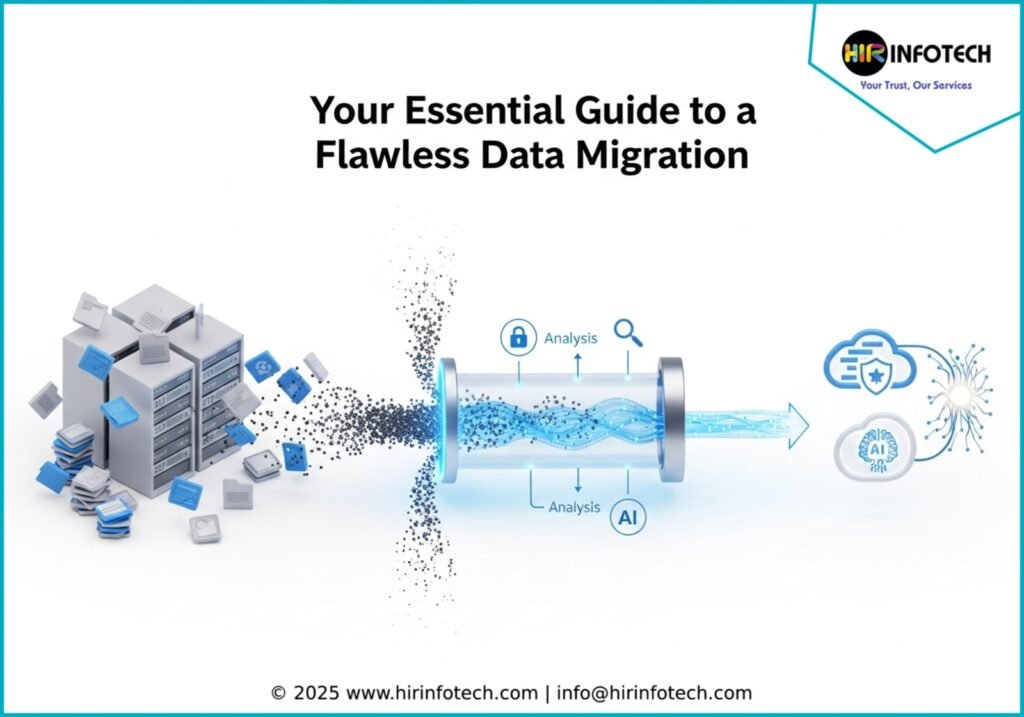
Data migration is the process of moving data from one location, format, or application to another. Think of it as relocating your business’s digital assets. This process is crucial for upgrading systems, moving to a cloud-based infrastructure, or consolidating data from various sources. A successful data migration enhances the agility of your critical business data, ensuring it remains accurate, secure, and readily accessible.
Key Questions to Ask Before Starting Your Data Migration in 2026
Before embarking on a data migration project, it’s essential to ask the right questions. This proactive approach will help you mitigate risks and ensure a smooth transition. Here are the key considerations for any business leader:
1. Do We Really Need to Migrate Our Data?
The first step is to determine if a data migration is truly necessary for your business. Migrations are typically prompted by system upgrades, a move to the cloud, or the need to consolidate disparate data sources. As of 2026, a significant driver for migration is the preparation for AI and machine learning initiatives, which require clean, high-quality, and centralized data. Ask yourself if your current system is hindering growth, compromising security, or preventing you from leveraging advanced analytics. If the answer is yes, a migration is likely in order.
2. What Are Our Migration Options?
Once you’ve decided to migrate, the next step is to explore your options. You can use export and import tools, a user interface, or database scripts. For larger, more complex datasets, Extract, Transform, and Load (ETL) or the more modern Extract, Load, Transform (ELT) tools are excellent choices. There are numerous data migration tools available, ranging from open-source options to enterprise-grade platforms. For businesses looking for a hassle-free solution, engaging data migration services can be the most effective route.
Here are some of the top data migration tools to consider in 2026:
- Cloud-Native Solutions: AWS Database Migration Service (DMS), Azure Migrate, and Google Cloud Database Migration Service are ideal for businesses moving to the cloud.
- ETL/ELT Platforms: Tools like Fivetran, Matillion, and Talend offer robust capabilities for transforming and moving large volumes of data.
- Open-Source Options: Airbyte is a popular open-source choice that provides flexibility and control over your data pipelines.
3. Have We Conducted a Thorough Preliminary Analysis?
A comprehensive pre-migration analysis is crucial for success. This involves assessing your current data landscape, identifying potential risks, and understanding the dependencies between different data sets. This analysis will not only help in preventing data loss but also in avoiding unforeseen complications during the migration process. A crucial part of this phase is data profiling and cleansing to ensure that you’re not migrating inaccurate or redundant information. As the saying goes, “garbage in, garbage out.” Prioritizing data quality before the move is a cornerstone of modern migration best practices.
For more on the importance of a structured approach, see this in-depth guide on the phases of data migration.
4. Are We Prepared for the Inherent Risks?
Even with the most skilled team, data migration projects can encounter unexpected issues. Proactive risk management is key. This involves identifying potential problems and having a contingency plan in place. Thorough testing at every stage of the migration is non-negotiable. This includes testing data mapping, transformations, and the functionality of the new system with a subset of migrated data before the full-scale migration. Automated testing and validation tools are becoming increasingly important in 2026 to ensure accuracy and reduce manual effort.
5. How Will We Ensure Data Security and Governance?
Data security is a paramount concern during migration. The process can expose data to new threats if not managed properly. You must consider all factors that could impact data security and choose a migration strategy that maintains data integrity and confidentiality. This includes encrypting data in transit and at rest, implementing strict access controls, and ensuring compliance with regulations like GDPR and HIPAA. Strong data governance is not just a best practice; it’s a strategic necessity to ensure your data remains a trusted asset. Establishing clear data ownership and quality standards before, during, and after the migration is essential.
For a deeper dive into data governance, this article from TechTarget offers valuable insights.
The Growing Role of AI and Automation in Data Migration
Looking ahead to 2026 and beyond, AI-powered migration tools are revolutionizing the industry. These advanced solutions automate many complex and time-consuming tasks, such as schema mapping, code conversion, and data validation. By leveraging machine learning, these tools can predict potential risks and identify anomalies with greater accuracy than manual methods. This shift towards automation not only accelerates migration timelines but also significantly improves the quality and reliability of the outcome.
The Importance of Web Scraping and Data Extraction in a Data-Driven World
For many businesses, particularly those in competitive markets, external data is just as valuable as internal data. Web scraping and data extraction are powerful techniques for gathering this external data, such as competitor pricing, customer reviews, and market trends. When planning a data migration, it’s crucial to consider how these data streams will be integrated into your new system. A well-designed migration strategy will ensure that your web scraping and data extraction processes continue to function seamlessly, providing your business with a continuous flow of valuable insights. By automating the collection of vast amounts of data from websites, businesses can make more informed decisions and maintain a competitive edge.
To learn more about the power of automated data extraction, check out this resource on how data extraction can benefit your business.
Final Thoughts: Your Path to a Successful Data Migration
Managing vast amounts of data while juggling other critical business tasks is a significant challenge. A successful data migration requires careful planning, the right tools, and expert execution. By partnering with a specialist, you can navigate the complexities of data migration with confidence, allowing you to focus on what you do best—running your business.
At Hir Infotech, our team of data professionals has extensive experience in managing critical business data. We handle every aspect of the data migration process with efficiency and diligence, ensuring a seamless transition to your new system.
Ready to unlock the full potential of your data? Contact Hir Infotech today for a consultation and let us help you build a data infrastructure that is ready for the future.
#DataMigration #DataSolutions #CloudMigration #DataManagement #BigData #WebScraping #DataExtraction #DigitalTransformation #SEO #AI #TechTrends2026
Frequently Asked Questions (FAQs)
1. What are the primary benefits of data migration?
Data migration offers numerous benefits, including a consolidated data environment, enhanced data reliability, and improved system performance. It streamlines data administration, reduces operational challenges, and provides a solid foundation for advanced analytics and business intelligence.
2. What are the different types of data migration?
There are several types of data migration, including storage migration (moving data to a new storage device), database migration (moving from one database to another), and application migration (moving an application to a new environment). Cloud migration, which involves moving data and applications to a cloud platform, is one of the most common types today.
3. How long does a data migration project typically take?
The timeline for a data migration project can vary significantly based on the volume and complexity of the data, the chosen migration strategy, and the resources available. A small-scale migration might take a few weeks, while a large enterprise-level project could span several months or even a year.
4. What are the most common challenges in data migration?
The most common challenges include poor data quality, data loss, extended downtime, security vulnerabilities, and budget overruns. Thorough planning, robust testing, and strong data governance are essential to mitigate these risks.
5. What is the difference between ETL and ELT?
ETL (Extract, Transform, Load) involves extracting data from a source, transforming it into the desired format, and then loading it into the target system. ELT (Extract, Load, Transform) loads the raw data into the target system first and then performs the transformation. ELT is often favored in modern cloud data warehouses for its flexibility and scalability.
6. How much does data migration cost?
The cost of data migration can range from a few thousand dollars for small projects to over $500,000 for large, complex enterprise migrations. Key cost factors include the volume of data, the complexity of the systems involved, the need for specialized tools, and the cost of labor, whether internal or external consultants.
7. Why is post-migration validation important?
Post-migration validation is a critical final step to ensure the success of the project. It involves verifying that all data has been transferred accurately, is complete, and functions correctly in the new system. This step confirms that the migration has met all business requirements and that the new system is ready for use.