Outsource Data Auditing for Exceptional Growth: A 2026 Perspective
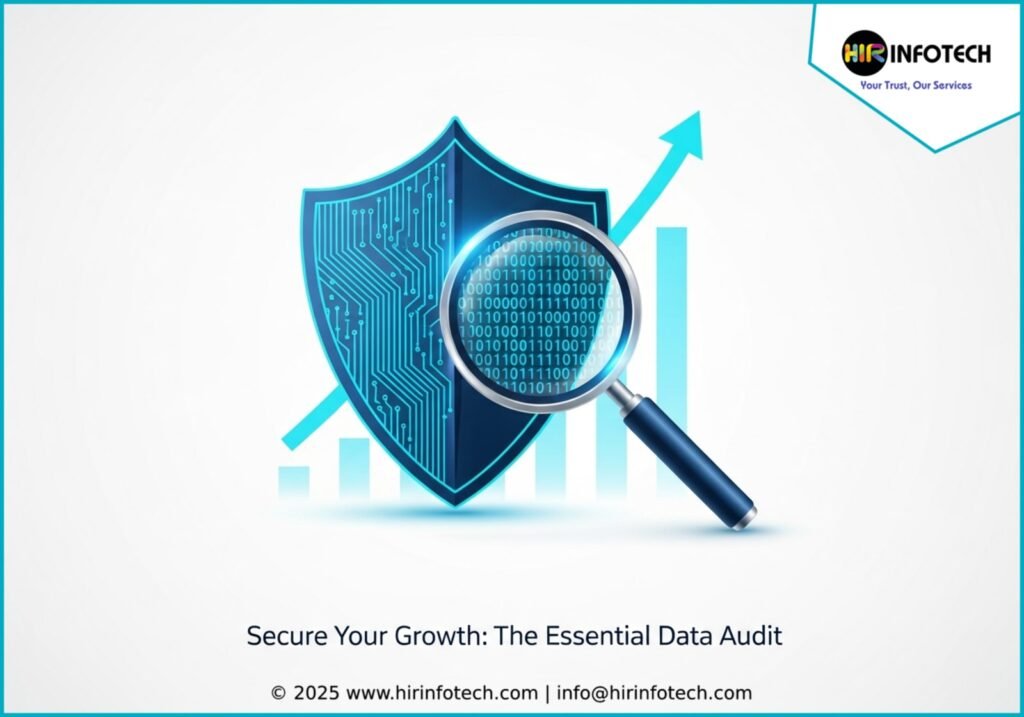
In today’s hyper-connected and data-driven world, information is the lifeblood of your business. But with the rapid advancements in artificial intelligence (AI), machine learning, and big data, the risks of data manipulation, inaccuracies, and security breaches are higher than ever. A comprehensive data audit is no longer a luxury—it’s an absolute necessity for protecting your business and customer information.
Most strategic business decisions are built on a foundation of in-depth research and data analysis. Outsourcing your data audit services can help you uncover valuable insights, boost revenue, and develop strategies to enhance business efficiency by correcting inaccuracies and fortifying your data infrastructure.
Why Auditing Your Data is Crucial for Enhancing Its Security
As we look towards 2026, the complexity and volume of data businesses handle are growing exponentially. This makes manual and traditional auditing methods insufficient. Integrating AI and data analytics into your audit process is now essential for staying ahead of the curve.
Here are some actionable steps you can take to improve your data and analytics with the help of outsourced data audit services:
1. Consult with Relevant Stakeholders
Every department within your organization, from IT to sales, maintains its own systems for storing sensitive data. The IT department, for instance, manages data related to website performance and customer information, while the sales department holds crucial purchase and sales records. The way this information is shared and utilized depends heavily on your company’s structure and operations.
Before diving into a data audit, it’s vital to bring together team managers and leaders. These insiders, who work with the data daily, can provide invaluable context. Key discussion points include how data is consumed, its role in adding value to the organization, and the frequency of updates. Outsourcing your data audit services can help facilitate these crucial conversations and focus your efforts where they will have the most impact.
2. Keep Track of Your Data Storage
A primary objective of a data audit is to identify and understand your company’s information structure. After discussing the various types of data with stakeholders, the next step is to map out how and where this data is stored and used.
This can be a demanding task, as it involves sifting through the data of every team in your organization. Key aspects of this stage include examining the distribution of information (whether it’s centralized or distributed across multiple channels), monitoring the regularity of data updates, and identifying any alarming patterns. Professional data audit analytics services can assist in evaluating and securing your vital data, preventing potential breaches and ensuring its integrity.
During this phase, you can also determine who is accessing the data and how often, giving you a clearer picture of your organization’s information needs.
3. Clearly Analyze and Assess Your Data’s Quality
After gathering all the necessary information from stakeholders and mapping your data’s distribution and usage, the final step is to re-evaluate its quality. A decision or conclusion cannot be reliably based on information that has not been thoroughly vetted. This final phase of the data audit should put your data through three critical funnels: accuracy, breadth, and consistency.
Through meetings and discussions with team leads, you will likely have already gained an understanding of existing issues in data storage, updating, and dissemination. These can include structural problems, methodological difficulties, or incorrect formatting. By outsourcing your data audit, you can effectively identify and rectify these errors that could be silently harming your organization.
Essential Processes You Can Audit with Data Audit Services
Data loss can be incredibly difficult to recover from. Therefore, it’s critical to continuously monitor for activities that could put your company at risk. The following components should be regularly audited to prevent theft or breaches:
1. Access Control and Authentication
This is one of the most critical areas to address when it comes to data security. Malicious actors who gain unauthorized access can not only view sensitive customer or organizational financial information but also alter it without detection. A data audit helps you implement robust security measures to protect this sensitive information effectively.
2. Objects Stored in the Database
Data corruption is a significant and growing problem for many businesses. A reputable data audit company is your best defense against this threat. Your database contains not only user and corporate data but also functional and procedural details that, if compromised, could be used to alter your company’s organizational structure.
3. Data Manipulation
At times, users may misuse data in ways that are detrimental to your business. Data audit services can help you identify and track these users, providing details on the time, date, and specific changes made.
4. Network Security
If your data is distributed across various networks, including private and public clouds, engaging data audit services is highly recommended. This will help you understand and analyze vast amounts of data to develop more effective configuration strategies and enhance your networking architecture.
The Future of Data Auditing: A Look at 2026 and Beyond
The landscape of data auditing is undergoing a significant transformation, driven by technological advancements and the increasing sophistication of cyber threats. As we move further into 2026, several key trends are emerging that will shape how businesses approach data security and integrity.
The Rise of AI-Powered Audits
Artificial intelligence and machine learning are no longer just buzzwords; they are becoming integral to the auditing process. AI-powered tools can analyze entire datasets in real-time, identifying anomalies and potential risks far more effectively than traditional sampling methods. This allows auditors to focus their attention on high-risk areas and provide more strategic insights.
By 2026, we can expect to see wider adoption of AI in auditing for tasks such as:
- Automated Data Analysis: AI algorithms can efficiently process vast volumes of data, automating tasks like data extraction, cleansing, and validation.
- Anomaly and Fraud Detection: Machine learning models can identify unusual patterns and outliers that may indicate fraudulent activity, adapting and improving over time.
- Predictive Analytics: AI can analyze historical data to forecast potential future risks, enabling a more proactive approach to auditing.
Continuous Auditing and Monitoring
The traditional, periodic audit is becoming a thing of the past. In 2026, the demand for real-time information will drive the adoption of continuous auditing and monitoring. This approach allows for the ongoing assessment of data and transactions, providing timely insights and early warnings of potential issues.
A Greater Focus on Cybersecurity
With the increasing prevalence of sophisticated cyber threats such as AI-powered attacks, ransomware, and deepfake fraud, cybersecurity has become a core component of data auditing. In 2026, a comprehensive data audit will need to include a thorough assessment of an organization’s cybersecurity posture, including:
- Vulnerability to AI-driven attacks: As cybercriminals leverage AI to create more sophisticated attacks, businesses must adopt AI-driven defense strategies.
- Supply chain vulnerabilities: Breaches in third-party vendors and service providers are a growing concern.
- Insider threats: The risk of data misuse by employees, whether intentional or accidental, remains a significant threat.
The Importance of Data Governance and E-E-A-T
As data becomes more central to business operations, strong data governance is essential. This includes establishing clear policies and procedures for data management, as well as ensuring data quality and integrity.
Furthermore, in the age of AI-driven search engines, demonstrating E-E-A-T (Experience, Expertise, Authoritativeness, and Trust) is crucial for online visibility and credibility. A thorough data audit can help ensure the accuracy and reliability of the information you present, bolstering your E-E-A-T and building trust with your audience.
Leveraging Web Scraping and Data Extraction for Business Growth
In addition to securing your existing data, actively gathering external data through web scraping and data extraction can provide a significant competitive advantage. These techniques allow you to collect and analyze vast amounts of publicly available information from the internet.
Here are some of the key benefits of web scraping for your business:
- Competitor Monitoring: Keep a close eye on your competitors’ pricing, promotions, and product offerings to inform your own strategies.
- Pricing Optimization: Analyze market data to set competitive prices and implement dynamic pricing strategies.
- Lead Generation: Extract contact information and other relevant details to build targeted marketing lists.
- Market Research: Gain a deeper understanding of market trends, customer sentiment, and emerging opportunities.
By outsourcing your web scraping and data extraction needs, you can access this valuable information without the need for in-house technical expertise.
Frequently Asked Questions
1. How can outsourced data audit services help identify the root causes of errors?
Expert data auditors have extensive experience in handling sensitive data with the utmost security. They are skilled at delving deep into your systems and processes to uncover the underlying issues that may be hindering your organization’s growth. Following their analysis, these professionals can develop customized action plans to resolve these problems permanently.
2. Is data auditing essential for protecting customer and corporate information?
Absolutely. Regular data evaluation is crucial to prevent breaches, manipulation, or unauthorized modifications. Outsourced data audit services can simplify complex datasets, providing you with a clearer understanding of your essential customer and business information and ensuring its maximum safety.
3. What is a data audit tool?
Data audit tools are software applications designed to help you monitor and manage your data usage, often in relation to licensing agreements. While these tools can alert you to when you are nearing your data limits, they typically do not take automatic action. More advanced data audit services, however, utilize a suite of sophisticated tools to provide a much more comprehensive analysis and protection of your data.
4. How is AI changing the data audit landscape in 2026?
AI is revolutionizing data auditing by enabling the analysis of complete datasets rather than just samples, leading to more accurate and efficient audits. AI-powered tools can automate repetitive tasks, detect fraud and anomalies with greater precision, and even predict future risks. This allows human auditors to focus on more strategic, high-value tasks.
5. What are the most significant data security threats for businesses in 2026?
In 2026, businesses face a range of sophisticated cyber threats, including AI-powered attacks, ransomware, phishing, and supply chain breaches. Data manipulation, deepfake fraud, and insider threats are also major concerns. A proactive and comprehensive approach to data security, including regular data audits, is essential to mitigate these risks.
6. Why should my company consider outsourcing web scraping and data extraction?
Outsourcing web scraping and data extraction provides you with access to valuable market and competitor data without the need for specialized in-house skills or infrastructure. It’s a cost-effective way to gain a competitive edge, optimize your pricing, generate leads, and make more informed business decisions.
7. How can a data audit improve my company’s E-E-A-T?
A thorough data audit ensures the accuracy, reliability, and integrity of your data. By extension, this improves the quality and trustworthiness of the information you present on your website and in other communications. This directly contributes to your E-E-A-T (Experience, Expertise, Authoritativeness, and Trust), which is a key factor in how search engines like Google evaluate the quality of your content.
Take the Next Step Towards Data Security and Growth with Hir Infotech
In the ever-evolving digital landscape of 2026, a proactive and comprehensive approach to data auditing is not just a recommendation—it’s a necessity for survival and growth. By outsourcing your data audit, web scraping, and data extraction needs, you can protect your valuable assets, gain a competitive edge, and make more informed decisions to drive your business forward.
At Hir Infotech, we have a proven track record of helping businesses of all sizes navigate the complexities of data management. Our team of experts utilizes the latest tools and techniques to provide you with the insights and security you need to thrive.
Contact us today to learn more about how our data solutions can help you achieve exceptional growth.
#DataAudit #DataSecurity #BusinessGrowth #DataAnalytics #Outsourcing #Cybersecurity #AI #MachineLearning #BigData #WebScraping #DataExtraction #SEO #EEAT