
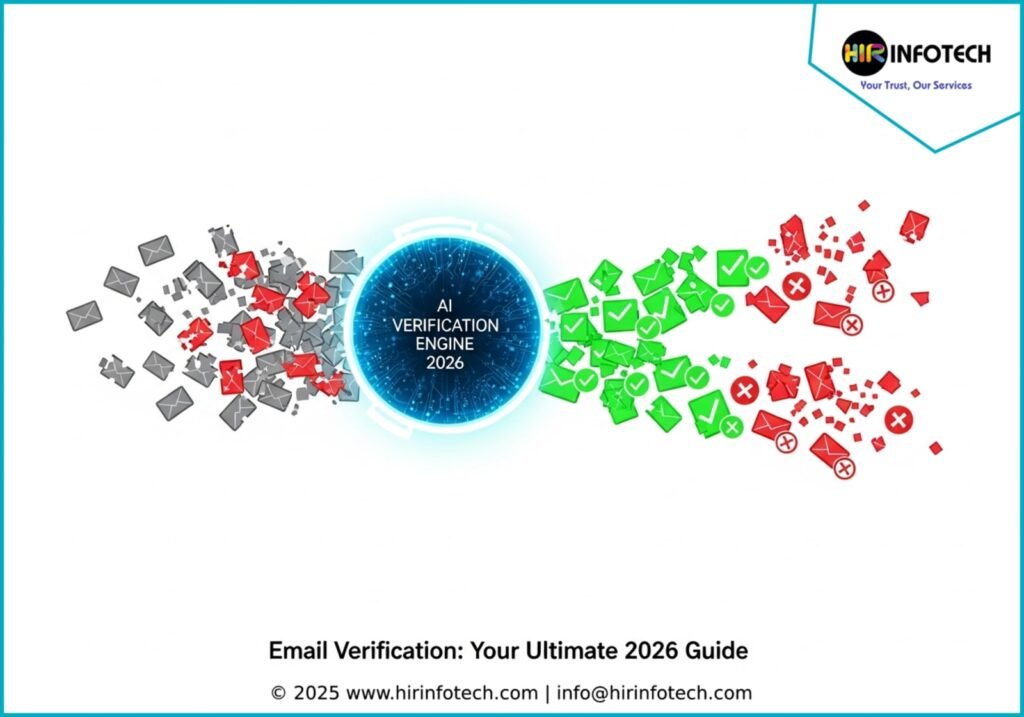
Choosing Your 2026 Email Verification Service: A Guide for Data-Driven Businesses
In the fast-paced world of B2B communication, the quality of your email list is paramount. For mid to large-sized companies deeply involved in web scraping, data extraction, and other data-intensive work, ensuring the accuracy of your email data isn’t just a best practice—it’s a critical component of your success. With the data solutions industry constantly evolving, choosing the right email list verifier in 2026 requires a clear understanding of the latest technologies and a strategy that aligns with your business goals. This guide will walk you through everything you need to know, from the fundamentals of email verification to the advanced, AI-driven solutions shaping the future of data quality.
Why Email Verification is Non-Negotiable in 2026
A pristine email list is the bedrock of any successful digital marketing or outreach campaign. In an era of increasingly sophisticated spam filters and heightened customer expectations, sending emails to invalid or inactive addresses can have severe consequences. Here’s why prioritizing email verification is more crucial than ever:
- Protecting Your Sender Reputation: Internet Service Providers (ISPs) and Email Service Providers (ESPs) closely monitor your sending practices. High bounce rates, a direct result of a poorly maintained email list, can damage your sender reputation, leading to your emails being flagged as spam.
- Maximizing ROI: Every email sent to a non-existent address is a wasted resource. By cleaning your lists, you ensure your marketing budget is spent on reaching real, potential customers, directly boosting your return on investment (ROI).
- Enhancing Deliverability and Engagement: When your emails consistently reach their intended inboxes, you see a natural uplift in open rates, click-through rates, and overall engagement. This leads to more meaningful interactions and a stronger sales pipeline.
- Improving Data Analytics: Accurate data is the foundation of informed decision-making. A verified email list provides a clearer picture of your audience, enabling more precise segmentation, personalization, and campaign analysis.
Simply put, neglecting email verification is like building a house on a shaky foundation—it’s only a matter of time before things start to crumble.
Understanding the Technology: How Email Verifiers Work
Email verification tools have come a long way from simple syntax checks. Today’s advanced solutions employ a multi-layered approach to determine the validity of an email address. Here’s a breakdown of the process, explained in a way that’s easy for a non-technical audience to grasp.
Level 1: The Basic Check-Up
This initial stage is like a quick once-over. The software checks for fundamental errors that would immediately render an email address invalid:
- Syntax and Formatting: Does the email address follow the standard `username@domain.com` format? Are there any illegal characters or spaces?
- Domain Validation: The verifier checks the Domain Name System (DNS) records to ensure the domain (the part after the “@” symbol) is legitimate and has a configured mail server (MX record).
While this is a good first step for weeding out obviously fake or mistyped addresses, it’s not enough to guarantee deliverability. Some less sophisticated tools stop here, which can lead to a false sense of security and still result in high bounce rates.
Level 2: The Deeper Dive with SMTP
More comprehensive verification services take it a step further by using the Simple Mail Transfer Protocol (SMTP). This is the standard protocol for sending and receiving emails. Here’s how it works in a simplified way:
- The verifier initiates a “handshake” with the recipient’s mail server, essentially simulating the first step of sending an email without actually delivering a message.
- It then asks the server if the specific mailbox (the “username” part of the address) exists.
- The server’s response tells the verifier whether the address is valid, invalid, or if there’s a different issue.
This SMTP check provides a much higher degree of accuracy and is a key feature to look for in a quality email verification service.
The Challenge of Catch-All Servers
Some businesses configure their email servers as “catch-all” or “accept-all.” This means the server is set up to accept all emails sent to that domain, regardless of whether the specific mailbox exists. While this can prevent legitimate emails with typos from being lost, it poses a significant challenge for verification tools. An SMTP check on a catch-all server will always return a “valid” response, even for non-existent addresses. Advanced verification services use sophisticated algorithms and historical data to identify catch-all domains and flag them as “risky,” allowing you to make an informed decision about whether to include them in your campaigns. Verifying catch-all emails often requires more advanced techniques, and some top-tier verification services are now able to do this with a higher degree of accuracy.
The Rise of AI in Email Verification
Looking ahead to 2026, Artificial Intelligence (AI) and machine learning are revolutionizing the email verification landscape. AI-powered tools go beyond the traditional checks to provide a more nuanced and predictive analysis of email quality. Here’s how AI is changing the game:
- Predictive Analytics: AI algorithms can analyze vast datasets to identify patterns associated with high-risk email addresses, such as those from temporary or fraudulent domains. This allows for the proactive identification of potentially problematic emails.
- Behavioral Analysis: AI can assess the historical engagement of an email address, helping to determine if it’s an active and valuable contact.
- Enhanced Accuracy: By continuously learning from new data, AI-powered systems can adapt to evolving spammer tactics and improve their detection capabilities over time.
As your business grows and your data needs become more complex, leveraging an email verification service with AI capabilities will be essential for maintaining a competitive edge.
Choosing the Right Email Verifier for Your Business: A 2026 Checklist
With a plethora of options on the market, selecting the right email verification tool can be a daunting task. Here are the key factors to consider to ensure you choose a solution that meets the specific needs of your data-driven company:
Key Features to Look For:
- High Accuracy Rate: Look for a provider that guarantees a high accuracy rate, ideally above 98%. This ensures that you are getting reliable results and minimizing bounce rates.
- Real-Time Verification API: For businesses that collect emails through web forms or other online channels, a real-time API is a must-have. It verifies emails as they are entered, preventing bad data from entering your system in the first place.
- Bulk Verification Capabilities: If you have large, existing email lists, you’ll need a service that can efficiently process them in bulk without sacrificing accuracy.
- Detailed Status Codes: A good verifier will provide more than just “valid” or “invalid.” Look for detailed status codes that identify disposable emails, role-based accounts (e.g., info@, support@), and those challenging catch-all domains.
- Integrations: The ability to integrate with your existing CRM, marketing automation platforms, and other data tools is crucial for a seamless workflow.
- Data Security and Compliance: Ensure the provider is GDPR compliant and has robust security measures in place to protect your data.
Demonstrating E-E-A-T in Your Choice:
Google’s E-E-A-T (Experience, Expertise, Authoritativeness, and Trust) framework isn’t just for content creation; it’s a valuable lens through which to evaluate potential data solution partners.
- Experience: Does the provider have a proven track record in the industry? Look for case studies and testimonials from companies similar to yours.
- Expertise: Is the company a recognized expert in data quality and email verification? Do they publish insightful content and contribute to industry discussions?
- Authoritativeness: Are they cited by other reputable sources? Do they have a strong presence in the data solutions community?
- Trust: Is their pricing transparent? Are their security and privacy policies clear and easy to understand? Do they offer excellent customer support?
Actionable Takeaways for Your Business
Now that you have a comprehensive understanding of email verification, here are some actionable steps you can take to improve your data quality and marketing effectiveness:
- Audit Your Current Email Lists: If you haven’t done so recently, run your existing email lists through a reputable verification service. This will give you a baseline understanding of your data health.
- Implement Real-Time Verification: Integrate an email verification API into all of your data collection points to prevent bad data from entering your systems.
- Segment Your “Risky” Emails: For emails flagged as “catch-all” or otherwise risky, consider a separate, cautious outreach strategy rather than including them in your main campaigns.
- Make Email Verification a Regular Practice: Email lists decay over time. Make it a habit to regularly clean your lists to maintain high data quality.
Frequently Asked Questions (FAQs)
1. What is the difference between email validation and email verification?
While often used interchangeably, email validation typically refers to the initial check of an email’s format and syntax. Email verification is a more comprehensive process that includes checking the domain’s validity and communicating with the mail server to confirm the existence of the mailbox.
2. How often should I verify my email lists?
It’s a good practice to verify your email lists at least once every quarter. However, for businesses with high-volume data acquisition, more frequent verification may be necessary. Implementing real-time verification at the point of collection is the most effective strategy.
3. Can email verification guarantee 100% deliverability?
No email verification service can guarantee 100% deliverability. Other factors, such as your email content, sender reputation, and recipient server settings, also play a role. However, a clean, verified list is the most critical step toward maximizing your deliverability.
4. Is it worth paying for an email verification service?
Absolutely. The cost of a reputable email verification service is a small investment compared to the potential losses from a damaged sender reputation, wasted marketing spend, and missed sales opportunities. The ROI on clean data is significant.
5. What are “spam traps”?
Spam traps are email addresses used by ISPs and anti-spam organizations to identify senders who are not following best practices. Sending an email to a spam trap can have a severe negative impact on your sender reputation.
6. How does email verification impact my marketing campaigns?
By ensuring your messages reach real people, email verification directly improves your open rates, click-through rates, and conversions. It also provides more accurate data for analyzing campaign performance and making strategic decisions.
7. What should I do with invalid emails after verification?
Invalid emails should be promptly removed from your mailing lists. Continuing to send to these addresses will only harm your sender reputation and skew your marketing metrics.
Partner with the Experts in Data Solutions
Navigating the complexities of data quality and email verification can be challenging. At Hir Infotech, we specialize in providing comprehensive data solutions, including web scraping, data extraction, and data verification, tailored to the unique needs of mid to large-sized companies. Our expertise and cutting-edge technology ensure that you have the accurate, reliable data you need to drive your business forward.
Ready to unlock the full potential of your data? Contact Hir Infotech today for a consultation and discover how our data solutions can empower your business to achieve its goals.
Relevant Keywords and Hashtags:
#EmailVerification #DataQuality #B2BMarketing #LeadGeneration #DataSolutions #EmailMarketing #SenderReputation #MarketingROI #BigData #DataAnalytics #HirInfotech #WebScraping #DataExtraction