Unlocking E-Commerce Success in 2026: The Definitive Guide to Web Scraping
In the hyper-competitive world of e-commerce, staying ahead of the curve isn’t just an advantage; it’s a necessity. With global e-commerce sales expected to surge past $6.88 trillion in 2026, the digital marketplace is more crowded and complex than ever before. For mid-to-large-sized companies, the sheer volume of data generated daily—from competitor pricing and product catalogs to customer reviews and market trends—is both a monumental challenge and a golden opportunity. The key to unlocking this opportunity lies in a powerful technology: e-commerce web scraping.
Many businesses are navigating this digital landscape, but a surprising number falter. The secret weapon for thriving businesses is the strategic use of web data extraction. By harnessing the power of automated web scraping, companies can gather vast amounts of public online data, transforming it into actionable insights that drive growth, enhance efficiency, and solidify their market position. This blog post will demystify e-commerce web scraping for the non-technical audience, explore its profound benefits, and provide actionable strategies to leverage data for unparalleled success.
What is E-Commerce Web Scraping and Why is it a Game-Changer?
At its core, web scraping is the automated process of extracting data from websites. Imagine a team of tireless assistants browsing thousands of e-commerce sites, competitor product pages, and online marketplaces 24/7. They collect, structure, and deliver the specific information you need—product names, prices, stock availability, customer ratings, and more—directly to you. This is what automated web scraping does, but with incredible speed, accuracy, and scale.
In 2026, this is no longer a niche technical tool; it is a fundamental business strategy. The shift is driven by advancements in Artificial Intelligence (AI) and Machine Learning (ML), which have made web scraping smarter, more adaptable, and capable of handling even the most complex, dynamic websites. AI-powered scraping tools can now understand the context of data, identify relevant information with greater precision, and even bypass sophisticated anti-bot measures, ensuring a consistent and reliable flow of high-quality data. For businesses, this means moving from reactive decision-making to proactive, data-driven strategies that anticipate market shifts and customer needs.
The Sheer Scale of E-Commerce Demands Automation
The global e-commerce market is not just growing; it’s exploding. Projections show the B2B e-commerce market alone will be valued at a staggering $36 trillion by 2026. Manually tracking this much activity is impossible. Automated data extraction is the only feasible way for large companies to keep pace with:
- Dynamic Pricing: Competitors can change their prices multiple times a day.
- Product Assortment: Thousands of new products are launched daily across various platforms.
- Inventory Fluctuations: Real-time stock levels are crucial for supply chain management.
- Customer Sentiment: Millions of reviews and social media comments shape brand perception.
Without automation, you are operating with blind spots. Web scraping removes these blind spots, providing a clear and comprehensive view of the market landscape.
Actionable Strategies to Dominate Your Market with E-Commerce Data
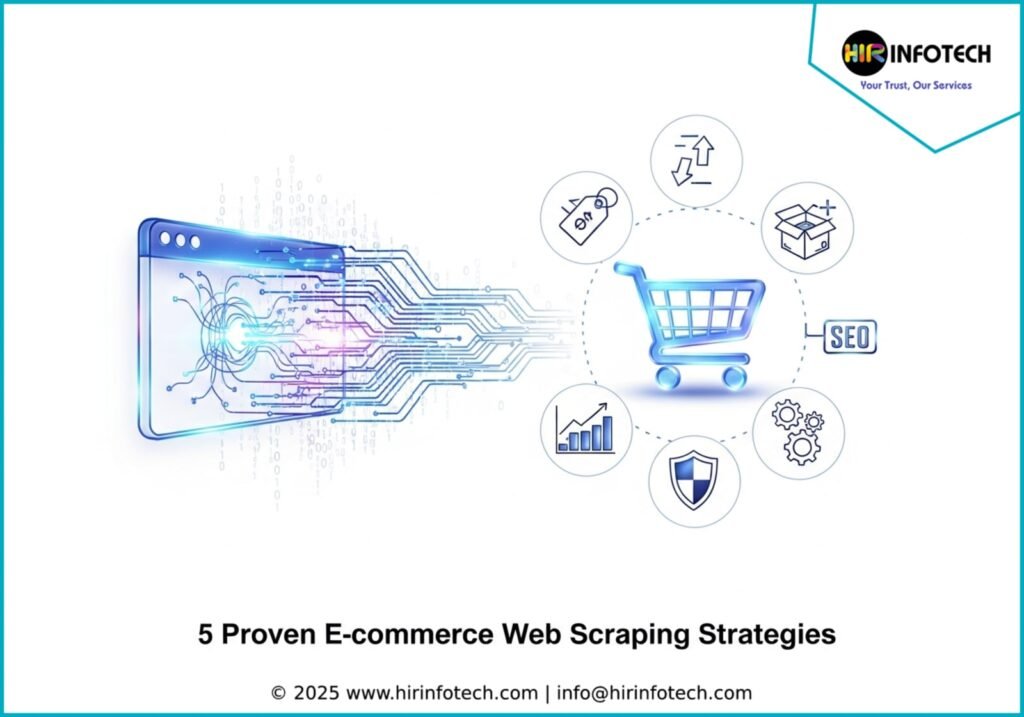
Understanding what web scraping is is the first step. The real value comes from applying the extracted data to solve business challenges and seize opportunities. Here are five powerful strategies that mid-to-large companies can implement immediately.
1. Master Your Pricing Strategy for Maximum Profitability
Pricing is one of the most critical factors in e-commerce success. Price too high, and you lose customers to competitors. Price too low, and you erode your profit margins. Web scraping provides the real-time competitive pricing intelligence needed to find the sweet spot.
How to implement it:
- Continuous Competitor Monitoring: Set up automated scrapers to track the prices of specific products or entire product categories across all your key competitors’ websites.
- Dynamic Pricing Models: Feed this real-time data into a dynamic pricing engine. This allows you to automatically adjust your prices based on market conditions, competitor actions, stock levels, and demand.
- Identify MAP Violations: For manufacturers and brands, web scraping can automatically detect if distributors or resellers are violating Minimum Advertised Price (MAP) agreements, protecting your brand’s value.
By leveraging data-driven pricing, businesses can increase revenue and maintain a strong competitive edge. For a deeper dive into how this works, leading data solution providers like Bright Data offer robust e-commerce scraping tools designed for this purpose.
2. Optimize Your Product Assortment and Enhance Offerings
What are the hottest products on the market? What features are customers demanding? Are there gaps in your product catalog that competitors are exploiting? Web scraping helps you answer these questions with data, not guesswork.
How to implement it:
- Analyze Bestseller Lists: Scrape bestseller lists from major marketplaces like Amazon, Walmart, and eBay to identify trending products in your niche.
- Monitor New Product Launches: Keep a close watch on competitors’ “new arrivals” sections to stay informed about their product development strategies.
- Aggregate Customer Reviews: Extract and analyze thousands of customer reviews for both your products and your competitors’. This provides invaluable, direct feedback on what customers love, what they dislike, and what features they wish a product had. Use this insight to improve your existing products and inform new product development.
3. Supercharge Your Marketing and SEO Efforts
Effective marketing in 2026 is about personalization and visibility. You need to understand your audience deeply and ensure your products appear prominently in search results. Web scraping is a powerful tool for achieving both.
How to implement it:
- Keyword Intelligence: Scrape competitor product titles, descriptions, and on-page metadata to discover the high-intent keywords they are targeting. This intelligence can fuel your own SEO and paid search campaigns.
- Content and Trend Analysis: Monitor industry blogs, news sites, and social media to identify emerging trends and topics. This allows you to create relevant and timely marketing content that resonates with your audience.
- Lead Generation: For B2B e-commerce, scraping public data from professional networks or online directories can help build targeted lists for your sales and marketing teams. It is crucial, however, to ensure this is done ethically and in compliance with privacy regulations.
A well-executed, data-informed SEO strategy is essential for driving organic traffic and outranking competitors.
4. Build a Resilient and Efficient Supply Chain
Supply chain disruptions can be incredibly costly. Web scraping provides the visibility needed to anticipate potential issues and optimize your operations for efficiency and reliability.
How to implement it:
- Monitor Supplier Data: Scrape your suppliers’ websites for real-time information on product availability, lead times, and pricing changes.
- Track Competitor Stock Levels: Monitoring competitors’ inventory can provide early warnings of broader market shortages or surges in demand, allowing you to adjust your own stock levels proactively.
- Diversify Your Sourcing: Use web scraping to identify and vet new potential suppliers from online directories and B2B marketplaces, reducing your reliance on a single source.
5. Protect Your Brand and Enhance Customer Trust
Your brand’s reputation is one of your most valuable assets. Web scraping can act as your eyes and ears across the web, helping you protect it.
How to implement it:
- Detect Counterfeit Products: Monitor online marketplaces for unauthorized sellers or counterfeit versions of your products. This is crucial for protecting both your revenue and your customers’ safety.
- Monitor Customer Sentiment: Go beyond just your own site. Scrape third-party review sites, forums, and social media to get an unfiltered view of what people are saying about your brand. This allows you to address negative feedback quickly and amplify positive sentiment.
- Ensure Data Accuracy: Use web scraping to audit your own product listings across all channels, ensuring that information like pricing, descriptions, and availability is consistent and accurate everywhere.
By proactively managing your brand’s online presence, you build the trust that is essential for long-term customer loyalty.
Choosing the Right Partner for Your Data Needs
For mid-to-large companies, implementing a web scraping strategy is not about building everything from scratch. It’s about partnering with an expert who can provide the infrastructure, tools, and expertise to deliver reliable, high-quality data at scale. Companies like Oxylabs offer enterprise-grade data acquisition solutions, from powerful scraper APIs to ready-to-use datasets, allowing you to focus on analyzing insights rather than managing infrastructure.
When selecting a partner, consider the following:
- Scalability and Reliability: Can they handle the volume of data you need without interruptions?
- Data Quality: Do they have mechanisms for cleaning, structuring, and validating the data?
- Ethical and Legal Compliance: Do they adhere to regulations like GDPR and CCPA and respect website terms of service? This is non-negotiable.
- Support and Expertise: Do they offer expert support to help you achieve your specific business goals?
The Future is Data-Driven: Are You Ready?
The e-commerce landscape of 2026 is fiercely competitive, but it is also rich with opportunity for businesses that can effectively harness the power of data. E-commerce web scraping has evolved from a technical task into a strategic imperative. It is the key to unlocking the real-time market intelligence needed to make smarter pricing decisions, optimize product offerings, supercharge marketing campaigns, and build a more resilient business.
By moving beyond manual research and embracing automated data extraction, your company can gain a significant competitive advantage. The question is no longer whether you should be using web scraping, but how quickly you can integrate it into the core of your strategy.
#EcommerceSuccess #WebScraping #DataExtraction #BigData #BusinessIntelligence #MarketResearch #DataSolutions #AI #2026Trends
Frequently Asked Questions (FAQs)
1. What is the difference between web scraping and web crawling?
Web crawling and web scraping are related but distinct processes. Web crawling, which is what search engines do, is the process of systematically browsing the internet to index websites. The goal is discovery. Web scraping, on the other hand, is a more targeted process focused on extracting specific data from particular websites. The goal is data extraction.
2. Is e-commerce web scraping legal and ethical?
Scraping publicly available data is generally considered legal. However, the legality and ethics depend heavily on how and what you scrape. Ethical web scraping involves respecting a website’s Terms of Service and `robots.txt` file (which outlines rules for bots), avoiding the collection of personal or copyrighted data, and ensuring your scraping activities do not disrupt the website’s performance. Partnering with a reputable data provider is the best way to ensure compliance.
3. How does AI improve web scraping in 2026?
AI and machine learning have revolutionized web scraping. AI-powered scrapers can intelligently identify and extract data even when website structures change, a common issue that breaks traditional scrapers. They can handle complex, JavaScript-heavy sites, solve CAPTCHAs, and even parse unstructured data (like customer reviews) into structured, analysis-ready formats. This makes data extraction more reliable, accurate, and low-maintenance.
4. What kind of data can be extracted from e-commerce websites?
A wide variety of valuable data points can be extracted, including:
- Product Data: Product names, SKUs, descriptions, specifications, images, and prices.
- Pricing and Promotions: Regular prices, sale prices, shipping costs, and special offers.
- Availability: In-stock/out-of-stock status and inventory levels.
- Customer Reviews: Star ratings, review text, reviewer information, and dates.
- Seller Information: Seller names, ratings, and number of reviews.
- Category and Search Rankings: How products are ranked within specific categories or for certain keywords.
5. Our company isn’t very technical. Can we still use web scraping?
Absolutely. Many leading data solution providers now offer no-code scrapers and fully managed services. With a no-code tool, your team can set up scraping tasks through a simple user interface without writing any code. With a managed service, you simply define your data requirements, and the provider handles the entire extraction process, delivering the final dataset to you. This makes powerful data extraction accessible to all businesses, regardless of their technical expertise.
6. How can we ensure the quality of the scraped data?
Data quality is paramount. A professional data solutions provider ensures quality through a multi-step process. This includes automated validation rules to check for errors and inconsistencies, data parsing to convert raw data into a clean, structured format (like JSON or CSV), and de-duplication to remove redundant entries. This ensures the data you receive is accurate, complete, and ready for analysis.
7. How can our business get started with e-commerce web scraping?
The best way to start is by identifying a clear business objective. What is the most pressing challenge you want to solve or the biggest opportunity you want to seize? Whether it’s optimizing your pricing, analyzing competitors, or understanding customer sentiment, having a specific goal will guide your data extraction strategy. The next step is to connect with a data solutions expert who can help you turn that goal into a successful data project.
Ready to Transform Your E-Commerce Strategy with Data?
Don’t let your competitors get ahead. Harness the power of web scraping to unlock actionable insights and drive your business forward. Contact Hir Infotech today to learn how our tailored data solutions can help you dominate the e-commerce landscape. Our experts are ready to help you design and implement a data strategy that delivers real results. Reach out for a consultation and discover what’s possible.