Unlock Your Real Estate Potential: How Web Data Extraction Drives Smarter Decisions in 2026
The digital universe is expanding at an explosive rate, and with it, the sheer volume of data generated every second. This explosion of information is creating unprecedented opportunities for businesses to refine their processes and make more intelligent, data-driven decisions. For the real estate industry, this data revolution is not just a trend; it’s a fundamental shift in how the market operates.
Whether you’re a real estate broker, a seasoned realtor, a savvy investor, or a meticulous property manager, the ability to harness the power of web data extraction can set you apart from the competition. By embracing a data-centric approach, you can unlock invaluable insights that were previously hidden in plain sight.
This article will explore the transformative benefits of real estate data and how leveraging web scraping can future-proof your business, making it resilient to market disruptions and poised for growth in 2026 and beyond.
What is a Web Data Extractor and Why Do You Need One?
The real estate sector is awash with publicly available data. Countless listing websites, property portals, and market analysis platforms offer an endless stream of information. While this data is accessible to everyone, a significant challenge remains: how to collect and structure it efficiently. This is where a web data extractor, or web scraper, becomes an indispensable tool.
Many real estate websites lack a public API (Application Programming Interface), which would allow for easy data access. Even when an API is available, it might not provide all the specific data points you need. A web data extractor overcomes these limitations. It’s a specialized software tool designed to automatically navigate websites and extract large volumes of publicly available real estate data, transforming it into a structured and usable format.
Think of it as having a team of researchers working for you 24/7, tirelessly gathering the most up-to-date information to fuel your decisions. In an increasingly competitive market, having access to this structured data is no longer just an advantage; it’s a necessity.
5 Key Advantages of Real Estate Data Extraction for a Competitive Edge in 2026
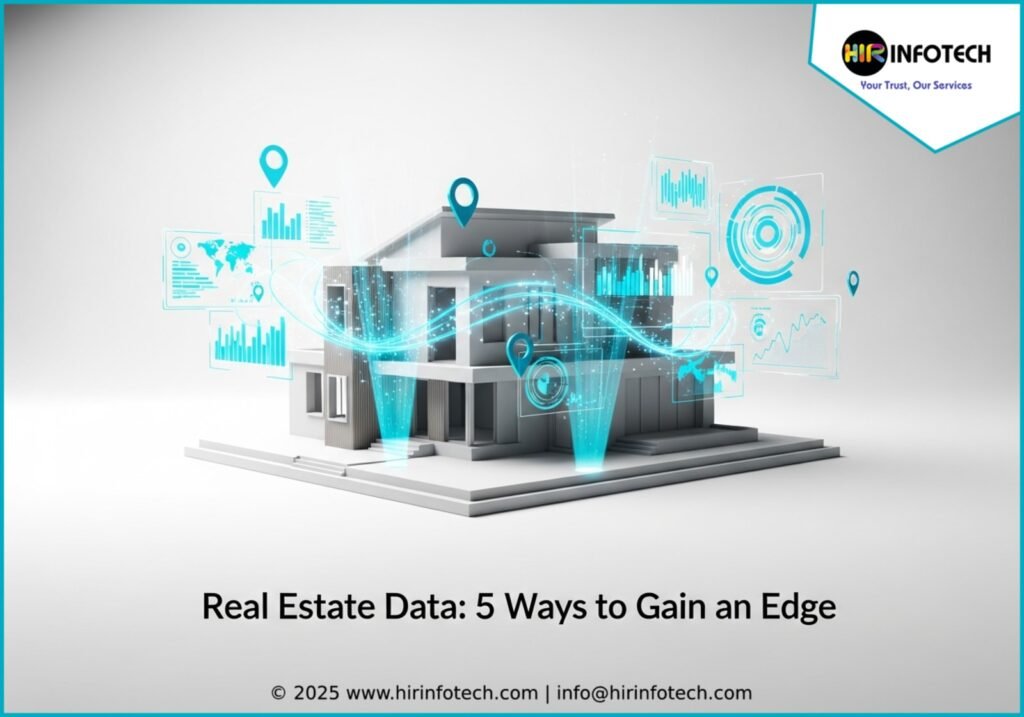
The applications of web data extraction in the real estate industry are vast and impactful. By systematically collecting and analyzing online data, you can gain a deeper understanding of the market and make more strategic choices. Here are five key ways web scraping can revolutionize your real estate business:
1. Pinpointing Accurate Property Valuations
Determining the precise value of a property is fundamental to success in real estate. Whether you are preparing to list a property, seeking financing, or analyzing a potential investment, an accurate valuation is critical. The real estate market is fiercely competitive, and superior knowledge is what sets the winners apart. To gain this edge, you need to look beyond traditional MLS data.
Web data extraction allows you to gather a wealth of information from any publicly accessible listing site. This includes details on comparable properties, recent sales, neighborhood amenities, and market trends. By leveraging this comprehensive dataset, you can develop more accurate and defensible property valuations. This data-driven approach allows you to confidently price your listings or position your offers for maximum impact.
2. Mastering the Art of Location Analysis
It’s a timeless real estate mantra: “location, location, location.” The value of a property is intrinsically linked to its surroundings. However, obtaining structured data for a specific geographic area can be a cumbersome and time-consuming process. Web scraping automates this task, allowing you to filter and extract data for the precise locations you are interested in. Whether you need to analyze an entire metropolitan area or a single neighborhood, web scraping provides the granular data necessary for in-depth location analysis.
- Demographics: Understand the population, income levels, and lifestyle preferences of a specific area.
- Amenities: Identify nearby schools, parks, restaurants, and transportation hubs that add value to a property.
- Development: Track new construction projects and infrastructure improvements that could impact future property values.
For more on the importance of location data, see this insightful article from Forbes.
3. Making Decisions Based on Data, Not Emotion
The process of buying and selling property can be highly emotional. These feelings can sometimes cloud judgment and lead to suboptimal financial decisions. A data-driven approach helps to ground your decisions in objective reality. By focusing on the hard numbers, you can make more rational and profitable choices.
Web scraping provides the raw data you need to conduct a thorough financial analysis. This includes key metrics such as:
-
- Square footage
- Age of the property
- Lot size
- Last sold price
– And many other quantitative data points.
Especially for investment properties, it is crucial to have a comprehensive view of the market’s pricing and performance data. Web scraping makes it possible to gather this information at scale, empowering you to make smarter, more calculated investment decisions.
4. Accurately Gauging Vacancy Rates
For real estate investors, the vacancy rate of a property or a market can be a critical factor in their decision-making process. A low vacancy rate often indicates strong demand and the potential for rising rental income. Conversely, a high vacancy rate can signal a weakening market and downward pressure on rents.
Too often, real estate professionals rely on outdated or generalized vacancy rate estimates because they lack the time and resources to conduct a thorough analysis. Web scraping solves this problem by enabling the collection of high-dimensional, real-time market data. By scraping new property listings, rental prices, and lease terms, you can calculate a much more accurate and up-to-date vacancy rate for your target market. This level of precision can be the difference between a profitable investment and a costly mistake.
5. Predicting and Navigating Market Trends
The real estate market is cyclical, with periods of expansion and contraction. Understanding where the market is in its current cycle and where it’s headed is essential for making sound investment and pricing decisions. These crucial insights are derived from analyzing vast amounts of market data.
Manually collecting the historical and real-time data needed for trend analysis is an insurmountable task. Web data extraction provides a fast and efficient way to gather this information. By starting to scrape real estate data today, you begin to build a valuable historical database. Mining this data can reveal long-term trends, seasonal patterns, and emerging market shifts that would otherwise go unnoticed. This foresight allows you to position yourself and your clients for success, no matter which way the market turns.
To learn more about the latest trends in data-driven real estate, check out this comprehensive guide from J.P. Morgan.
The Future is Now: AI and Automation in Web Scraping
As we look towards 2026 and beyond, the world of web scraping is itself evolving, driven by advancements in Artificial Intelligence (AI) and automation. The integration of AI is making data extraction smarter, faster, and more accurate. AI-powered scrapers can now intelligently identify and extract data from complex and dynamic websites, even those with anti-bot measures in place. This means more reliable and consistent data for your real estate analysis.
Furthermore, automation is streamlining the entire data pipeline. From scheduling regular data extractions to cleaning and structuring the collected information, automation is reducing the manual effort required to maintain a high-quality data flow. This allows you to focus on what you do best: analyzing the data and making strategic decisions.
Ethical and Legal Considerations
It is important to note that while web scraping is a powerful tool, it must be used responsibly. When engaging in web data extraction, it is crucial to be aware of and comply with the terms of service of the websites you are scraping, as well as any relevant data privacy regulations such as GDPR and CCPA. Ethical web scraping practices involve respecting website owners’ intellectual property and not overloading their servers with excessive requests. By adhering to these principles, you can leverage the benefits of web scraping while maintaining a high standard of professional integrity.
For a deeper dive into the legal aspects of web scraping, this article from Bright Data offers valuable insights.
Frequently Asked Questions (FAQs)
1. What exactly is web scraping?
Web scraping, also known as web data extraction, is the automated process of collecting data from websites. Using software called a “scraper” or “bot,” you can gather large amounts of information and save it in a structured format, such as a spreadsheet or database, for further analysis.
2. Is web scraping difficult for someone without a technical background?
While the underlying technology can be complex, many modern web scraping services and tools are designed to be user-friendly for non-technical users. Companies like Hir Infotech offer managed data extraction services, where their team of experts handles the entire process for you, from setting up the scraper to delivering the clean data.
3. What kind of real estate data can I collect with web scraping?
You can extract a wide variety of publicly available data, including property listings, prices, property characteristics (square footage, number of bedrooms/bathrooms), agent contact information, neighborhood data, and much more. If the information is visible on a website, it can likely be scraped.
4. How is the scraped data delivered?
The extracted data can be delivered in various formats to suit your needs, such as CSV (Excel), JSON, or directly into your own database via an API. This flexibility allows for easy integration with your existing analytical tools and workflows.
5. How often can the data be updated?
The frequency of data updates can be customized to your specific requirements. Whether you need data on a daily, weekly, or even hourly basis, a web scraping solution can be configured to provide you with the most current information available.
6. Can web scraping help me monitor my competitors?
Absolutely. Web scraping is an excellent tool for competitive analysis. You can track your competitors’ listings, pricing strategies, and marketing efforts in real-time. This intelligence allows you to benchmark your own performance and identify opportunities to gain a competitive advantage.
7. Is web scraping legal and ethical?
Web scraping of publicly available data is generally legal. However, it’s essential to adhere to ethical practices, such as respecting a website’s terms of service and `robots.txt` file, which outlines which parts of a site can be crawled. It’s also crucial to be compliant with data privacy regulations. Partnering with a reputable data extraction provider like Hir Infotech ensures that your data collection is both ethical and compliant.
Take the Next Step Towards a Data-Driven Future
The real estate landscape of 2026 will be defined by those who can effectively harness the power of data. By leveraging web data extraction, you can move beyond intuition and make decisions based on comprehensive, real-time market intelligence. The insights you gain will not only improve your day-to-day operations but also position you for long-term success in an increasingly competitive industry.
Are you ready to unlock the full potential of your real estate business? Don’t let valuable data slip through your fingers. Contact Hir Infotech today to learn how our expert data solutions can provide you with the actionable insights you need to thrive.
#WebDataExtraction #RealEstateData #DataDrivenDecisions #WebScraping #RealEstateTechnology #PropTech #BigData #MarketAnalysis #InvestmentStrategy #HirInfotech