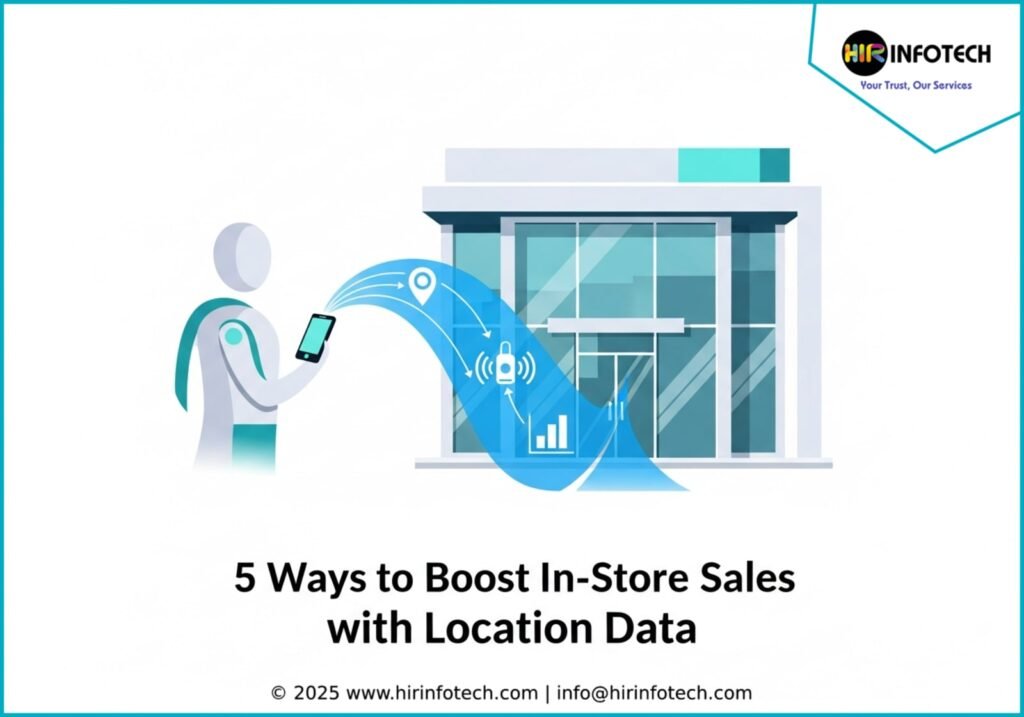
Boost In-Store Sales: How to Use Location Data to Increase Conversion Rates in 2026
In the evolving landscape of retail, the line between the digital and physical worlds is blurring. Today’s customers navigate a seamless journey, often starting on their phones and ending in a physical store. Winning their business in 2026 and beyond requires more than just a great website or a well-placed ad; it demands a deep, contextual understanding of their real-world behavior. This is where store location data transforms from a simple pin on a map into a powerful engine for conversion.
For mid-to-large companies, harnessing the immense power of data is paramount. You’re likely already collecting vast amounts of information through web scraping, data extraction, and various analytics platforms. However, the true competitive advantage lies in enriching this data with location intelligence. By understanding where your customers are, where they’ve been, and the environments they frequent, you can move from reactive marketing to predictive, hyper-personalized engagement that drives measurable foot traffic and boosts conversion rates.
The Evolution of Customer Insight: Why Location Data is Your 2026 Power Play
For years, marketers relied on cookies and digital footprints to understand customer behavior. But as we move deeper into a cookieless world, this one-dimensional view is no longer enough. The future of effective marketing lies in combining digital insights with real-world behavioral data. Location intelligence provides the crucial “where” and “when” context that digital data alone often lacks.
Think of it as the difference between knowing a customer is interested in running shoes and knowing they run past your competitor’s store every morning on their way to the gym. The latter piece of information is infinitely more powerful. It allows you to deliver a perfectly timed, relevant message that resonates with their immediate context. The global location intelligence market is projected to skyrocket, reflecting a massive shift toward data-driven, real-world marketing strategies. Businesses that master this will not just survive; they will thrive by creating truly omnichannel experiences that bridge the gap between online browsing and in-store buying.
5 Actionable Strategies to Convert Location Data into Revenue
Transforming raw location data into a higher conversion rate requires a strategic approach. It’s not just about tracking dots on a map; it’s about interpreting patterns, predicting intent, and delivering value at the perfect moment. Here are five actionable, future-focused strategies your company can implement to turn location intelligence into a cornerstone of your growth strategy.
Strategy 1: Hyper-Personalize the In-Store Experience with Real-Time Inventory & Insights
The modern customer expects a seamless blend of digital convenience and physical experience. Location data is the key to delivering this “phygital” reality. It begins with inventory transparency but extends much further.
- Live Inventory Feeds: Don’t just tell customers you have the jacket they’re looking for—show them. Use location data to trigger notifications or targeted social media ads that highlight in-stock items at their nearest store, especially for products with limited availability. A message like, “Hey, the last pair of size 10 running shoes you viewed online is waiting for you at our downtown location, just 15 minutes away,” creates a powerful sense of urgency and convenience.
- Predictive Traffic and Staffing: Analyze historical foot traffic data to predict your busiest hours and days. This allows you to optimize staffing levels, ensuring that customers always receive prompt service, which is a major factor in conversion. By anticipating rushes, you prevent long checkout lines and understaffed floors, directly improving the customer experience and increasing the likelihood of a purchase.
- Smart Restock Alerts: Connect a customer’s online browsing history with their physical location. If a customer has repeatedly viewed an out-of-stock item, use location data to send an automated alert the moment the item is restocked at a nearby store. This proactive service not only recovers a potentially lost sale but also builds significant brand loyalty.
Strategy 2: Leverage Proximity Marketing with Wi-Fi and Beacon Technology
Once a customer is near or inside your store, your engagement strategy should become even more granular. Proximity marketing technologies like geofencing and beacons allow you to interact with customers on a micro-level, turning your physical space into a dynamic, responsive environment.
- Geofencing to Drive Footfall: Create a virtual perimeter (a geofence) around your stores. When a customer with your app enters this zone, you can trigger a targeted welcome offer or a reminder about items in their online cart. You can also implement “conquesting” by setting up geofences around your competitors’ locations, sending a compelling offer to entice their customers away.
- In-Store Navigation and Offers with Beacons: Beacons are small, low-energy Bluetooth devices that can detect smartphones at close range. Place them in different departments to deliver context-aware messages. As a customer dwells in the electronics section, a beacon can trigger a notification about a flash sale on headphones. In a grocery store, a beacon in the snack aisle could offer a coupon for a new chocolate bar. This turns the simple act of shopping into an interactive, personalized journey.
- Analyze Dwell Time for Layout Optimization: Use Wi-Fi and beacon data to understand how customers move through your store. Which aisles are most popular? Where do bottlenecks occur? How long do customers spend in front of certain displays? This “dwell time” analysis provides invaluable insights for optimizing your store layout, placing high-margin products in high-traffic areas, and improving the overall shopping flow to maximize conversions. For more on this, Forbes discusses the future of hyper-personalization in retail.
Strategy 3: Craft Irresistible, Context-Aware Offers
The most effective marketing feels less like an advertisement and more like a helpful suggestion. Location data allows you to add layers of context to your offers, making them incredibly relevant and far more likely to convert.
- Loyalty Program Integration: Use a customer’s location to deliver personalized loyalty rewards. As a regular customer approaches the checkout, send a push notification: “Thanks for being a loyal shopper! Use this exclusive 15% off coupon on today’s purchase as a token of our appreciation.” This not only encourages a sale but strengthens the customer relationship.
- Combine with External Data Points: Elevate your strategy by integrating location data with other real-time information, such as weather. If it suddenly starts raining, you can send a targeted offer for umbrellas to people currently within a 5-block radius of your store. This level of real-time relevance demonstrates a sophisticated understanding of your customer’s immediate needs.
- Time-Sensitive Promotions: Drive traffic during slower periods by sending out “happy hour” style offers. A coffee shop could use location data to send a “50% off pastries for the next hour” notification to people in nearby office buildings at 3 PM, turning a slow afternoon into a profitable one.
Strategy 4: Achieve Pinpoint ROI with Advanced Attribution Models
One of the biggest challenges for marketers has always been proving the link between digital ad spend and physical store sales. Location data finally solves this problem through a process called footfall attribution.
- Connect Digital Ads to Store Visits: Footfall attribution allows you to track how many people who saw your online ad (on social media, a website, or a CTV app) later visited your physical store. By comparing this to a control group that didn’t see the ad, you can measure the precise “lift” in store visits generated by your campaign.
- Optimize Ad Spend in Real-Time: This data is not just for post-campaign reports. It provides actionable intelligence to optimize your advertising in real-time. Are ads on one platform driving significantly more foot traffic than another? Reallocate your budget accordingly. This data-driven approach ensures your marketing dollars are being spent in the most effective way possible to drive real-world results.
- Calculate a True Return on Investment (ROI): By linking ad spend directly to store visits—and combining that with average transaction values—you can calculate a far more accurate ROI for your marketing efforts. This concrete data is invaluable for justifying marketing budgets and proving the department’s direct contribution to the company’s bottom line. McKinsey & Company offers deep insights into marketing attribution models that can help refine this process.
Strategy 5: Build Predictive Audiences for Proactive Targeting
The ultimate goal of data collection is to move from reacting to customer behavior to predicting it. Historical location data is a goldmine for building highly accurate, predictive audience segments for future campaigns.
- Identify Lifestyle Patterns: Location data reveals powerful lifestyle affinities. You can identify groups of people who are “frequent gym-goers,” “weekend hikers,” “luxury shoppers,” or “quick-service restaurant regulars.” These behavioral segments are far more powerful than simple demographic data (e.g., women aged 18-24). Targeting a “frequent gym-goer” with an ad for new athletic wear is more precise and effective.
- Model Your Best Customers: Analyze the location patterns of your most valuable customers. Where else do they shop? What types of places do they frequent? Use this information to create a “lookalike” audience model. You can then target new potential customers who share these same real-world behaviors, dramatically increasing the efficiency of your customer acquisition campaigns.
- Ethical Data Handling and Privacy: As you build these powerful audiences, it is critical to prioritize ethical data handling. Be transparent with your customers about what data you are collecting and how you are using it. Always provide clear opt-out options. Building trust is paramount; customers are more likely to share data when they receive genuine value in return. Adherence to regulations like GDPR and CCPA is not just a legal requirement but a cornerstone of a sustainable, customer-centric data strategy.
The Ethical Compass: Building Trust in a Data-Driven World
The power of location data comes with immense responsibility. In 2026, consumer awareness of data privacy is at an all-time high. A successful data strategy is built on a foundation of trust and transparency. Your customers need to know that you are a responsible steward of their information. Provide clear value in exchange for data—better offers, more convenience, and a superior customer experience. Always be transparent in your privacy policies, use anonymized and aggregated data wherever possible, and ensure your practices are fully compliant with all privacy regulations. Trust is the ultimate currency; once lost, it is incredibly difficult to regain.
Finding Your Partner in Data: Why Expertise Matters
Harnessing the full potential of location data is a complex endeavor. It requires sophisticated tools for data extraction, web scraping, data cleaning, and advanced analytics. Without the right expertise, raw data can be overwhelming and lead to flawed conclusions. Partnering with a data solutions expert is crucial to transforming this complex information into a clear, actionable strategy. An experienced partner can help you build the infrastructure, integrate disparate data sources, and develop the analytical models needed to unlock the insights that will drive your business forward.
Frequently Asked Questions (FAQs)
1. How accurate is retail location data?
The accuracy of location data depends on the technology used. GPS is highly accurate outdoors, while Wi-Fi and beacons provide precise indoor locationing, often down to a specific aisle or department. Reputable data partners ensure accuracy by cleansing and verifying data from multiple sources.
2. Is using customer location data a violation of privacy?
It is not a violation of privacy when handled ethically and with user consent. The key is transparency and control. Customers must explicitly opt-in to share their location, understand how their data will be used to enhance their experience, and have the ability to opt-out at any time. Compliance with regulations like GDPR and CCPA is non-negotiable.
3. How do I integrate location data with my existing CRM and marketing platforms?
Modern data solutions are designed for integration. Through APIs (Application Programming Interfaces), location data platforms can feed insights directly into your Customer Relationship Management (CRM), marketing automation, and advertising platforms. This allows you to enrich customer profiles and automate personalized, location-aware campaigns.
4. What is the difference between geofencing and beacons?
Think of them as macro vs. micro tools. Geofencing uses GPS to create large virtual perimeters around locations (like a store or a neighborhood) to trigger actions when someone enters or exits. Beacons use Bluetooth to detect smartphones at a very close range (micro-location), enabling highly specific in-store interactions, like sending an offer when a customer stands in front of a particular product.
5. Can location data really predict future customer behavior?
Yes. By analyzing historical and aggregated movement patterns, AI and machine learning models can identify trends and build predictive audiences. For example, data might show that people who visit garden centers in the spring are also highly likely to visit hardware stores within the next two weeks. This allows you to proactively target that audience with relevant offers.
6. How can I ensure the data I’m using is ethically sourced?
Work with a trusted data solutions partner that is transparent about their data sourcing methods. Ensure they adhere to a strict code of ethics, comply with all global privacy laws, and only work with app publishers who obtain clear user consent. Ethical sourcing is fundamental to building a sustainable and trustworthy data strategy.
7. What kind of investment is required to start using location intelligence?
The investment can vary greatly depending on the scale of your operations and the depth of analysis required. Many data solution providers offer scalable models, starting with foundational services like footfall attribution and expanding to more complex predictive analytics. The key is to focus on the ROI; a well-executed strategy should generate returns that far exceed the initial investment.
Your Next Conversion is a Data Point Away
The retail landscape of 2026 will be defined by those who can successfully merge the digital and physical realms. Store location data is the bridge that makes this possible. By moving beyond simple tracking and embracing a sophisticated strategy of hyper-personalization, proximity marketing, and predictive analytics, you can create exceptional customer experiences, prove the ROI of your marketing, and significantly increase your conversion rates.
The future of retail is intelligent, responsive, and deeply personal. The question is no longer whether you should be using location data, but how quickly you can master it.
Ready to transform your data into your most powerful asset? Contact Hir Infotech today. Our team of experts specializes in web scraping, data extraction, and building custom data solutions that provide the clarity and insight you need to thrive. Let us help you unlock the power of location intelligence and turn foot traffic into loyal customers.
#LocationIntelligence #DataSolutions #ConversionRateOptimization #RetailAnalytics #ProximityMarketing #FootfallAttribution #DataExtraction #BigData #RetailTrends2026 #HirInfotech