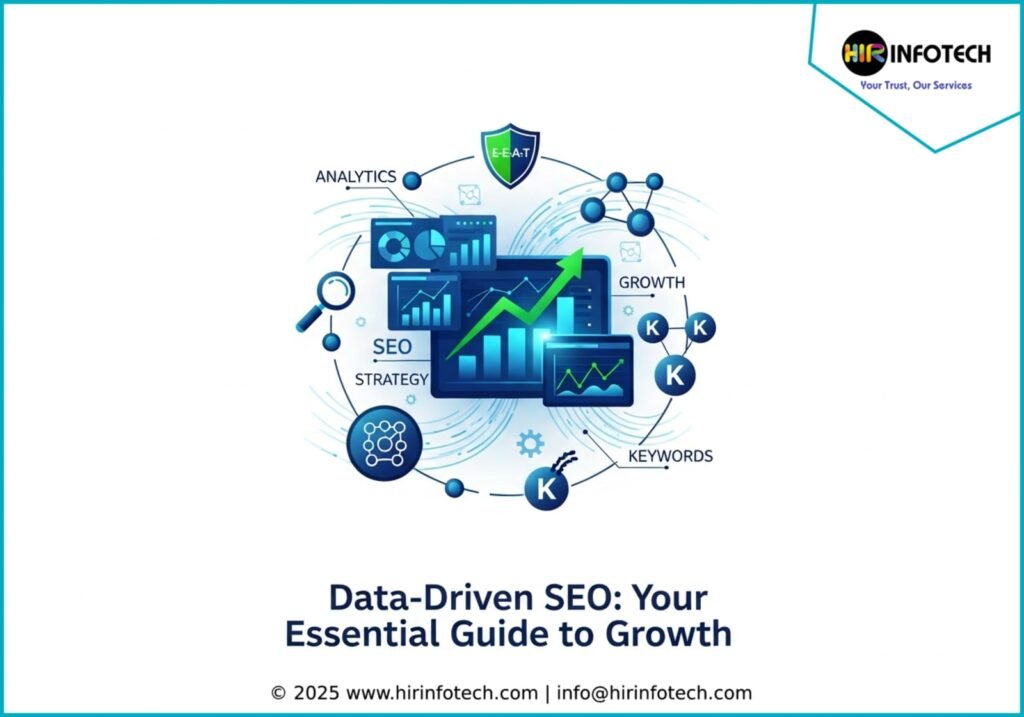
Harnessing the Power of Data: Why Data-Driven SEO is Crucial for Your Business in 2026
In an increasingly competitive digital landscape, making informed decisions is no longer a luxury—it’s a necessity. As we move further into 2026, the importance of a data-driven Search Engine Optimization (SEO) strategy continues to grow. For mid to large-sized companies that rely on web scraping, data extraction, and other data-related services, leveraging analytics is the key to unlocking sustainable growth and a significant competitive edge. This post will explore why a data-driven approach to SEO is vital and how you can implement it to achieve tangible results.
The Dawn of a New Era: SEO in 2026
The world of SEO is in a constant state of evolution. Google’s algorithms are becoming more sophisticated, prioritizing user experience and content that demonstrates genuine expertise. In 2026, successful SEO is less about guesswork and more about making strategic decisions based on robust data. For businesses dealing with vast amounts of information, a data-driven culture is the foundation of a successful digital marketing strategy.
A data-driven SEO approach involves collecting and analyzing both quantitative and qualitative data to inform and refine your optimization efforts. It moves beyond basic keyword tracking to a more holistic understanding of user behavior, market trends, and competitor strategies. This analytical approach ensures that your marketing efforts are targeted, efficient, and, most importantly, effective.
Why Your Business Can’t Afford to Ignore Data-Driven SEO
In today’s economy, every marketing dollar counts. A data-driven approach to SEO maximizes your return on investment by focusing on strategies with the highest potential for success. Here’s why it’s so critical:
- Enhanced Decision-Making: Data provides clear insights into what’s working and what isn’t. This allows you to allocate resources more effectively and make strategic decisions with confidence.
- Deeper Customer Understanding: By analyzing user data, you can gain a comprehensive understanding of your target audience’s needs, preferences, and pain points. This enables you to create content and offers that resonate deeply with them.
- Competitive Advantage: In a crowded marketplace, data can reveal opportunities that your competitors may have missed. From identifying underserved keywords to understanding competitor weaknesses, data is your secret weapon.
- Increased ROI: By focusing on tactics backed by data, you can significantly improve your campaign performance, leading to higher traffic, better conversion rates, and a stronger bottom line.
To learn more about how analytics can revolutionize your content strategy, check out this insightful article on leveraging user search behavior.
Building Topical Authority with Data-Driven Insights
One of the most significant shifts in modern SEO is the emphasis on topical authority. Search engines like Google and AI engines such as Gemini, ChatGPT, and Perplexity favor websites that are recognized as experts in their niche. Building this authority requires a deep and comprehensive coverage of a specific topic, and data is the roadmap to achieving it.
By using data analytics, you can identify the core topics and subtopics that are most relevant to your audience. This allows you to create a content strategy that covers a subject in its entirety, answering every possible question a user might have. This comprehensive approach signals to search engines that you are a definitive source of information, boosting your rankings and establishing trust with your audience.
Demonstrating E-E-A-T Through Data
Google’s E-E-A-T (Experience, Expertise, Authoritativeness, and Trust) guidelines are more important than ever. A data-driven approach allows you to systematically build and showcase these qualities:
- Experience: Use data to understand real-world user journeys and create content that reflects a genuine understanding of their experiences.
- Expertise: Leverage data to uncover detailed insights and present well-researched, factual content that showcases your deep knowledge.
- Authoritativeness: Analyze backlink data and industry trends to identify opportunities to build your brand’s reputation and authority.
- Trust: Use data to ensure the accuracy and reliability of your content, and monitor user engagement to continuously improve and build trust.
Actionable Steps to Implement a Data-Driven SEO Strategy
Transitioning to a data-driven SEO model can seem daunting, but it can be broken down into manageable steps. Here’s a practical guide for mid to large companies to get started.
Focus on Location-Specific Pages
For businesses with a physical presence, optimizing location-specific pages is a crucial first step. These pages are often the first point of contact for local customers and are vital for both your website and your Google Business Profile. Data can help you enhance these pages for maximum impact.
1. Leverage High-Quality Visuals
Data consistently shows that engaging visuals significantly improve user engagement. Use high-quality photos and videos of your team, your location, and your products or services in action. Analyze which images drive the most engagement and optimize accordingly. Showcase your company culture and the people behind your brand to build a stronger connection with your audience.
2. Harness the Power of Customer Reviews
Online reviews are a cornerstone of trust. A steady stream of positive reviews can dramatically increase consumer confidence and drive both online and in-person traffic. Implement a data-driven reputation management system to monitor and respond to reviews promptly. Use data mining and aggregation to track feedback across multiple platforms and identify areas for business improvement.
Optimizing Your Location Pages with Data
Beyond photos and reviews, several other elements on your location pages can be optimized using data.
1. Craft a Compelling Tagline
A tagline is a concise phrase that encapsulates your brand’s value proposition. Use data analytics tools to aggregate and analyze the taglines of top-ranking competitors in your industry. This can provide valuable insights into what resonates with your target audience and help you craft a tagline that is both memorable and effective.
2. Conduct In-Depth Keyword Research
Effective keyword research is the bedrock of any successful SEO strategy. Go beyond basic keyword planners and utilize advanced data mining tools to uncover what your audience is searching for. Analyze search volumes, user intent, and competitive density to identify the most valuable keywords for your business. For instance, if you run a data solutions company, you might target keywords like “enterprise web scraping services,” “large-scale data extraction,” and “custom data solutions.”
The Future is Data: Preparing for 2026 and Beyond
The digital marketing landscape will only become more data-centric. Technologies like AI-driven analytics, real-time data processing, and predictive modeling are transforming how businesses approach SEO. By embracing a data-driven culture now, you can position your company for long-term success.
For a deeper dive into upcoming big data trends, this article on the future of data analytics offers a glimpse into what’s on the horizon.
Hashtags: #DataDrivenSEO #SEO2026 #BigData #DataAnalytics #DigitalMarketing #WebScraping #DataExtraction #TopicalAuthority #EEAT #LeadGeneration
Frequently Asked Questions (FAQs)
1. What is data-driven SEO?
Data-driven SEO is the practice of using quantitative and qualitative data to inform and guide your search engine optimization strategy. It involves analyzing user behavior, market trends, and competitor performance to make informed decisions that improve search rankings and drive organic traffic.
2. How does web scraping benefit a data-driven SEO strategy?
Web scraping is a powerful tool for gathering large datasets from across the web. For SEO, it can be used to collect competitor data, analyze backlink profiles, monitor keyword rankings, and gather insights into content performance at scale. This data is invaluable for identifying opportunities and refining your strategy.
3. What are the key metrics to track in a data-driven SEO campaign?
Key metrics include organic traffic, keyword rankings, click-through rates (CTR), bounce rates, conversion rates, and user engagement metrics like time on page. It’s also crucial to track metrics related to topical authority and E-E-A-T, such as backlink quality and brand mentions.
4. How can a large company transition to a data-driven SEO culture?
Transitioning requires a top-down commitment to data-informed decision-making. This involves investing in the right analytics tools, providing training for your marketing teams, establishing clear KPIs, and fostering a culture of continuous testing and optimization.
5. Why is topical authority so important in 2026?
As search engines become more sophisticated, they prioritize content from sources that demonstrate deep expertise on a particular subject. Building topical authority establishes your website as a trusted resource, leading to higher rankings, increased organic traffic, and greater brand credibility.
6. How does E-E-A-T impact SEO?
E-E-A-T (Experience, Expertise, Authoritativeness, and Trust) is a framework used by Google to assess content quality. Websites that demonstrate strong E-E-A-T are more likely to rank well, especially for topics that can impact a person’s well-being (Your Money or Your Life – YMYL). A data-driven approach helps you systematically build and showcase these crucial signals.
7. What role does AI play in data-driven SEO?
AI is revolutionizing data analysis for SEO. AI-powered tools can process vast amounts of data to identify patterns, predict trends, and provide actionable insights at a speed and scale that is impossible for humans. This enables more sophisticated and effective SEO strategies.
Ready to Unlock Your Growth Potential?
In 2026, the companies that thrive will be those that harness the power of data to make smarter, faster, and more effective decisions. A data-driven SEO strategy is no longer just an option—it’s essential for survival and growth. By embracing the principles and practices outlined in this guide, you can build a powerful and sustainable engine for organic growth.
At Hir Infotech, we specialize in providing cutting-edge data solutions, including web scraping and data extraction, to help businesses like yours unlock their full potential. Our expertise in handling large-scale data projects can provide the foundation you need to build a truly effective data-driven SEO strategy.
Contact us today to learn how our data solutions can empower your business and drive measurable results.