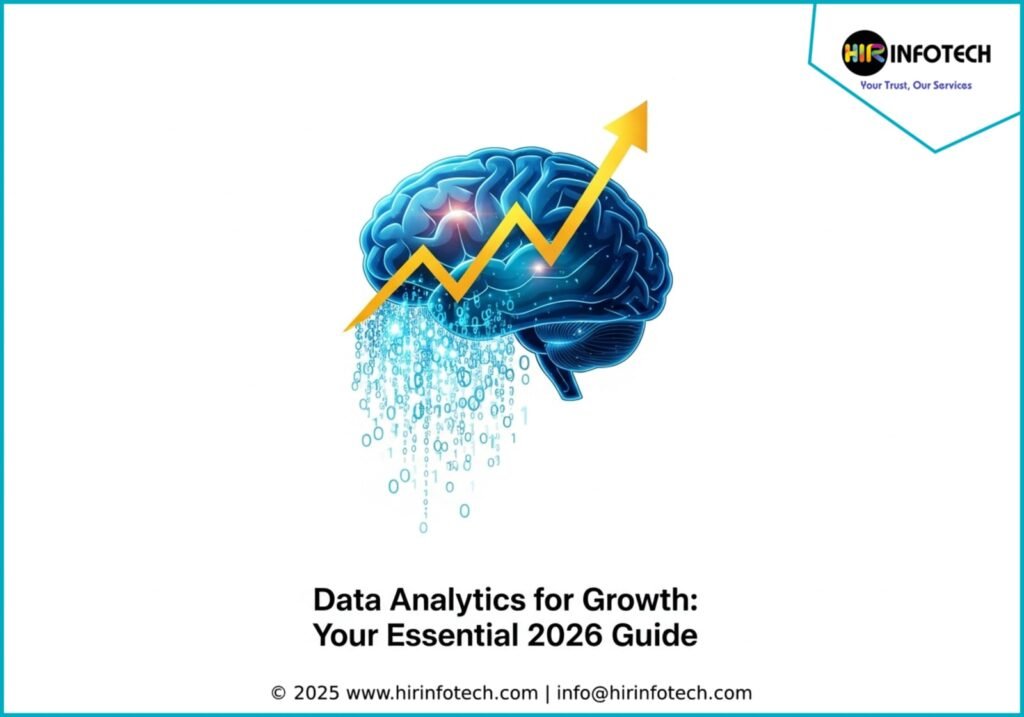
Unlock Your Business’s Full Potential: How to Drive Growth with Data Analytics in 2026
In today’s fast-paced digital world, data is no longer a luxury reserved for large corporations. It’s the engine of growth, innovation, and competitive advantage. For mid to large-sized companies managing vast amounts of information, harnessing the power of data analytics, including sophisticated techniques like web scraping and data extraction, is essential for survival and success. By 2026, organizations leveraging data-driven insights are not just staying ahead; they are redefining their industries. This comprehensive guide will walk you through how to use data analytics to propel your business forward, making complex concepts accessible for a non-technical audience and providing actionable strategies for your team.
Understanding the Modern Data Landscape
The volume of data generated globally is staggering and continues to grow exponentially. For businesses, this data comes from a multitude of sources: customer interactions, social media, website traffic, operational processes, and a vast, publicly available ocean of online information. The challenge lies not in the scarcity of data, but in the ability to collect, process, and analyze it effectively. This is where advanced data solutions, including automated web scraping and data extraction, become critical. These technologies allow businesses to gather structured and unstructured data from websites at a massive scale, transforming raw information into actionable intelligence.
Why Data Analytics is a Non-Negotiable for Growth in 2026
Gone are the days of making critical business decisions based on intuition alone. The modern business environment demands agility and precision. Data analytics provides the clarity needed to navigate market complexities and seize opportunities. In fact, companies that excel at data analytics are significantly more likely to acquire and retain customers and be more profitable than their competitors. By 2026, real-time data analytics is not just a trend but a standard for businesses aiming for leadership in their sector.
Putting Data Analytics into Action: A Three-Pronged Approach
To truly unlock the growth potential of your business, it’s helpful to think about data analytics in three key areas: understanding performance, achieving goals, and maintaining a competitive edge.
1. Gaining Crystal-Clear Insight into Your Business Performance
At its core, data analytics allows you to quantify and understand every facet of your organization. It transforms abstract challenges into concrete, measurable events. By analyzing sales data, website traffic, customer engagement metrics, and operational efficiency, you can identify what’s working and what isn’t with unparalleled accuracy.
Imagine a large e-commerce platform noticing a dip in sales for a particular product category. A surface-level analysis might suggest discontinuing the products. However, a deeper dive using data analytics could reveal a different story. Website analytics might show high traffic to these product pages, while social media data could indicate strong positive sentiment. The real issue, perhaps, lies in a convoluted checkout process or uncompetitive pricing, insights that are only visible through a holistic analysis of various data points.
By integrating data from different sources, you can piece together a complete picture of your business performance, enabling you to make informed decisions that drive real results. For more information on how to harness real-time data, consider exploring resources on real-time data analytics.
2. Strategically Evaluating and Achieving Your Business Goals
Setting ambitious goals is easy; achieving them is the hard part. Data analytics acts as your roadmap, guiding you toward your objectives and highlighting the most effective path to get there. Whether your goal is to increase market share, improve customer satisfaction, or enhance operational efficiency, data provides the feedback loop necessary to track progress and adjust your strategy in real time.
Consider a B2B company aiming to increase its lead generation by 30% in the next quarter. Their initial strategy might involve a broad email marketing campaign. However, by analyzing the data from the first few weeks, they may discover that leads from a specific industry segment have a much higher conversion rate. Armed with this insight, they can pivot their strategy to focus on this high-value segment, optimizing their marketing spend and significantly increasing their chances of hitting the target. This ability to dynamically adjust based on real-time data is a hallmark of a data-driven organization.
Actionable steps for goal achievement through data analytics include:
- Defining Clear, Measurable KPIs: Establish key performance indicators that directly align with your business objectives.
- Regular Monitoring and Reporting: Implement dashboards and automated reports to track your KPIs consistently.
- A/B Testing and Experimentation: Use data to test different approaches and identify the most effective tactics.
- Predictive Analytics: Leverage historical data to forecast future trends and proactively address potential challenges.
3. Sharpening Your Competitive Edge in a Crowded Marketplace
In today’s competitive landscape, understanding your own business is only half the battle. You also need to have a deep understanding of your competitors and the broader market trends. This is where external data, often gathered through sophisticated web scraping and data extraction techniques, becomes invaluable. By systematically collecting and analyzing data from competitor websites, social media, and industry publications, you can gain critical insights into their pricing strategies, product offerings, and marketing campaigns.
Imagine a leading manufacturing company looking to expand into a new market. Before making a significant investment, they can use web scraping to gather data on existing competitors in that region. This data can include product specifications, pricing, customer reviews, and distribution channels. This intelligence allows them to identify gaps in the market, tailor their product offerings to meet local demand, and develop a go-to-market strategy that gives them a significant advantage from day one.
Moreover, data analytics enables you to continuously redefine and elevate your business goals. As you achieve your initial targets, a constant stream of market data will reveal new opportunities for growth and innovation, ensuring that your business not only keeps pace with the competition but sets the standard for the industry.
For those interested in the technical aspects of data collection, a guide on what is web scraping can provide a deeper understanding of this powerful technique.
The Four Pillars of Business Analytics: A Simple Breakdown
To effectively leverage data, it’s helpful to understand the different types of analytics and how they work together to provide a comprehensive view of your business. Modern analytics is often broken down into four key categories:
- Descriptive Analytics: What Happened? This is the most straightforward type of analytics. It involves summarizing historical data to understand past performance. Think of sales reports, website traffic summaries, and customer engagement metrics.
- Diagnostic Analytics: Why Did It Happen? This type of analytics takes a deeper dive to understand the root causes behind the trends identified in descriptive analytics. It might involve correlating different data sets to find dependencies and patterns.
- Predictive Analytics: What Will Happen Next? Using historical data, statistical algorithms, and machine learning techniques, predictive analytics forecasts future outcomes. This can help businesses anticipate customer behavior, market trends, and potential risks.
- Prescriptive Analytics: What Should We Do About It? This is the most advanced form of analytics. It not only predicts what will happen but also recommends actions to take to achieve a desired outcome. For example, it can suggest the optimal pricing for a product to maximize revenue.
Building Your Data Analytics Capability
For mid to large-sized companies, building a robust data analytics function is a strategic imperative. This doesn’t necessarily mean hiring a large team of data scientists overnight. Instead, it’s about fostering a data-driven culture and investing in the right tools and expertise. Partnering with a specialized data solutions provider can be a highly effective approach. A good partner will not only provide the technology for web scraping and data extraction but also offer the expertise to help you make sense of the data and integrate it into your decision-making processes.
When choosing a data solutions partner, consider the following:
- Industry Expertise: Look for a provider with experience in your specific industry.
- Scalability and Flexibility: Ensure their solutions can grow with your business and adapt to your changing needs.
- Data Quality and Security: Data accuracy and robust security protocols are non-negotiable.
- Support and Collaboration: A true partner will work with you to understand your goals and help you achieve them.
The Future is Data-Driven: Are You Ready?
As we move further into 2026, the integration of artificial intelligence and machine learning into data analytics will continue to accelerate, offering even more powerful tools for business growth. Companies that embrace a data-driven culture and invest in advanced data solutions will be the leaders of tomorrow. By understanding your performance, strategically pursuing your goals, and maintaining a keen eye on the competitive landscape, you can unlock the full potential of your business and thrive in the digital age.
Explore more about building a data-driven culture through this insightful article on building a data-driven culture from Harvard Business Review.
#DataAnalytics #BusinessGrowth #DataDrivenDecisions #WebScraping #DataExtraction #BigData #BusinessIntelligence #FutureOfBusiness #SEO #DigitalTransformation
Frequently Asked Questions (FAQs)
1. How does data analytics contribute to business growth?
Data analytics drives business growth by providing insights that lead to better decision-making. It helps businesses understand customer behavior, optimize operations, identify new market opportunities, and gain a competitive advantage by analyzing trends and patterns within data.
2. What are the four main types of business analytics?
The four main types of business analytics are descriptive, diagnostic, predictive, and prescriptive. Descriptive analytics explains what has happened. Diagnostic analytics explores why it happened. Predictive analytics forecasts what is likely to happen in the future. Prescriptive analytics recommends the best course of action.
3. What is web scraping and how can it benefit my business?
Web scraping is the automated process of extracting large amounts of data from websites. It can benefit your business by enabling you to monitor competitor pricing, gather market intelligence, generate leads, and track industry trends in real-time, providing you with a significant competitive advantage.
4. How can a non-technical person start implementing data analytics?
A non-technical person can begin by focusing on the business questions they want to answer. Start with user-friendly business intelligence tools that offer intuitive dashboards and visualizations. Partnering with a data solutions provider can also bridge the technical gap, allowing you to focus on the strategic application of data insights.
5. What are the key trends in data analytics for 2026?
Key trends for 2026 include the increased adoption of AI and machine learning for more advanced predictive and prescriptive analytics, a greater emphasis on real-time data processing, the rise of data democratization where more employees have access to data tools, and a continued focus on data governance and security.
6. How do I ensure the quality of the data I am collecting?
Ensuring data quality involves implementing robust data governance practices, including data validation, cleaning, and metadata management. When working with a data solutions provider, inquire about their data quality assurance processes to ensure you are making decisions based on accurate and reliable information.
7. What is the return on investment (ROI) for data analytics?
While the exact ROI varies by industry and implementation, studies consistently show that businesses investing in data analytics see significant returns. These benefits include increased revenue, improved operational efficiency, higher customer satisfaction and retention, and a stronger competitive position in the market. Some reports indicate that business intelligence implementations can deliver a 127% ROI within three years.
Ready to Transform Your Business with Data?
Don’t let your valuable data go to waste. At Hir Infotech, we specialize in providing comprehensive data solutions, including advanced web scraping and data extraction services, tailored to the unique needs of mid to large-sized companies. Our team of experts is ready to help you unlock the insights hidden within your data and turn them into a powerful engine for growth.
Contact us today to schedule a consultation and take the first step toward a more data-driven future for your business.