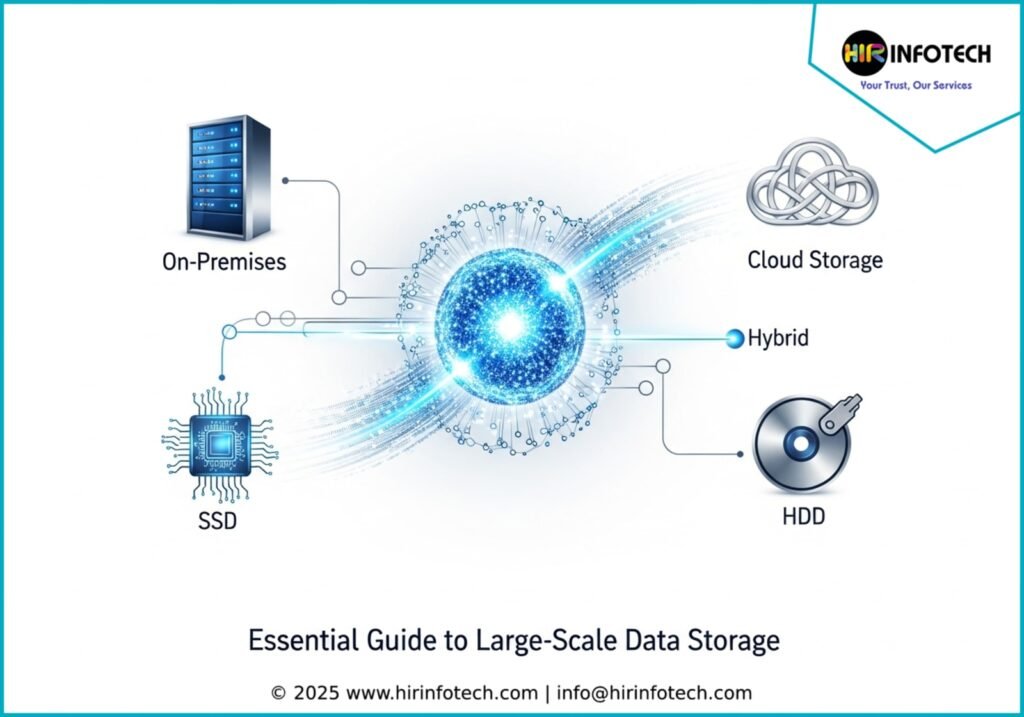
Navigating the Data Deluge: The Ultimate Guide to Large-Scale Data Storage Solutions in 2026
In today’s digital-first world, data is the lifeblood of every modern enterprise. For businesses of all sizes, harnessing the power of big data is no longer a luxury—it’s a necessity. From analyzing performance metrics and identifying operational bottlenecks to pioneering advancements in artificial intelligence and machine learning, the strategic use of data is what separates industry leaders from the rest. Companies deeply involved in data-intensive tasks like web scraping, data extraction, and large-scale analysis understand this better than anyone. The constant influx of massive datasets demands a robust, scalable, and secure storage infrastructure.
However, managing big data initiatives can be a double-edged sword. While the potential rewards are immense, the sheer volume of computational resources and sophisticated software services required can be incredibly demanding. To truly unlock the value hidden within vast collections of big data, organizations need powerful and reliable storage solutions. This guide will walk you through the top large-scale data storage options available in 2026, helping you make an informed decision that aligns with your business needs and technical requirements.
The Foundation of Modern Data Strategy: Choosing the Right Storage Solution
Selecting the appropriate data storage solution is a critical decision that can significantly impact your organization’s ability to innovate and grow. The right choice will not only ensure the security and accessibility of your data but also empower your teams to perform complex analyses and train advanced AI models efficiently. Let’s explore the leading contenders in the data storage landscape of 2026.
1. On-Premises Storage: The Fortress of Data Security
On-premises storage refers to the practice of housing your data on local hardware, such as servers, computers, and other devices located within your organization’s physical facilities. With this approach, your company retains full control and responsibility for every aspect of the storage infrastructure, from hardware maintenance to security protocols.
The Advantages of Keeping Your Data In-House
- Unmatched Security: Because your data never leaves your premises, the risk of external data breaches is significantly reduced. This makes on-premises storage an ideal choice for businesses that handle highly sensitive or classified information.
- Complete Control: You have total autonomy over your hardware, software, and security configurations, allowing you to tailor the environment to your specific needs.
- Regulatory Compliance: For industries with stringent data sovereignty and compliance requirements, on-premises solutions provide a straightforward way to ensure that data is stored in specific geographic locations.
The Challenges of On-Premises Infrastructure
While on-premises storage offers unparalleled security, it comes with its own set of challenges. The lack of flexibility is a significant drawback. As your business scales and data volumes grow, you’ll need to physically expand your storage capacity by purchasing and installing new hardware. This process can be both time-consuming and expensive, requiring the expertise of skilled IT professionals. For a rapidly growing business, the capital expenditure and operational overhead associated with on-site storage can be substantial.
2. Hard Disk Drives (HDDs): The Workhorse of Bulk Storage
For decades, hard disk drives (HDDs) have been a staple in the world of data storage. These devices use spinning magnetic platters to store data, a technology that has proven to be both reliable and cost-effective.
Why HDDs Still Matter in 2026
- Cost-Effectiveness: When it comes to the cost per gigabyte, HDDs remain one of the most affordable storage options, especially for large-scale data archiving.
- High Capacity: HDDs are available in massive capacities, making them a suitable choice for businesses that need to store vast amounts of non-critical or infrequently accessed data.
- Non-Volatile Storage: Unlike some other forms of storage, HDDs are non-volatile, meaning they retain data even when powered off. This ensures that your information is safe during power outages or other system disruptions.
The Limitations of Mechanical Storage
The primary drawback of HDDs lies in their mechanical nature. The moving parts make them more susceptible to physical damage compared to their solid-state counterparts. Furthermore, data access and processing speeds are significantly slower on HDDs, which can create bottlenecks in data-intensive applications. For tasks that require rapid data retrieval and analysis, such as real-time analytics or training machine learning models, HDDs may not be the optimal choice.
3. Solid-State Drives (SSDs): Speed and Performance Redefined
Solid-state drives (SSDs) represent a significant leap forward in storage technology. Instead of spinning platters, SSDs use NAND flash memory to store data, resulting in dramatically faster performance and greater durability.
The Compelling Case for SSDs
- Blazing-Fast Speeds: With no moving parts, SSDs can read and write data at incredible speeds, significantly reducing data processing times and boosting overall system productivity.
- Enhanced Durability: The absence of mechanical components makes SSDs more resistant to shocks and vibrations, leading to a longer lifespan and greater data reliability.
- Energy Efficiency: SSDs consume less power than HDDs, which can translate into significant cost savings in large data center environments.
Considering the Cost Factor
Historically, the higher cost of SSDs has been a barrier to widespread adoption for bulk data storage. However, as technology has advanced, the price per gigabyte for SSDs has steadily decreased. While they may still be more expensive than HDDs for raw capacity, the performance benefits they offer often justify the investment, especially for storing frequently accessed datasets and applications where speed is paramount.
4. Cloud-Based Storage: The Future of Scalability and Flexibility
In 2026, cloud-based storage has firmly established itself as the go-to solution for businesses with massive data storage needs. Cloud storage offers a powerful combination of scalability, cost-effectiveness, and ease of use that is hard to match.
Unlocking the Power of the Cloud
- Infinite Scalability: With cloud storage, you can effortlessly scale your storage capacity up or down as your needs change. This eliminates the need for large upfront investments in hardware and ensures you’re only paying for the storage you actually use.
- Accessibility and Collaboration: Data stored in the cloud can be securely accessed by authorized users from anywhere in the world, fostering seamless collaboration among geographically dispersed teams.
- Managed Infrastructure: When you partner with a cloud storage provider, you offload the complexities of managing and maintaining storage infrastructure. This includes everything from server maintenance and security to data availability and network transmission.
- Reduced Downtime: Cloud-based solutions are inherently more resilient to hardware failures, as data is typically replicated across multiple servers and data centers. This redundancy minimizes the risk of downtime and ensures business continuity.
Leading cloud service providers like Amazon Web Services (AWS), Google Cloud, and Microsoft Azure offer a wide range of storage services tailored to different business needs, from high-performance object storage to low-cost archival solutions.
The Rise of Hybrid Cloud: Getting the Best of Both Worlds
For many organizations, the optimal data storage strategy in 2026 is a hybrid approach that combines the security and control of on-premises storage with the scalability and flexibility of the cloud. A hybrid cloud solution allows you to keep your most sensitive data in-house while leveraging the cloud for less critical workloads, disaster recovery, and scalable analytics. This approach provides a balanced solution that can be tailored to your specific security, performance, and cost requirements.
Data Storage for Web Scraping and Data Extraction
For businesses that rely on web scraping and data extraction, choosing the right storage solution is paramount. The sheer volume and velocity of scraped data require a storage infrastructure that is both scalable and efficient.
- Cloud object storage services, such as Amazon S3, Google Cloud Storage, and Azure Blob Storage, are excellent choices for storing large volumes of unstructured and semi-structured scraped data. These services are highly scalable, durable, and cost-effective.
- NoSQL databases like MongoDB are well-suited for storing flexible and evolving data schemas, which are common in web scraping projects.
- Data warehouses such as Amazon Redshift, Google BigQuery, and Snowflake are ideal for storing and analyzing large, structured datasets extracted from the web.
By leveraging these solutions, businesses can build a robust and scalable data pipeline that can handle the demands of modern web scraping and data extraction workflows.
Actionable Takeaways for Your Data Storage Strategy
- Assess Your Needs: Carefully evaluate your specific requirements in terms of security, performance, scalability, and cost before choosing a storage solution.
- Embrace the Cloud: For most businesses, a cloud-first or hybrid cloud strategy will provide the best balance of features and flexibility.
- Don’t Overlook Security: Regardless of the solution you choose, prioritize data security by implementing robust encryption, access controls, and regular security audits.
- Plan for Growth: Select a storage solution that can scale with your business as your data volumes continue to grow.
- Seek Expert Guidance: Don’t hesitate to consult with data storage experts to help you design and implement the optimal solution for your business.
Frequently Asked Questions (FAQs)
1. What is the most effective way to store huge amounts of data in 2026?
Cloud storage is widely regarded as the most effective solution for storing and processing large datasets. Cloud platforms offer a scalable, secure, and cost-effective way to manage big data, with powerful servers and a global network of data centers designed to handle massive data collections.
2. What are big data storage solutions?
Big data storage refers to a compute-and-storage architecture designed to ingest, manage, and analyze extremely large and complex datasets in real-time. These solutions enable businesses to derive valuable insights from their data to inform strategic decision-making.
3. What type of storage do large companies typically use?
Large enterprises often employ a hybrid approach to data storage, utilizing a combination of on-premises infrastructure for sensitive data and cloud-based solutions for scalability and flexibility. This allows them to leverage the best of both worlds while meeting their specific security and performance requirements.
4. How is AI impacting data storage in 2026?
The rise of artificial intelligence is driving an exponential increase in data generation and storage needs. AI models require massive datasets for training, and in turn, generate new data. This is leading to a greater demand for high-performance, scalable, and AI-optimized storage architectures.
5. What are the key trends in data storage for 2026?
Key trends for 2026 include the continued dominance of cloud and hybrid cloud solutions, the growing adoption of SSDs for performance-critical workloads, an increased focus on energy-efficient storage, and the integration of AI and machine learning into data management and storage optimization.
6. What is the difference between hot and cold data storage?
Hot data refers to information that is frequently accessed and requires high-performance storage solutions like SSDs or in-memory databases. Cold data, on the other hand, is infrequently accessed and can be stored on more cost-effective, lower-performance tiers like HDDs or archival cloud storage.
7. How important is data governance in a large-scale storage solution?
Data governance is critically important. It involves establishing policies and procedures for how data is collected, stored, used, and secured. A strong data governance framework ensures data quality, integrity, and compliance with regulatory requirements, which is essential when managing large and sensitive datasets.
Unlock Your Data’s Full Potential with Hir Infotech
Navigating the complex world of large-scale data storage can be challenging. At Hir Infotech, we specialize in providing comprehensive data solutions, including web scraping, data extraction, and data management services. Our team of experts can help you design and implement a storage strategy that is perfectly aligned with your business objectives. Contact us today to learn how we can help you turn your data into a powerful strategic asset.
#DataStorage #BigData #CloudStorage #OnPremises #SSD #HDD #HybridCloud #DataManagement #WebScraping #DataExtraction #AI #MachineLearning #BusinessIntelligence #HirInfotech