Gain a 2026 Competitive Edge: How Data Scraping Unlocks Business Growth
In today’s hyper-competitive market, data is the new currency. For mid-to-large companies, the ability to harness web data isn’t just an advantage—it’s a necessity. If you can effectively gather and analyze insights from the vast ocean of online information, you can propel your company’s growth at an unprecedented rate. Staying ahead of market trends and leveraging technological breakthroughs is critical, and web scraping is the key to unlocking this potential.
This comprehensive guide will explore how your business can use data scraping to gain a significant competitive advantage in 2026. We’ll demystify the process, highlight its benefits, and provide actionable strategies to turn raw data into strategic assets. Whether you’re in retail, travel, or any other data-intensive industry, understanding these concepts is crucial for success.
What is Data Scraping and Why is it a Game-Changer?
Data scraping, also known as web scraping, is the automated process of extracting large amounts of data from websites. Instead of manually copying and pasting information—a tedious and error-prone task—specialized software “bots” or “scrapers” do the work for you. This data is then saved into a structured format, like a spreadsheet or database, making it easy to analyze and act upon.
Think of it as having a team of tireless researchers working 24/7 to gather intelligence from the web. This capability allows businesses to make faster, more informed decisions based on real-time information. In a world where market conditions can change in an instant, this is a powerful tool to have in your arsenal.
The Evolution of Data Scraping: The AI Revolution
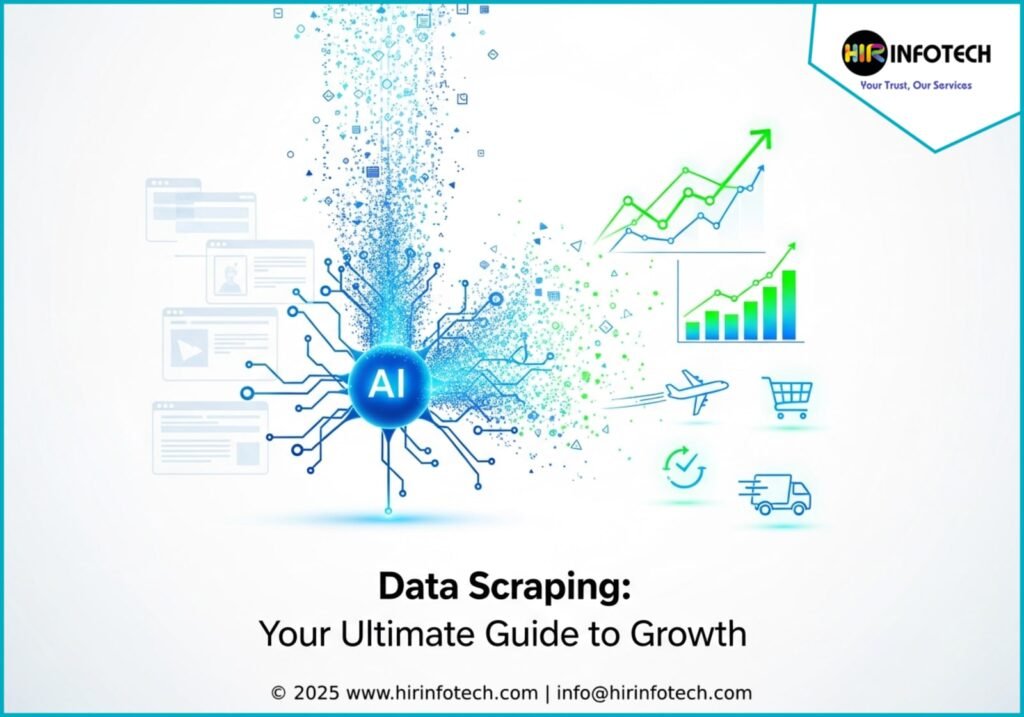
What was once a matter of simply transferring information into an Excel sheet has evolved into a sophisticated business strategy. The single most significant trend shaping the future of web scraping is the integration of Artificial Intelligence (AI) and Machine Learning (ML). By 2026, AI-powered scraping will be the standard, making data extraction smarter, faster, and more efficient. Traditional scrapers that rely on fixed rules are becoming obsolete, as even minor website changes can break them. AI-powered scrapers, on the other hand, can learn and adapt to these changes, ensuring a continuous flow of accurate data.
Three Major Categories of Scraped Data
To understand the full potential of data scraping, it’s helpful to break down the types of information you can collect:
- Website Content: This is the most common type of data scraping and involves extracting the text, images, and other content from web pages. Examples include product descriptions, prices, customer reviews, and news articles.
- Website Usage: This type of data is gathered from server logs and browser tracking systems. It provides insights into how users interact with a website, such as which pages they visit and how long they stay. A scraper can repeatedly visit a competitor’s website to track and record any changes.
- Web Structure: This involves extracting data about the relationships between pages, people, and other structured information on a website. This can be useful for understanding a site’s architecture or mapping out social networks.
Why is Data Scraping So Popular with Businesses Today?
The demand for data is growing, and with it, the need to collect it ethically and efficiently. Businesses across various sectors, including e-commerce, finance, and travel, are increasingly relying on web scraping to gather competitive intelligence and monitor market trends. Here’s why data scraping has become an indispensable tool for modern enterprises:
- Cost-Effectiveness: Automating data collection is significantly cheaper than manual methods. When scraping large volumes of data, the cost per data point becomes almost negligible, saving both time and money.
- High Efficiency and Accuracy: Automated scrapers can work around the clock without the risk of human error. They can systematically navigate every page of a website, ensuring that no valuable information is missed.
- Low Maintenance: Once a scraper is set up, it requires minimal maintenance. This allows your team to focus on analyzing the data rather than collecting it.
- Speed and Convenience: Data scraping provides a massive amount of information quickly. This allows businesses to organize and categorize the data, making it more manageable and actionable.
How to Use Data Scraping to Outsmart Your Competition
The true power of data scraping lies in how you use the information you collect. When properly formatted and analyzed, it can provide a huge competitive advantage.
Mastering Pricing Strategies with Competitor Monitoring
In today’s dynamic market, especially in e-commerce and retail, pricing is a key competitive differentiator. Manually tracking your competitors’ prices is not only slow but also prone to errors. Automated data scraping tools can monitor competitor websites in real-time, providing you with up-to-the-minute pricing information. This allows you to:
- Implement Dynamic Pricing: Adjust your prices automatically based on market demand and competitor pricing to maximize revenue and market share.
- Identify Market Trends: By analyzing historical pricing data, you can spot trends and anticipate your competitors’ next move.
- Optimize Promotions: Track your competitors’ promotional activities to ensure your own offers are competitive and appealing to customers.
A prime example of this is Amazon. The e-commerce giant has famously used big data analysis and product assortment optimization to dominate the retail landscape. By understanding market trends and customer buying habits, they can strategically decide which products to feature and when.
Revolutionizing the Travel Industry
The travel industry is another sector where real-time data is crucial. Prices for flights, hotels, and vacation packages can change by the minute. To survive in this fast-paced environment, travel websites must stay ahead of the curve. Web scraping allows them to:
- Track Competitor Pricing: Constantly monitor rivals’ prices for airfare, accommodations, and package deals.
- Identify New Revenue Streams: By analyzing industry pricing trends and consumer expectations, travel companies can discover new opportunities for growth.
- Optimize Offerings: Tailor travel packages to meet the specific needs and preferences of their customers based on scraped data.
Enhancing Supply Chain and Logistics
Data scraping can be a powerful tool for optimizing supply chain operations. By collecting and analyzing data on product availability, prices, and demand patterns, companies can gain insights to improve their strategies. This enables them to:
- Improve Demand Planning: More accurately forecast demand to avoid stockouts or overstocking.
- Strengthen Supplier Relationships: Monitor supplier performance and reliability to make more informed partnership decisions.
- Optimize Logistics: Track shipments in real-time and identify the most cost-effective shipping options.
Zara, the fast-fashion retailer, is a testament to the power of data scraping in supply chain management. They employ over 300 designers who use web scraping to analyze industry trends and quickly bring affordable versions to the market. This efficient flow of information allows them to restock their stores with new designs every few weeks, keeping them ahead of the competition.
Building Topical Authority and E-E-A-T for SEO Success
In the world of search engine optimization (SEO), topical authority is a measure of a website’s perceived expertise in a particular niche. By consistently creating high-quality, in-depth content on a specific subject, you can establish your website as a trusted source in the eyes of search engines like Google. This can lead to higher rankings and more organic traffic.
Demonstrating E-E-A-T (Experience, Expertise, Authoritativeness, and Trust) is also crucial. You can achieve this by providing credible examples, data-backed insights, and citing authoritative sources. Web scraping can help you gather the data needed to create content that showcases your expertise and builds trust with your audience.
By leveraging web scraping to gather industry data and trends, you can create content that is not only informative but also demonstrates a deep understanding of your field. This will help you build topical authority and improve your search engine rankings, driving more potential customers to your website.
Frequently Asked Questions (FAQs)
1. What is the primary purpose of data scraping for a business?
The main goal of data scraping is to automatically collect data from websites to gain a competitive advantage. Businesses use this data for various purposes, including competitor price monitoring, lead generation, market research, and sentiment analysis.
2. Is web scraping legal and ethical?
Web scraping is legal as long as it is done ethically and responsibly. It’s important to respect a website’s terms of service and avoid scraping personal data or overwhelming a website’s servers with too many requests. Always prioritize ethical data collection practices.
3. How is AI changing the landscape of web scraping in 2026?
AI and machine learning are making web scraping more intelligent and adaptable. AI-powered scrapers can automatically adjust to website layout changes, handle complex data formats, and even bypass some anti-scraping measures, leading to more accurate and reliable data extraction.
4. What are some common challenges of large-scale web scraping?
Large-scale web scraping can present several challenges, including IP blocking, CAPTCHAs, and changes in website structure. Using high-quality residential proxies, CAPTCHA-solving services, and AI-powered scrapers that can adapt to website changes can help overcome these obstacles.
5. How can my business get started with data scraping?
While some companies may consider developing their own in-house scraping solutions, partnering with a professional data scraping service is often more efficient. A reputable provider can offer the expertise and infrastructure needed to collect data accurately and at scale.
6. What industries benefit the most from web scraping?
A wide range of industries can benefit from web scraping, including e-commerce, finance, travel, real estate, and marketing. Any business that relies on timely and accurate data to make informed decisions can leverage web scraping to gain a competitive edge.
7. How does data scraping help with lead generation?
Many businesses use web scraping to gather contact information for potential clients or customers. This data can be collected from public directories, social media platforms, and other online sources to build a targeted list for marketing and sales outreach.
Unlock Your Business’s Full Potential with Hir Infotech
In the data-driven landscape of 2026, real-time insights are the key to unlocking your business’s full potential. By leveraging the power of data scraping, you can gain a significant competitive advantage, make smarter decisions, and deliver exceptional customer experiences. Don’t let your competitors get ahead. Embrace the future of data extraction and turn information into your most valuable asset.
Ready to harness the power of your data? Contact Hir Infotech today for a free consultation and discover how our expert data solutions can help you achieve your business goals.
#DataScraping #WebScraping #CompetitiveAdvantage #BigData #DataAnalytics #BusinessIntelligence #MarketResearch #SEO #DigitalMarketing #AI #MachineLearning