Investment Trends in the Era of Big Data: A 2026 Look Ahead
The financial world is in the midst of a data revolution. In 2026, the convergence of big data, artificial intelligence (AI), and advanced analytics is not just a trend; it is the primary driver of investment strategies and market dynamics. For mid to large-sized companies, harnessing the power of data is no longer optional—it’s essential for survival and growth. This blog post will explore the latest investment trends shaped by big data, offering a clear, non-technical guide for businesses navigating this new era. We will delve into how data solutions, such as web scraping and data extraction, are providing a competitive edge and reshaping the future of finance.
The State of Big Data in Investments Today
Big data’s influence on the investment landscape has grown exponentially. Financial institutions, from global investment banks to nimble hedge funds, are leveraging vast datasets to inform their decisions. The sheer volume of data generated daily from market feeds, news articles, social media, and economic reports is staggering. Financial analytics has become a critical tool, enabling firms to process and analyze this data to gain valuable insights and make more informed decisions. In fact, the market for big data and business analytics is projected to continue its significant growth, underscoring its importance in the financial sector.
This reliance on data is reshaping traditional investment approaches. Gone are the days of relying solely on fundamental analysis and gut feelings. Today’s most successful investors are data-driven, using sophisticated algorithms and machine learning models to identify patterns, predict market movements, and manage risk more effectively. This shift is creating a more efficient and dynamic financial ecosystem, where data is the most valuable asset.
The Rise of AI and Machine Learning in Finance
Artificial intelligence and machine learning are at the forefront of this data-driven transformation. AI-powered platforms can analyze complex datasets with incredible speed and accuracy, automating tasks that would take humans months to complete. For instance, AI algorithms are now widely used for:
- Algorithmic Trading: AI models can execute trades at high speeds based on real-time market data, identifying profitable opportunities that would be impossible for human traders to spot.
- Risk Management: By analyzing historical data and market trends, machine learning algorithms can predict potential risks, allowing firms to take proactive measures to protect their investments.
- Fraud Detection: AI systems can identify unusual patterns in transaction data, flagging potential fraudulent activity in real-time and minimizing financial losses.
Major financial institutions like JP Morgan, BlackRock, and SoFi have heavily invested in AI, developing proprietary systems to gain a competitive advantage. This embrace of AI is not just about automation; it’s about augmenting human intelligence, providing investment professionals with the tools they need to make smarter, data-backed decisions.
How Big Data Creates a Systematic Investment Advantage
For large companies, big data offers a systematic approach to investing that can significantly enhance returns and mitigate risks. By leveraging comprehensive data solutions, businesses can move beyond reactive decision-making and adopt a more proactive and strategic investment posture. This systematic advantage is built on several key pillars:
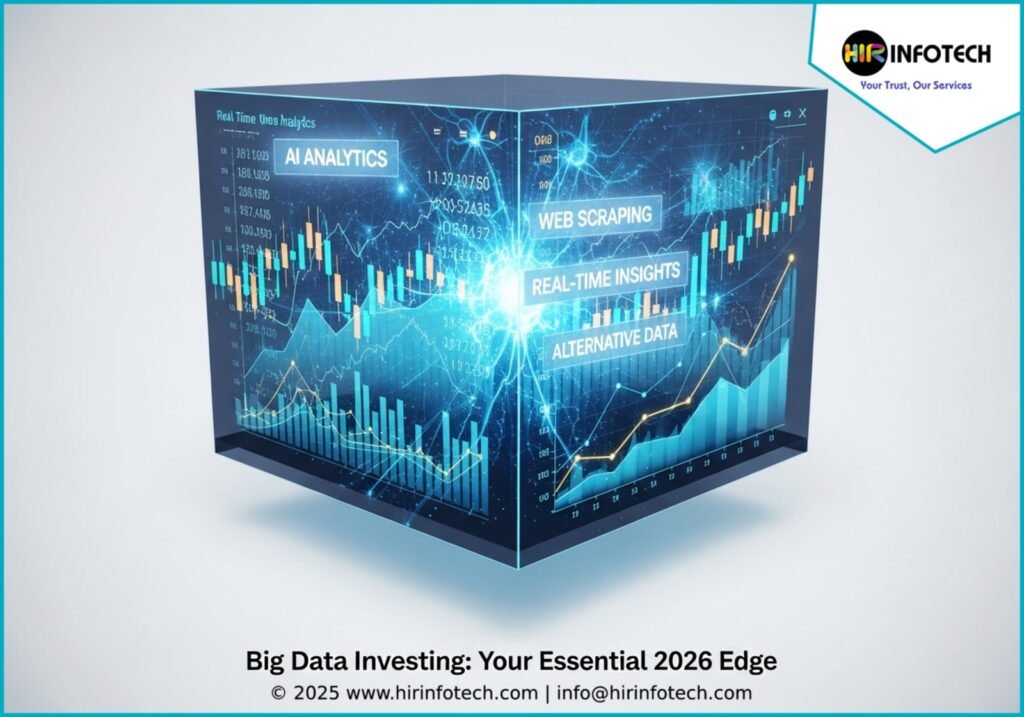
- Real-Time Market Insights: The financial markets are in a constant state of flux. Web scraping and data extraction services provide a continuous stream of real-time data from a multitude of sources, including news outlets, financial websites, and social media. This allows companies to stay ahead of market trends and react swiftly to new information.
- Enhanced Accuracy and Granularity: By aggregating data from diverse sources, businesses can achieve a more accurate and detailed view of the market. This granular level of insight enables a more nuanced understanding of investment opportunities and risks.
- Cost-Effective Data Collection: Manually collecting and processing large volumes of financial data is a time-consuming and expensive endeavor. Automated data extraction solutions offer a more cost-effective alternative, freeing up valuable resources that can be allocated to analysis and strategy development.
- Competitive Intelligence: Understanding the strategies and performance of competitors is crucial in the investment world. Web scraping allows companies to monitor their rivals’ activities, from pricing changes to new product launches, providing a critical competitive edge.
Actionable Insights for the Modern Investor
The true power of big data lies in its ability to generate actionable insights. For the average investor or a large corporation, the challenge is often not a lack of data, but the ability to extract meaningful information from it. This is where automated data solutions and analytics platforms become invaluable. For example, consider the impact of consumer behavior on stock prices. By analyzing location data that shows a resurgence in foot traffic to shopping malls, an investor can make an informed decision to invest in retail stocks. Automated systems can even be set up to execute trades based on predefined data triggers, allowing for a more disciplined and long-term investment strategy.
This data-driven approach is not limited to public markets. Venture capital and private equity firms are also increasingly using big data to identify promising startups and evaluate potential investments. By analyzing everything from a company’s web traffic to its social media sentiment, investors can gain a more holistic understanding of a company’s growth potential.
The Future of Data Management in the Financial Sector
As we look towards 2026 and beyond, the role of data management in finance will only become more critical. The ability to process data streams in near-real-time and integrate them with machine learning models is becoming a standard expectation. This evolution is driven by several key trends:
- The Growth of Unstructured Data: A significant portion of the world’s data is unstructured, including text, images, and videos. Advanced AI and natural language processing (NLP) techniques are enabling financial firms to unlock the value of this unstructured data, gaining insights from sources like news articles, analyst reports, and social media conversations.
- The Rise of Alternative Data: Investors are increasingly turning to alternative data sources to gain an edge. This includes everything from satellite imagery and credit card transaction data to employee satisfaction ratings. The ability to effectively collect, clean, and analyze this alternative data is a key differentiator for successful investment firms.
- The Importance of Data Governance: With the increasing volume and sensitivity of financial data, robust data governance frameworks are essential. This includes ensuring data quality, security, and compliance with regulations such as GDPR.
To learn more about the evolving landscape of financial technology, you can explore resources from the CFA Institute and thought leadership from firms like BlackRock.
For companies looking to thrive in this data-centric environment, partnering with a data solutions provider is often the most effective path forward. Companies like Hir Infotech offer a comprehensive suite of services, from web scraping and data extraction to advanced data analytics, empowering businesses to turn data into a strategic asset.
Frequently Asked Questions (FAQs)
1. What are the most significant data analytics trends in finance for 2026?
The key trends include the increasing use of AI and machine learning for predictive analytics, the integration of alternative data sources, the rise of real-time data processing, and a greater emphasis on data governance and security.
2. How is big data transforming investment banking?
Big data is enabling investment banks to automate and enhance various functions, including deal origination, due diligence, risk assessment, and fraud detection. By leveraging data analytics, banks can identify potential clients, evaluate investment opportunities more accurately, and provide more personalized advisory services.
3. What is web scraping and how is it used in finance?
Web scraping is the automated process of extracting data from websites. In finance, it is used to gather a wide range of information in real-time, such as stock prices, financial news, company filings, and market sentiment from social media. This data is then used for analysis, modeling, and to inform investment decisions.
4. How can my company get started with a data-driven investment strategy?
The first step is to identify your key business objectives and the data you need to achieve them. Partnering with a data solutions expert like Hir Infotech can help you develop a tailored strategy for data collection, processing, and analysis. This often involves a combination of web scraping, data extraction, and the implementation of advanced analytics tools.
5. What are the risks associated with using big data in investments?
The primary risks include data quality issues, data security breaches, and regulatory compliance challenges. It is crucial to have robust data governance policies in place to ensure the accuracy, privacy, and ethical use of data. Working with a reputable data provider can help mitigate these risks.
6. How can data extraction improve my company’s operational efficiency?
Data extraction automates the process of gathering information from various sources, significantly reducing the time and resources required for manual data collection. This allows your team to focus on higher-value activities such as analysis and strategic planning, leading to improved efficiency and better-informed business decisions.
7. What is “alternative data” and why is it important for investors?
Alternative data refers to non-traditional data sources that can provide investment insights. Examples include satellite imagery, credit card transactions, web traffic, and social media sentiment. This data can offer unique perspectives on a company’s performance and market trends that are not captured in traditional financial statements, giving investors a competitive edge.
Unlock Your Data’s Potential with Hir Infotech
In the data-driven era of 2026, the companies that succeed will be those that can effectively harness the power of information. Whether you are looking to enhance your investment strategies, gain a deeper understanding of market trends, or improve your operational efficiency, the right data solutions are critical. At Hir Infotech, we specialize in providing comprehensive web scraping, data extraction, and data analytics services tailored to the unique needs of mid to large-sized companies. Our team of experts can help you navigate the complexities of the data landscape and turn raw data into actionable insights that drive growth.
Contact us today to learn how Hir Infotech can help you unlock your data’s full potential and build a more intelligent, data-driven business.
#BigData #InvestmentTrends #DataAnalytics #AIinFinance #WebScraping #DataExtraction #FinancialTechnology #FinTech #DataSolutions #HirInfotech