Harnessing Analytics for Triumphant Content Marketing in 2026
In the dynamic realm of digital marketing, gauging the success of your campaigns is paramount. Measuring both qualitative and quantitative outcomes provides a comprehensive understanding of your content’s performance. Imagine pouring your resources into creating an exceptional blog post—conducting thorough research, identifying potent keywords, and writing compelling copy—only to have it languish in obscurity. Without a clear method to evaluate its impact, you’re navigating in the dark, unable to discern whether your efforts are yielding a positive return on investment (ROI).
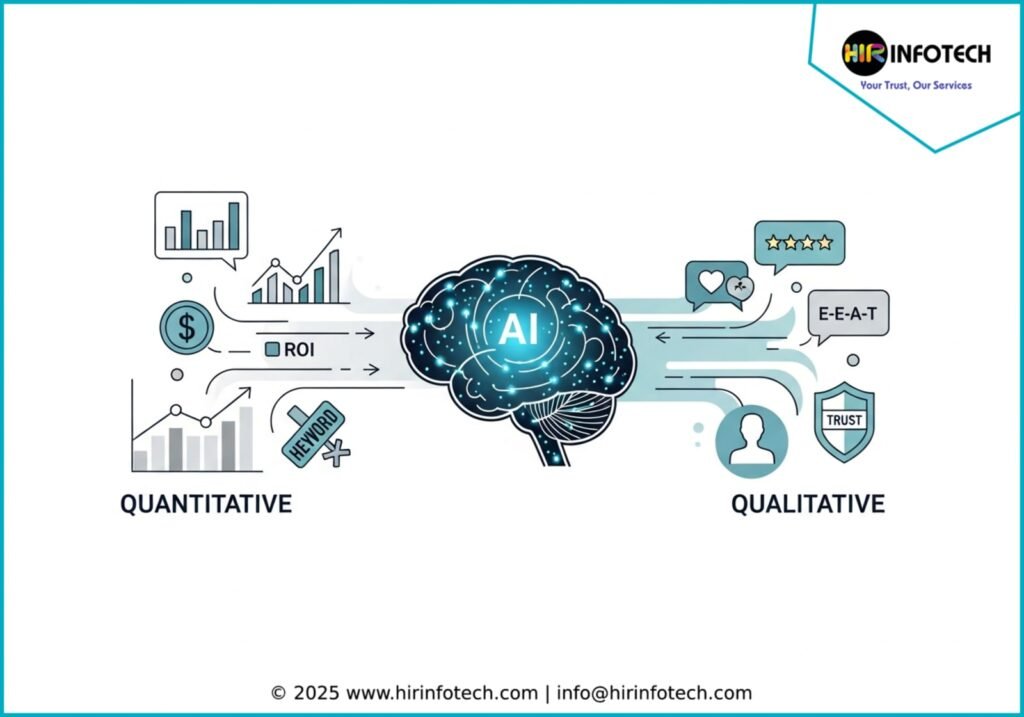
When direct sales aren’t the immediate goal, how do you measure success? The answer lies in a balanced approach to analytics, incorporating both the subjective insights of qualitative data and the concrete metrics of quantitative analysis. Positive comments and increased subscriber engagement are clear indicators of a successful post. This blend of feedback is crucial for refining your strategy and ensuring your content resonates with your target audience. Let’s delve into why a dual-pronged analytical approach is essential for your marketing endeavors.
The Art of Qualitative Analysis: Understanding the “Why”
Qualitative analysis is inherently subjective, focusing on the nuances of human perception and feeling. When your audience leaves glowing comments or expresses how your content has helped them, you’re gathering valuable qualitative data. These insights, while not easily quantifiable, provide a deep understanding of your content’s impact and the emotional connection you’re building with your audience. This feedback is instrumental in shaping a brand voice that truly speaks to your customers.
For mid to large-sized companies engaged in frequent web scraping and data extraction, understanding customer sentiment is a goldmine. It allows you to tailor your data solutions to meet their specific, and often unstated, needs. This subjective feedback loop is a powerful tool for innovation and customer retention.
The Science of Quantitative Analysis: Measuring for Results
Conversely, quantitative analysis is all about the numbers. It’s an objective measure of your content’s performance against predefined benchmarks. There’s no room for ambiguity; you either hit your targets or you don’t. This black-and-white clarity is essential for tracking progress and making data-driven decisions. By focusing on key performance indicators (KPIs), you can systematically improve your content strategy.
Let’s explore how these analytical methods apply to real-world digital marketing scenarios, specifically content and email marketing, and how they are evolving with the data solutions industry in 2026.
Analyzing a Content Marketing Campaign in the Age of AI
Short-term campaigns, like a product launch promoted through social media ads, are relatively straightforward to assess. Success is often visible within days. However, content marketing is a long game, with strategies spanning months or even years, making it more complex to measure. As we head further into 2026, the integration of Artificial Intelligence (AI) and predictive analytics is revolutionizing how we measure content effectiveness. AI can analyze vast datasets to forecast trends and audience behavior, allowing for more proactive and personalized content strategies.
Qualitative Analysis in Action:
Consider a company blog focused on data solutions. As your content gains traction, you’ll see an increase in comments and direct messages. Are the questions becoming more sophisticated? Are readers sharing their own success stories using your insights? This qualitative feedback is a direct line to your audience’s evolving needs and a testament to your growing authority in the field.
Quantitative Analysis in Action:
On the quantitative side, you’ll be tracking a variety of metrics. A rising number of unique visitors and a growing subscriber list are fundamental indicators of interest. But in 2026, we’re diving deeper. Tools like Google Analytics, Semrush, and Ahrefs provide granular data on user behavior. Key metrics to watch include:
- Organic Traffic: The number of visitors arriving from search engines.
- Keyword Rankings: Your position in search results for target keywords.
- Backlinks: The number of other websites linking to your content.
- Time on Page and Bounce Rate: How long visitors stay and whether they explore other pages.
- Conversion Rate: The percentage of visitors who take a desired action, like downloading a white paper.
Dissecting an Email Marketing Campaign
Email marketing campaigns can be both short-term, like a week-long mini-course, or long-term relationship-building efforts. The analytics you track will depend on your goals.
Qualitative Analysis in Action:
When you receive positive replies to your emails and feel a strong connection with your subscribers, you’re on the right track. Conversely, a lack of engagement or survey responses is a clear sign that your messaging needs adjustment.
Quantitative Analysis in Action:
Email marketing offers a wealth of quantifiable data. Key metrics include:
- Open Rate: The percentage of recipients who open your email.
- Click-Through Rate (CTR): The percentage of openers who click on a link.
- Conversion Rate: The percentage of clickers who complete a desired action.
- List Growth Rate: The rate at which your subscriber list is expanding.
- Unsubscribe Rate: The percentage of users who opt out.
The Synergy of a Balanced Analytical Approach
Many marketers gravitate towards either qualitative or quantitative analysis, but the real power lies in their combination. Quantitative data tells you *what* is happening, while qualitative data reveals *why*. A truly effective marketing strategy leverages both to get a complete picture. This analytical literacy is no longer optional; it’s a core competency for all content marketing activities.
Optimizing for the Future: SEO and E-E-A-T in 2026
To ensure your insightful content reaches its intended audience, adhering to the latest SEO best practices is crucial. In 2026, Google’s emphasis on E-E-A-T (Experience, Expertise, Authoritativeness, and Trustworthiness) is more significant than ever. This means creating content that is not only well-researched and keyword-optimized but also demonstrates real-world experience and credibility.
Here’s how to align your content with these principles:
- Demonstrate Experience: Share case studies, personal anecdotes, and real-world examples. If you’re a data solutions provider, showcase successful projects and client testimonials.
- Showcase Expertise: Feature author bios with credentials, certifications, and links to their professional profiles. Collaborate with industry experts to co-author content.
- Build Authority: Earn backlinks from reputable websites in your industry. Speak at conferences and participate in industry forums.
- Establish Trust: Be transparent about your data sources and methodologies. Have a clear and accessible privacy policy and contact information.
By focusing on these elements, you’re not just optimizing for search engines; you’re building a brand that your audience can rely on. For more in-depth SEO guidance, the Content Marketing Institute is an excellent resource.
Actionable Insights for Your Business
For mid to large companies specializing in data-related services like web scraping and data extraction, the implications are clear. Your content needs to do more than just sell; it must educate, inform, and build trust. Here’s how you can make your content more actionable and effective:
- Create Data-Driven Content: Leverage your expertise to produce unique, data-backed reports and analyses. This type of content is highly shareable and establishes you as a thought leader.
- Develop In-Depth Case Studies: Detail the challenges your clients faced, the solutions you provided, and the measurable results you achieved. This provides tangible proof of your value.
- Host Educational Webinars: Share your knowledge on topics like the ethics of web scraping, the latest data extraction techniques, or how to leverage data for business growth.
- Offer Free Tools and Resources: A simple data validation tool or a guide to choosing the right web scraping service can be incredibly valuable to your target audience.
By consistently providing high-quality, actionable content, you attract qualified leads and build a loyal following. Your content becomes a powerful asset in your lead generation and brand awareness efforts.
Your Partner in Data Solutions
Navigating the complexities of data extraction and analysis requires a knowledgeable and experienced partner. At Hir Infotech, we specialize in providing bespoke data solutions, including web scraping and data extraction services, tailored to the unique needs of your business. Our commitment to ethical practices and cutting-edge technology ensures you receive accurate, reliable data to fuel your marketing and business intelligence efforts.
Ready to unlock the full potential of your content marketing with powerful data insights? Contact Hir Infotech today to learn how our expertise can drive your success.
#ContentMarketing #DataAnalytics #SEO2026 #DigitalMarketing #QualitativeAnalysis #QuantitativeAnalysis #MarketingROI #DataSolutions #WebScraping #DataExtraction
Frequently Asked Questions (FAQs)
1. How do analytics enhance marketing effectiveness?
Marketing analytics allow you to track campaign performance, demonstrate ROI, and make data-driven decisions. By analyzing past and present data, you can predict future trends, optimize your strategies, and allocate resources more effectively.
2. What are the most important KPIs for content marketing?
Key Performance Indicators (KPIs) for content marketing should align with your business goals. Some of the most crucial KPIs include organic traffic, conversion rates, lead generation, customer acquisition cost (CAC), and customer lifetime value (CLV). Tracking these metrics provides a clear picture of your content’s financial impact.
3. What are the four main types of marketing analytics?
The four primary types of marketing analytics are descriptive (what happened), diagnostic (why it happened), predictive (what is likely to happen), and prescriptive (what you should do about it). A comprehensive analytics strategy incorporates all four to provide a holistic view of your marketing performance.
4. How is AI changing content marketing analytics in 2026?
AI is transforming content marketing by enabling predictive analytics, hyper-personalization, and automated content generation. AI-powered tools can analyze massive datasets to identify emerging trends, predict audience behavior, and recommend content strategies for optimal engagement and ROI.
5. Why is E-E-A-T so important for SEO in 2026?
E-E-A-T (Experience, Expertise, Authoritativeness, and Trustworthiness) is a set of guidelines Google uses to assess content quality. In an internet saturated with information, Google prioritizes content that is reliable and created by credible sources. Demonstrating E-E-A-T is crucial for ranking well in search results and building trust with your audience. For a deeper dive into E-E-A-T and other SEO topics, check out the informative articles on Neil Patel’s blog.
6. How can I measure the ROI of my content marketing efforts?
To measure content marketing ROI, you need to calculate both the cost of your investment and the revenue generated. The formula is (Return – Investment) / Investment x 100. Attributing revenue can be done by tracking conversions from your content, such as lead form submissions or direct purchases.
7. What are the benefits of outsourcing web scraping and data extraction?
Outsourcing web scraping and data extraction to a specialized company like Hir Infotech allows you to access high-quality, structured data without the need for in-house expertise or infrastructure. This frees up your team to focus on core business activities while ensuring you have the data you need for informed decision-making.