Is Big Data the Key to Unlocking Better Business Relationships in 2026?
In today’s fast-paced business world, companies are constantly searching for innovative ways to solve complex problems. Big data has emerged as a powerful solution, and one of its most significant benefits lies in enhancing relationship development. While many discussions focus on operational efficiencies, the true power of big data is its ability to forge stronger, more meaningful connections with clients. By leveraging data, businesses can move beyond simple transactions and build lasting partnerships.
Advancements in data technology have already streamlined supply-chain management and introduced AI-powered chatbots for faster customer support. However, the most transformative advantages are often less discussed. For high-tier clients with complex needs, big data offers a unique opportunity to deepen relationships by anticipating their needs and providing tailored solutions. This capability extends beyond the corporate world, hinting at the potential for data to enrich all types of relationships.
Big Data’s Expanding Role in Relationship Dynamics
The applications of big data are expanding into new and surprising areas. Beyond optimizing business processes, data is now being used to understand and even predict the dynamics of personal relationships. This demonstrates the broad potential of data analytics to uncover patterns in human behavior. Companies that embrace these insights can gain a significant competitive edge.
For example, the retail giant Target famously used big data to identify shifts in consumer buying habits related to major life events like marriage or divorce. Their analysis showed that as people enter or exit these significant relationships, their brand loyalties and purchasing patterns change. This level of insight allows businesses to tailor their marketing and product offerings with incredible precision, meeting customers where they are in their life journey.
Learning from a Pioneer: How eHarmony Mastered Relationship Analytics
The online dating industry provides a compelling case study for the power of big data in building successful connections. As a leader in this space, eHarmony has been leveraging sophisticated analytics for years to understand and improve relationship outcomes. The company uses predictive analysis to match millions of people, closely monitoring their interactions to refine its algorithms.
Interestingly, data can also play a role in the dissolution of relationships, as seen in legal cases where social media data is cited. This highlights the dual nature of data and the importance of using it responsibly. eHarmony’s commitment to this principle is evident in its success, having significantly lowered the divorce rate for couples who meet on its platform through the power of predictive analytics. As data science continues to evolve, its ability to provide insights into relationship success will only grow more powerful.
The Future of a Data-Driven World
Looking ahead, the fusion of big data and artificial intelligence promises even more profound insights into relationship dynamics. Researchers are developing sophisticated algorithms that can analyze various data points to assess the quality of a connection over time. For instance, by processing the tone of voice in conversations, these programs can predict with surprising accuracy whether a relationship is improving or deteriorating.
While the prospect of an algorithm predicting relationship success with 100% accuracy remains a distant goal, the progress is undeniable. Life is filled with unpredictable variables, such as health and employment, that even the most advanced AI cannot fully account for. However, predictive analytics can give businesses and individuals a significant advantage. Just as eHarmony has demonstrated, data-driven insights can foster stronger, more successful connections from the very beginning.
As we move further into 2026, the strategic application of big data will become a key differentiator for successful companies. The ability to understand and anticipate customer needs on a deeper level will be the cornerstone of building lasting loyalty and driving growth. The mystery of human connection may never be fully solved, but with the power of big data, we can come closer than ever to understanding what makes relationships thrive.
Big Data Analytics Explained
Web Scraping and Automation Tools
Transforming Business Operations with Big Data Solutions
In 2026, big data is not just a buzzword; it’s the engine driving modern business transformation. For mid to large companies grappling with vast amounts of information, harnessing this data is the key to unlocking unprecedented growth and efficiency. From optimizing supply chains to personalizing customer experiences, data-driven insights are reshaping industries. Companies that effectively leverage big data are not just staying competitive; they are defining the future of their markets.
The impact of big data extends across every facet of a business. In supply chain management, for instance, predictive analytics can forecast demand with remarkable accuracy, minimizing waste and ensuring timely delivery. By analyzing real-time data from various sources, companies can identify potential disruptions before they occur and proactively adjust their strategies. This shift from reactive to proactive management is a game-changer, turning the supply chain into a strategic advantage rather than just a cost center.
Enhancing Customer Relationships Through Data
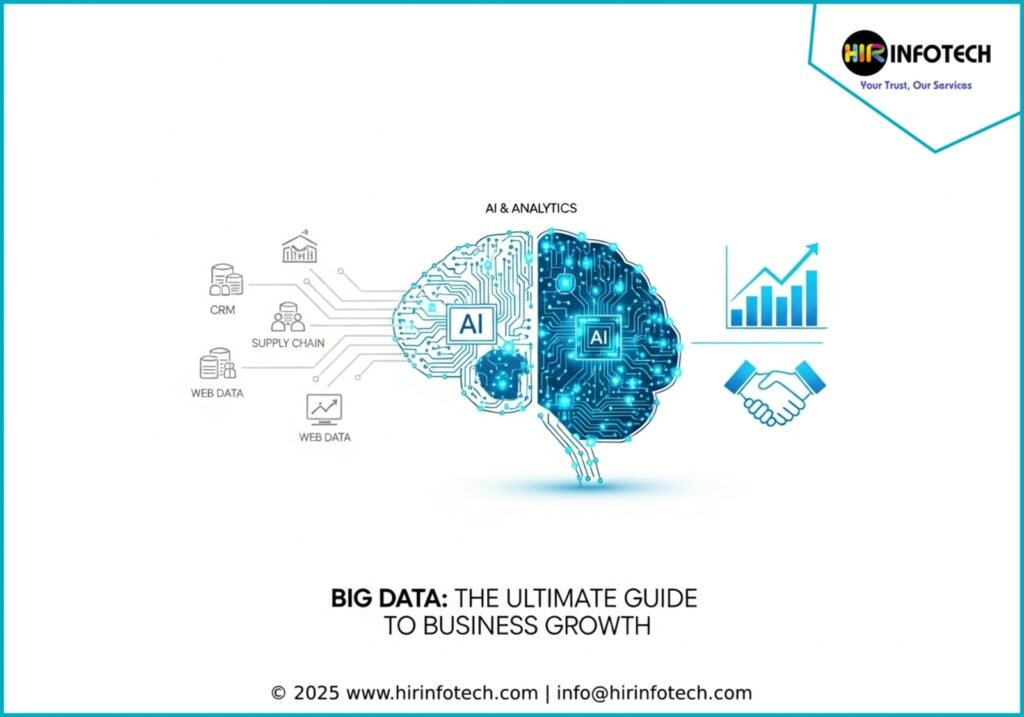
One of the most powerful applications of big data lies in customer relationship management (CRM). By integrating vast datasets into their CRM systems, companies can gain a 360-degree view of their customers. This allows for a level of personalization that was previously unimaginable. Imagine being able to anticipate a customer’s needs based on their browsing history, purchase patterns, and even social media activity. This is the power of big data in action.
This deep understanding of the customer journey enables businesses to:
- Deliver highly targeted marketing campaigns that resonate with individual preferences.
- Provide proactive customer service, addressing potential issues before they escalate.
- Develop new products and services that are perfectly aligned with market demand.
The result is a more engaging and satisfying customer experience, which in turn fosters loyalty and drives long-term revenue growth.
The Rise of AI and Predictive Analytics
The synergy between big data and artificial intelligence is at the heart of the current business revolution. AI-powered algorithms can sift through massive datasets to identify patterns and make predictions with a level of accuracy that far surpasses human capabilities. This has profound implications for all areas of business, from sales and marketing to finance and operations.
In 2026, AI-driven predictive analytics will be a standard tool for any forward-thinking company. These systems can forecast market trends, identify at-risk customers, and even suggest optimal pricing strategies. By leveraging these insights, businesses can make smarter, more informed decisions that lead to better outcomes. The era of relying on gut feelings and historical data alone is over; the future belongs to those who can harness the predictive power of AI.
Navigating the Challenges of Big Data
While the opportunities presented by big data are immense, they are not without their challenges. The sheer volume, velocity, and variety of data can be overwhelming for even the most well-equipped organizations. Storing, managing, and securing these massive datasets require specialized infrastructure and expertise. Furthermore, ensuring data quality and compliance with privacy regulations adds another layer of complexity.
To overcome these hurdles, many companies are turning to specialized data solution providers. These partners can offer the necessary tools and expertise to effectively manage the entire data lifecycle, from collection and storage to analysis and visualization. By outsourcing their data-related tasks, businesses can focus on their core competencies while still reaping the benefits of a robust data strategy.
The Strategic Role of the Chief Data Officer
In response to the growing importance of data, a new executive role has emerged: the Chief Data Officer (CDO). The CDO is responsible for overseeing the organization’s entire data strategy, ensuring that data is treated as a valuable corporate asset. This involves not only managing the technical aspects of data infrastructure but also fostering a data-driven culture throughout the company.
The CDO plays a crucial role in:
- Establishing data governance policies and ensuring compliance.
- Championing data-driven decision-making across all departments.
- Identifying new opportunities to leverage data for business growth.
By 2026, the CDO will be an indispensable member of the executive team in any data-forward organization.
Web Scraping and Data Extraction: The Fuel for Your Data Engine
To fully leverage the power of big data, companies need access to a continuous stream of high-quality, relevant information. This is where web scraping and data extraction come into play. These techniques allow businesses to gather vast amounts of data from the web, providing valuable insights into market trends, competitor activities, and customer sentiment.
Whether it’s monitoring competitor pricing, tracking brand mentions on social media, or gathering data for market research, web scraping provides the raw material for your data analytics engine. However, performing web scraping at scale can be a complex and resource-intensive task. This is why many companies choose to partner with a professional data extraction service. These services can handle all the technical aspects of web scraping, delivering clean, structured data that is ready for analysis.
In the competitive landscape of 2026, having a reliable source of external data is not just an advantage; it’s a necessity. By incorporating web-scraped data into your analytics strategy, you can gain a more complete and accurate picture of your business environment, enabling you to make more strategic and timely decisions.
Frequently Asked Questions
1. What is the biggest challenge in big data?
One of the most significant challenges in big data is the storage and management of massive data volumes. As companies collect ever-increasing amounts of information, ensuring that this data is stored securely and can be accessed efficiently becomes a complex task. This often requires sophisticated IT infrastructure and specialized expertise.
2. How can a company solve its big data issues?
Addressing big data challenges requires a multi-faceted approach. This can include upgrading IT systems, implementing robust data governance policies, and investing in employee training. Many leading companies also appoint a Chief Data Officer (CDO) to oversee their data strategy and ensure that data is leveraged effectively across the organization.
3. Are relational databases suitable for big data?
While relational databases are excellent for structured data, they can struggle with the sheer volume and variety of big data. This is why many organizations are turning to NoSQL databases, which are designed to handle large, unstructured datasets with greater flexibility and scalability. In many cases, a hybrid approach, using both relational and NoSQL databases for different purposes, can be the most effective solution.
4. What is web scraping and why is it important?
Web scraping is the process of automatically extracting large amounts of data from websites. This is crucial for businesses that need to gather market intelligence, monitor competitors, or track customer sentiment. Web scraping provides the raw data that fuels big data analytics, enabling companies to make more informed and strategic decisions.
5. How is AI changing customer service?
AI is revolutionizing customer service through the use of intelligent chatbots and virtual assistants. These AI-powered tools can handle a wide range of customer inquiries 24/7, providing instant and personalized support. By automating routine tasks, AI frees up human agents to focus on more complex and high-value interactions, leading to improved efficiency and customer satisfaction.
6. What does a Chief Data Officer (CDO) do?
A Chief Data Officer is a senior executive responsible for an organization’s data strategy. This includes overseeing data governance, ensuring data quality, and promoting a data-driven culture. The CDO plays a key role in aligning data initiatives with business goals and unlocking the strategic value of the company’s data assets.
7. Why is data quality so important?
Data quality is crucial because poor-quality data can lead to flawed analysis and bad business decisions. Ensuring that your data is accurate, complete, and consistent is the foundation of any successful big data initiative. Investing in data quality management is essential for building trust in your data and maximizing its value.
Ready to unlock the power of your data? Contact Hir Infotech today for a free consultation and discover how our tailored data solutions can help your business thrive in 2026 and beyond.
#BigData #DataAnalytics #BusinessIntelligence #CRM #AI #PredictiveAnalytics #DataSolutions #WebScraping #DataExtraction #HirInfotech