Harnessing the Power of Big Data and Machine Learning: A 2026 Guide for a Data-Driven Business
In today’s data-driven economy, businesses can’t afford to ignore the immense potential of big data and machine learning. However, many entrepreneurs and corporate executives are still navigating the complexities of these powerful technologies. They understand the need to leverage data but are often unsure how to harness its power for tangible business success. This guide will help your company not only stay relevant in this era of rapid change but also thrive by avoiding common pitfalls. By following these suggestions, you’ll be well on your way to streamlining your operations using big data and machine learning.
Building a Strong Foundation: People and Strategy First
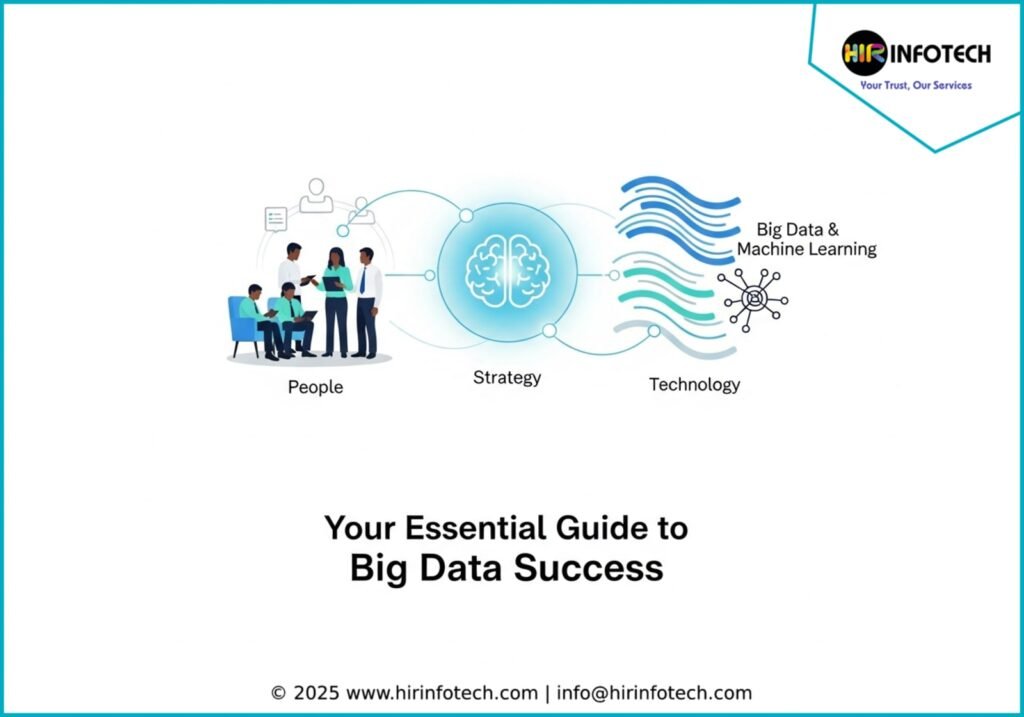
The journey into big data and machine learning begins not with technology, but with your team and a clear vision. It’s a common misconception that these technologies operate in a vacuum. In reality, they are powerful tools that amplify the skills and expertise of your workforce. Rushing to invest in the latest and most expensive technology without a plan or a trained team is a recipe for disaster.
Invest in Your Workforce Before New Technology
A frequent mistake companies make is purchasing sophisticated business intelligence tools without investing in their employees’ skills. This leads to a scenario where you have advanced technology that no one on your team knows how to use effectively. Business leaders often mistakenly believe that data-crunching systems work independently, forgetting that they are instruments that enhance human capabilities. Before introducing any new technology, it’s crucial to train your workforce. This ensures that your team is not only comfortable with the new tools but can also leverage them to their full potential.
Empowering your employees with the right skills fosters a culture of data literacy throughout the organization. When your team understands how to interpret data and use analytical tools, they can make more informed decisions, driving innovation and efficiency from the ground up. This internal expertise is invaluable and forms the bedrock of a truly data-driven company.
The People at the Core of Your Business
Always remember the people who are the heart of your company. Without proper training, even the most advanced tools will be ineffective. Your employees’ ability to succeed is directly tied to their proficiency with the tools you provide. A well-trained team can unlock the full potential of your technology investments, leading to significant returns.
Outsourcing your big data operations can be a viable option, but it comes with its own set of challenges. While it can be a cost-effective strategy, it often involves trade-offs such as reduced control over cybersecurity and a loss of autonomy. This doesn’t mean you should dismiss the benefits of outsourcing machine learning tasks, but rather proceed with caution, especially when dealing with technologies unfamiliar to your in-house team.
If you choose to partner with a third-party provider, take extra security measures to protect your data. Thoroughly vet potential partners to ensure they align with your company’s values and have a proven track record of reliability and excellence. A strong partnership can provide access to specialized expertise and resources that might be difficult to develop internally.
Define the “Why” Before You Buy: The Importance of a Clear Vision
In the fast-paced digital world, there’s a temptation to jump on the latest technological trends without a clear understanding of how they will benefit the business. Before investing in big data and machine learning, it’s essential to have a clear vision for the future. Identify the specific areas of your operations that would benefit most from big data analytics. A well-defined strategy ensures that your investments are targeted and aligned with your business goals.
For instance, if your primary challenge is attracting new customers, big data analytics can revolutionize your approach. For businesses with an established customer base looking to reduce costs, a different set of tools and strategies will be more effective. Having a clear purpose for your investment prevents you from becoming one of the many “zombie companies” with an impressive tech arsenal but no clear strategy for using it.
If your team lacks the expertise to develop a comprehensive tech strategy, consider hiring a third-party analyst. An external expert can help you create a forward-thinking game plan that leverages the full potential of modern technology.
The Transformative Power of Big Data and Machine Learning in 2026
The business landscape is undergoing a radical transformation, driven by the power of data. Big data and machine learning are at the forefront of this change, enabling companies to achieve unprecedented levels of success. By micro-targeting potential customers, identifying wasteful spending, and predicting future market trends, these technologies are giving businesses a significant competitive edge. However, success requires more than just flashy tools and complex algorithms. A comprehensive tech strategy must guide all your investments, and failing to utilize your new business tools effectively will ultimately harm your company.
In 2026, the integration of AI and machine learning into business operations is no longer a novelty but a necessity. Companies that embrace a data-driven culture are more agile, innovative, and customer-focused. Here are some of the key ways big data and machine learning are reshaping the business world:
- Hyper-Personalization at Scale: Machine learning algorithms can analyze vast amounts of customer data to deliver highly personalized experiences. This goes beyond simple recommendations to anticipating customer needs and providing tailored solutions in real-time.
- Predictive Analytics for Proactive Strategies: By analyzing historical data, machine learning models can predict future trends with remarkable accuracy. This allows businesses to move from a reactive to a proactive stance, making informed decisions that anticipate market shifts.
- Enhanced Operational Efficiency: AI-powered automation is streamlining business processes, from supply chain management to customer service. This not only reduces costs but also frees up human employees to focus on more strategic and creative tasks.
- Improved Decision-Making: By providing deep insights into complex datasets, big data analytics empowers leaders to make more informed and strategic decisions. This data-driven approach minimizes guesswork and maximizes the chances of success.
The Future is Data-Driven
As we move further into the digital age, the importance of data will only continue to grow. Businesses that effectively harness the power of big data and machine learning will be the leaders of tomorrow. By investing in your people, developing a clear strategy, and embracing the transformative potential of these technologies, you can position your company for long-term success in an increasingly competitive world.
To learn more about how data is shaping the future of business, you can explore resources from leading technology companies and research firms. For example, Google Cloud offers valuable insights into building a data-driven culture, while platforms like Tableau provide powerful tools for data visualization and analysis. Additionally, checking out what industry leaders like Databricks are doing can provide a glimpse into the future of data and AI.
Frequently Asked Questions (FAQs)
1. Why is big data management so important for businesses?
Effective big data management is crucial for several reasons. It helps in reducing costs by optimizing storage and processing. More importantly, it improves the accuracy and reliability of analytics. When high-quality, well-structured data is fed into analytics solutions, businesses can trust the insights generated to make strategic decisions. Good data management ensures data is accessible, secure, and governed, which is the foundation for any successful data-driven initiative.
2. What role does machine learning play in handling large datasets?
Machine learning is essential for analyzing the vast and complex datasets that constitute “big data.” Traditional data processing methods are often inadequate for such large volumes of information. Machine learning algorithms can identify patterns, make predictions, and uncover insights from big data that would be impossible for humans to find. This enables businesses to make sense of their data and use it to drive meaningful outcomes.
3. How are big data and machine learning connected?
Big data and machine learning have a symbiotic relationship. Big data provides the massive datasets that machine learning models need to learn and improve. In turn, machine learning provides the analytical power to extract value from big data. Essentially, big data is the fuel, and machine learning is the engine that drives business intelligence and innovation.
4. What are the first steps my company should take to become data-driven?
The first step is to develop a clear data strategy that aligns with your business goals. This involves identifying what you want to achieve with data and what data you need to collect. The next crucial step is to invest in your people by providing them with the necessary training and tools to become data literate. Fostering a culture that values data-driven decision-making is also key to a successful transformation.
5. Should my company build an in-house data science team or outsource?
The decision to build an in-house team or outsource depends on various factors, including your budget, internal expertise, and long-term goals. Building an in-house team provides more control and can foster a stronger data culture. However, it can be expensive and time-consuming. Outsourcing can provide immediate access to specialized skills and can be more cost-effective, but it requires careful management of security and communication.
6. What are the most significant challenges companies face when implementing big data and ML?
Common challenges include a lack of a clear strategy, insufficient investment in employee training, and poor data quality. Many companies also struggle with integrating new technologies with existing systems and ensuring data security and privacy. Overcoming these challenges requires careful planning, strong leadership, and a commitment to building a data-driven culture.
7. How can I ensure the ethical use of big data and machine learning in my company?
Ensuring ethical use involves establishing clear data governance policies that address privacy, bias, and transparency. It’s important to be transparent with customers about how their data is being used and to implement measures to detect and mitigate bias in machine learning models. Regular audits and a commitment to responsible AI principles are essential for building trust and maintaining ethical standards.
Unlock Your Data’s Potential with Hir Infotech
Navigating the world of big data and machine learning can be challenging, but you don’t have to do it alone. At Hir Infotech, we specialize in providing comprehensive data solutions, including web scraping, data extraction, and data-related services, tailored to the unique needs of mid to large-sized companies. Our team of experts can help you unlock the full potential of your data, transforming it into a powerful asset for your business.
Contact Hir Infotech today to learn how our data solutions can help you drive growth, improve efficiency, and gain a competitive edge in the data-driven economy.
#BigData #MachineLearning #DataAnalytics #BusinessIntelligence #DataDrivenCulture #TechTrends2026 #DataManagement #AIforBusiness