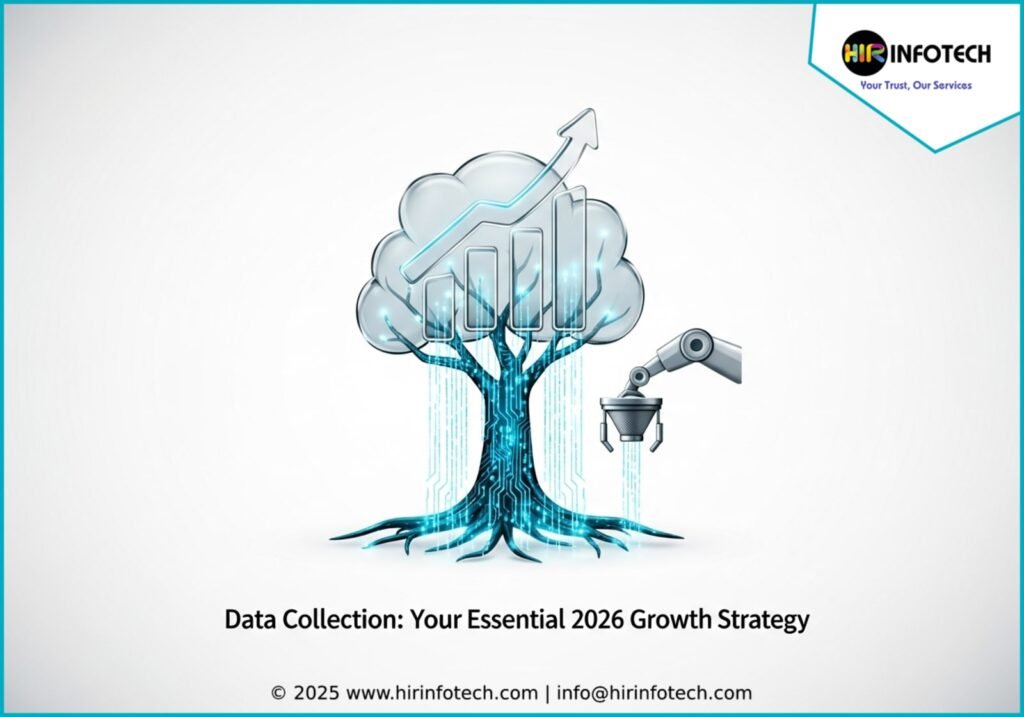
Unlock Your Business Potential: The Critical Role of Data Collection in 2026
In today’s digital economy, data is the lifeblood of any successful enterprise. But simply having access to vast amounts of raw data isn’t enough. The true power lies in collecting the right data and analyzing it effectively to uncover insights, predict future trends, and drive meaningful action. As we move through 2026, the ability to harness data is not just an advantage; it’s a necessity for survival and growth.
Consider these compelling facts: data-driven organizations are significantly more likely to acquire new customers, nine times more likely to retain them, and an incredible 19 times more likely to be profitable. With so much at stake, the importance of precise and methodical data collection cannot be overstated. Even a minor error in your database can ripple through your organization, impacting critical business decisions and strategic planning.
This post will explore the fundamentals of data collection, its transformative impact on research and analysis, and how your business can leverage the latest trends in 2026 to gain a competitive edge.
What is Data Collection?
Data collection is the systematic process of gathering, measuring, and analyzing information from various sources. When executed correctly, it empowers organizations to make informed business decisions, solve complex problems, test hypotheses, evaluate outcomes, and accurately forecast future trends.
There are two primary categories of data:
- Primary Data: This is firsthand data collected directly by you or your organization for a specific purpose. Methods include surveys, interviews, focus groups, and direct observations. It’s tailored to your exact needs, ensuring relevance and accuracy.
- Secondary Data: This is data that has already been collected by someone else. Sources include industry reports, government publications, and existing databases. It can provide broader context and benchmarks for your own findings.
In 2026, the lines between these are blurring as AI-powered tools enable the real-time collection and synthesis of both primary and secondary data streams.
The Transformative Role of Data Collection in Research and Analysis
High-quality data collection is the foundation upon which all successful research and analysis are built. It moves your business from reactive problem-solving to proactive strategy, turning uncertainty into opportunity.
Drive Necessary Upgrades and Innovation
Properly collected and analyzed data provides a clear picture of how your products or services are performing. It tells you what your customers want, what they dislike, and what changes are needed to deliver a superior experience. This insight is invaluable, allowing you to identify the root causes of issues and address them efficiently, without wasting precious time or resources. Effective data collection provides critical insights that ensure you allocate resources effectively and maximize profitability.
Develop Strategic and Targeted Methods
Efficient data gathering and analysis enable you to direct resources where they are most needed. Imagine an increase in service incidents in a specific region. By examining the data, you can determine if the issue is widespread or localized. If it’s localized, you can deploy teams, training, or other resources with surgical precision. This data-driven approach allows businesses to prioritize key areas for growth and improvement.
Eliminate Guesswork and Uncertainty
Data collection replaces assumptions with facts. It provides the sound, priceless insights needed to choose the most effective strategies for your company. When your tactics and actions are based on reliable information, you are far more likely to achieve your desired outcomes. This data-backed confidence allows for bolder, more innovative decision-making.
Predict and Mitigate Risks
By consistently collecting and monitoring data from crucial systems, your organization can track its operational health. This allows businesses to anticipate potential problems long before they escalate into full-blown crises. Effective quality monitoring, fueled by real-time data, enables your firm to be proactive and maintain best practices over the long term, ensuring stability and trust.
Engineer Effective Problem-Solving
Data empowers organizations to uncover the root cause of problems. It illuminates inefficiencies and pinpoints areas where errors occurred, providing a clear path for correction. Business owners can leverage data analysis to enhance sales and marketing efforts, streamline operations, and understand the core of any bottlenecks to boost revenue.
Track and Benchmark Business Growth
Accurate data collection allows companies to establish baselines, set meaningful benchmarks, and define ambitious goals. A baseline serves as a fixed point of comparison to measure the success of a project or product in terms of sales, costs, or other key metrics. Benchmarks, on the other hand, reveal how your company stacks up against competitors within a specific demographic. This information is crucial for setting performance targets that drive your business forward.
The Future of Data Collection: 2026 Trends and Beyond
The data solutions industry is evolving at a breakneck pace, driven by advancements in artificial intelligence and automation. For mid-to-large companies that rely on web scraping and data extraction, staying ahead of these trends is critical.
The Rise of AI-Powered Web Scraping
By 2026, AI-driven automation is set to revolutionize web scraping. AI-powered scrapers can adapt to website changes in real-time, handle complex JavaScript-heavy sites, and even navigate anti-bot measures. This means faster, more accurate, and more reliable data extraction. The integration of AI will not only collect data but also provide actionable intelligence, enabling instant decision-making.
Real-Time Data is the New Standard
The demand for real-time data is skyrocketing. In 2026, businesses will increasingly shift from batch-based data collection to real-time data streams. Real-time scraping provides immediate access to the most current information, which is vital in dynamic industries like e-commerce, finance, and travel. Companies are plugging Real-Time Data APIs directly into their analytics dashboards to power dynamic pricing, monitor market fluctuations, and track competitor activities as they happen.
A Strategic Shift from Volume to Value
For years, the mantra was “collect more data.” Now, the focus has shifted from quantity to quality and purpose. It’s no longer about hoarding massive datasets but about collecting, refining, and activating high-quality, actionable data. Data-driven companies consistently outperform their peers, but only when they trust and act on the right information.
Enhanced Focus on Data Governance and Ethics
With the increasing volume and sensitivity of data, robust governance and ethical practices are non-negotiable. Data provenance—knowing where data comes from and how it’s used—is more critical than ever. In 2026, expect a greater emphasis on data privacy, security, and compliance with regulations like GDPR. Building trust with your customers through transparent and ethical data handling is paramount.
Gartner: Top Strategic Technology Trends – Explore the latest technology trends shaping the future of business.
Frequently Asked Questions (FAQs)
1. What is the most significant trend in data collection for 2026?
The most significant trend is the integration of Artificial Intelligence into data collection processes. AI-powered automation, particularly in web scraping and data extraction, is making data collection smarter, faster, and more efficient. These intelligent systems can adapt to website changes, handle complex data formats, and provide cleaner, more structured data with minimal human intervention.
2. How can my company ensure the data we collect is high quality?
Ensuring data quality starts with a clear strategy. Define what data you need and why. Implement automated validation and cleaning processes to catch errors at the source. It is also crucial to establish strong data governance practices, which include defining data standards, roles, and responsibilities. Regularly auditing your data for accuracy and completeness is also a key practice.
3. Why is real-time data collection becoming so important?
In today’s fast-paced digital environment, decisions need to be made in the moment. Real-time data provides businesses with the most current information, allowing them to react instantly to market changes, competitor pricing, and customer behavior. This is especially critical for dynamic sectors like e-commerce, finance, and logistics, where a delay of even a few hours can result in missed opportunities.
4. What are the primary challenges of data collection for large companies?
Large companies often face challenges with data silos, where data is trapped in different departments and systems. Integrating these disparate data sources can be complex. Ensuring data quality and consistency at scale is another significant hurdle. Additionally, navigating the evolving landscape of data privacy and security regulations requires constant vigilance and robust governance.
5. How does ethical data collection benefit my business?
Ethical data collection is fundamental to building and maintaining customer trust. When you are transparent about the data you collect and how you use it, you foster a positive relationship with your audience. This not only ensures compliance with privacy regulations like GDPR but also enhances your brand reputation. Customers are more likely to engage with and remain loyal to businesses they trust.
6. What is the difference between primary and secondary data collection?
Primary data collection involves gathering new data directly from original sources for a specific purpose. Common methods include surveys, interviews, and observations. Secondary data collection involves using data that has already been collected by someone else, such as from government reports, industry publications, or public databases. A robust data strategy often utilizes a combination of both.
7. How can we get started with improving our data collection processes?
Start with a comprehensive audit of your current data collection methods and tools. Identify your key business objectives and determine what data is necessary to achieve them. Focus on implementing a strategy that prioritizes data quality over quantity. Consider partnering with a data solutions expert who can provide the tools and expertise to streamline your processes and ensure you are leveraging the latest technologies.
Take the Next Step with Hir Infotech
In the data-driven landscape of 2026, harnessing the power of accurate and timely data is no longer optional—it’s essential for success. From web scraping and data extraction to comprehensive data analysis, having a robust data strategy is the key to unlocking your business’s full potential.
At Hir Infotech, we specialize in providing cutting-edge data solutions tailored to the unique needs of mid-to-large enterprises. Our expertise in web scraping, data extraction, and data-related work can help you navigate the complexities of the digital world and turn raw data into your most valuable asset.
Don’t let your competition get ahead. Contact Hir Infotech today to discover how our expert data solutions can fuel your growth and drive your business forward.
#DataCollection #DataAnalysis #BusinessIntelligence #WebScraping #DataExtraction #BigData #AI #MachineLearning #DataDriven #BusinessGrowth #2026Trends