Unlocking Your Business Potential: How to Use Web Scraping Services for Job Portal Sites in 2026
In the digital era, data is the new oil. The vast expanse of the internet holds an ever-growing reservoir of information. However, for many organizations, the process of collecting accurate and actionable data can be a significant roadblock. This is where web scraping services come in, offering a powerful solution to harness the web’s potential. One of the most impactful applications of this technology is in the realm of job portals. By leveraging web scraping, businesses can gain a competitive edge in the talent acquisition landscape.
This comprehensive guide will delve into the world of web scraping for job portal sites. We’ll explore how it works, its tangible benefits for your business, and how to choose the right service provider. Whether you’re a mid-sized company looking to scale your recruitment efforts or a large enterprise seeking to optimize your data strategy, this post will provide you with the insights needed to make informed decisions in 2026.
#WebScraping #DataExtraction #JobPortals #RecruitmentTech #DataSolutions #LeadGeneration #SEO #DigitalTransformation #2026Trends
What is Web Scraping and Why is it a Game-Changer for Job Portals?
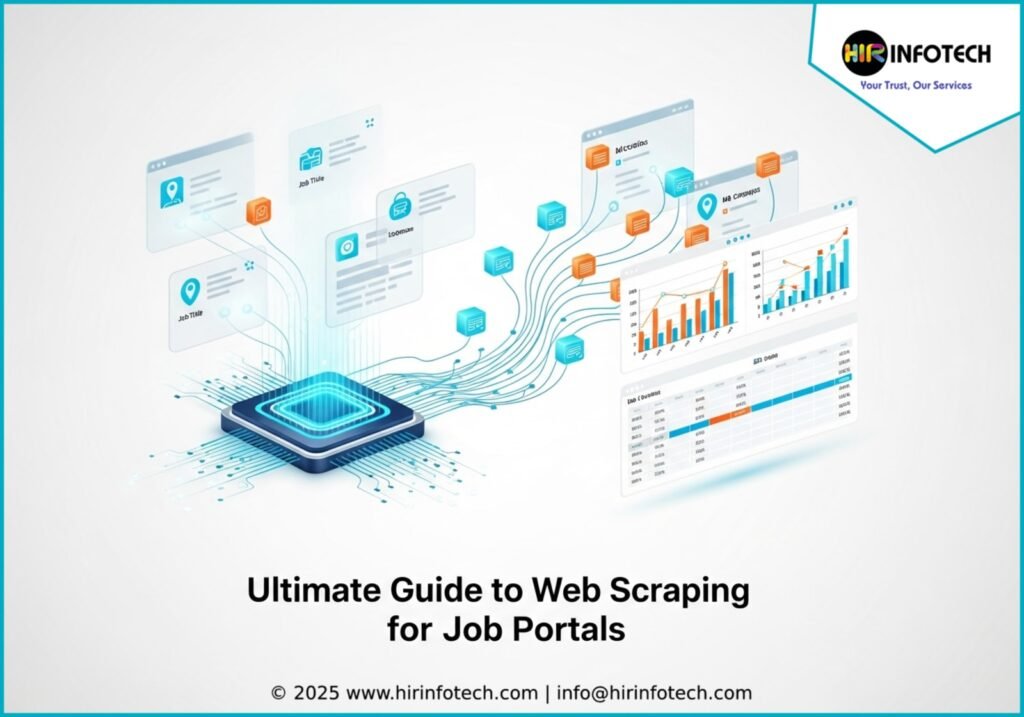
Web scraping, at its core, is the automated process of extracting large amounts of data from websites. Think of it as a highly efficient digital librarian that can browse through countless web pages, identify the specific information you need, and organize it into a structured, usable format. For job portals, this technology is transformative.
Traditionally, populating a job board with a comprehensive and up-to-date list of openings was a manual and labor-intensive process. Web scraping automates this, allowing job portals to aggregate listings from thousands of company career pages and other job boards across the internet. This not only saves an immense amount of time and resources but also significantly enhances the value proposition of the job portal by offering a much wider array of opportunities to job seekers.
How Does the Process Work?
Web scraping services utilize automated programs called “bots” or “crawlers” to navigate the web. These bots are programmed to visit specific websites, identify the relevant data points (such as job titles, company names, locations, and descriptions), and then extract this information. The collected data is then cleaned, structured, and delivered in a format that can be easily integrated into your systems, such as a CSV file or through an API.
The sophistication of these services has grown exponentially, with AI-powered scraping tools now capable of handling complex websites, bypassing anti-scraping measures, and ensuring high data accuracy. This level of automation allows businesses to access real-time data, a critical advantage in the fast-paced world of recruitment.
The Tangible Benefits of Leveraging Web Scraping for Your Job Portal
Integrating web scraping services into your operations can unlock a multitude of benefits that directly impact your bottom line and strategic growth. For mid to large-sized companies, these advantages are particularly pronounced.
A Wealth of Actionable Data at Your Fingertips
The primary advantage of web scraping is the sheer volume of data it makes accessible. Instead of being limited to the job postings you can manually find and upload, you can aggregate data from a vast array of sources. This comprehensive dataset allows you to:
- Offer a More Extensive Job Board: A larger and more diverse selection of job openings makes your portal more attractive to job seekers, increasing traffic and engagement.
- Gain Competitive Intelligence: By scraping data from competitor job boards and company career pages, you can gain invaluable insights into their hiring trends, in-demand skills, and salary benchmarks. This information can inform your own recruitment strategies and help you stay ahead of the curve.
- Identify Market Trends: Analyzing large-scale job data can reveal emerging trends in the job market, such as the rise of specific roles or skills. This allows you to tailor your services and content to meet the evolving needs of both employers and job seekers.
Streamlined Operations and Increased Efficiency
Manual data collection is not only time-consuming but also prone to human error. Web scraping automates this process, freeing up your team to focus on more strategic initiatives. The key efficiency gains include:
- Time Savings: What would take a team of employees weeks to accomplish manually can be done by a web scraping service in a fraction of the time.
- Cost-Effectiveness: Automating data collection reduces the need for a large data entry team, leading to significant cost savings.
- Enhanced Accuracy: Automated systems are far less likely to make errors than humans, ensuring the data you receive is clean, consistent, and reliable.
- Zero Maintenance: By outsourcing to a specialized service, you eliminate the need to build and maintain your own scraping infrastructure.
Data-Driven Decision Making
In today’s competitive landscape, making decisions based on intuition is no longer sufficient. Web scraping provides the hard data needed to make informed, strategic choices. With access to comprehensive job market data, you can:
- Optimize Your Platform: Understand which types of jobs are most popular and tailor your platform’s features and user experience accordingly.
- Inform Your Sales and Marketing Efforts: Identify companies that are actively hiring and target them with your services.
- Develop New Revenue Streams: The data you collect can be packaged and sold as valuable market intelligence reports.
Choosing the Right Web Scraping Service Provider: A Guide for 2026
With the growing demand for web scraping, the market is flooded with service providers. Selecting the right partner is crucial to the success of your data extraction initiatives. Here are the key factors to consider when making your decision:
Technical Expertise and Scalability
The provider should have a proven track record of handling large-scale and complex web scraping projects. Look for a team with deep technical expertise that can navigate challenges such as dynamic websites, CAPTCHAs, and IP blocks. Their infrastructure should be robust and scalable, capable of handling your growing data needs without compromising on speed or reliability.
Data Quality and Accuracy
The value of scraped data lies in its accuracy. A reputable provider will have rigorous quality assurance processes in place to ensure the data delivered is clean, accurate, and up-to-date. Inquire about their data validation and cleaning procedures to understand how they maintain data integrity.
Customization and Flexibility
Your data requirements are unique. A one-size-fits-all approach is unlikely to meet your specific needs. Choose a provider that offers customized solutions tailored to your business objectives. They should be able to extract the specific data fields you require and deliver it in a format that seamlessly integrates with your existing systems.
Ethical and Legal Compliance
The legal landscape surrounding web scraping is constantly evolving. It is imperative to partner with a provider that adheres to the highest ethical standards and is well-versed in data privacy regulations such as GDPR and CCPA. A compliant provider will only scrape publicly available data and will respect the terms of service of the websites they are scraping.
Customer Support and Communication
A strong partnership is built on clear communication and reliable support. Your chosen provider should be responsive to your queries and provide proactive updates on the status of your projects. Look for a company that offers dedicated support to ensure a smooth and collaborative experience.
For more in-depth guidance on this topic, this article from PromptCloud offers valuable insights into selecting a web scraping partner.
Establishing Topical Authority and E-E-A-T in the Data Solutions Space
In the digital marketing world, E-E-A-T (Experience, Expertise, Authoritativeness, and Trust) is a crucial framework used by search engines to evaluate the quality of content. For a data solutions provider like Hir Infotech, demonstrating E-E-A-T is paramount to building credibility and attracting clients.
By providing in-depth, well-researched content like this blog post, we showcase our expertise in the field of web scraping and data extraction. Our extensive experience in handling complex data projects for a diverse clientele establishes our authoritativeness. And by prioritizing ethical practices and transparent communication, we build trust with our audience and clients.
This commitment to E-E-A-T ensures that we not only rank well in search engine results but also provide genuine value to our readers, helping them navigate the complexities of the data-driven world.
The Future of Web Scraping and Job Portals
Looking ahead to 2026 and beyond, the integration of artificial intelligence and machine learning will further revolutionize web scraping. AI-powered scrapers will become even more adept at understanding website structures, extracting nuanced data, and even providing predictive insights. For job portals, this means access to even richer and more actionable data, enabling them to offer highly personalized and intelligent job matching services.
As the digital landscape continues to evolve, the ability to harness the power of web data will be a key differentiator for successful businesses. By embracing web scraping services, job portals can not only enhance their offerings but also solidify their position as indispensable resources in the ever-changing world of work.
To learn more about the evolving landscape of data as a service, check out this informative piece from Forbes.
Take the Next Step with Hir Infotech
In a world where data is a key driver of success, leveraging web scraping services is no longer an option, but a necessity. The ability to gather, analyze, and act on vast amounts of data can provide your business with an unparalleled competitive advantage.
At Hir Infotech, we specialize in providing bespoke web scraping and data extraction solutions that are tailored to the unique needs of our clients. Our team of experts combines cutting-edge technology with a deep understanding of the data landscape to deliver accurate, reliable, and actionable insights.
Ready to unlock the full potential of your business? Contact our experts today for a free consultation and discover how Hir Infotech can transform your data strategy.
Frequently Asked Questions (FAQs)
-
1. What is job scraping?
- Job scraping is the automated process of extracting job-related data from various online sources, such as company career pages and other job boards. This data is then structured and can be used to populate a job portal, analyze market trends, or gain competitive intelligence.
-
2. Is web scraping legal?
- Web scraping of publicly available data is generally considered legal. However, it is crucial to adhere to ethical practices and respect the terms of service of the websites being scraped. Partnering with a reputable and compliant web scraping service provider is the best way to ensure you are operating within legal boundaries.
-
3. How can web scraping benefit my recruitment agency?
- Recruitment agencies can use web scraping to build a comprehensive database of job openings, identify potential clients who are actively hiring, monitor competitor activity, and gain insights into salary benchmarks and in-demand skills.
-
4. Can web scraping handle data from complex and dynamic websites?
- Yes, modern web scraping services, particularly those powered by AI, are capable of extracting data from websites that use JavaScript, AJAX, and other dynamic technologies. They can also handle challenges like pagination and login-protected areas.
-
5. What kind of data can be extracted from job portals?
- A wide range of data can be extracted, including job titles, job descriptions, company names, locations, salary ranges, required skills and qualifications, and application deadlines.
-
6. How is the scraped data delivered?
- The data can be delivered in various formats depending on your needs, such as CSV, JSON, XML, or directly to your database via an API. This flexibility ensures seamless integration with your existing systems.
-
7. Why should I outsource web scraping instead of doing it in-house?
- Building and maintaining an in-house web scraping infrastructure requires significant technical expertise, time, and resources. Outsourcing to a specialized service provider is often more cost-effective and allows your team to focus on their core competencies while ensuring you receive high-quality, reliable data.