Conquering the Digital Gatekeepers: A Guide to Navigating Website Anti-Scraping in 2026
In today’s fiercely competitive business landscape, data is the new oil. Companies that can effectively gather and analyze information gain a significant edge. Web scraping, the automated extraction of data from websites, has become an indispensable tool in this data-driven era. However, accessing this valuable resource isn’t always straightforward. Many websites deploy sophisticated anti-scraping measures to protect their content.
This comprehensive guide will demystify the world of anti-scraping tools and provide you with actionable strategies to navigate these digital gatekeepers. We’ll explore the latest techniques and technologies, ensuring you can continue to harness the power of web scraping ethically and effectively. This information is tailored for mid-to-large companies that rely on frequent data extraction, presented in a way that is easy for non-technical audiences to understand.
What Are Anti-Scraping Tools and Why Do Websites Use Them?
As your business grows, you’ll likely target well-established websites for data extraction. These sites often view their data as a valuable asset and employ anti-scraping tools to prevent automated access. These tools are designed to distinguish between human users and automated bots, blocking the latter from accessing and extracting content.
The motivations behind using anti-scraping measures are multifaceted:
- Protecting Intellectual Property: Websites invest significant resources in creating unique content, from product descriptions to market analyses. Anti-scraping tools help safeguard this proprietary information from being copied and repurposed by competitors.
- Maintaining Server Performance: Aggressive web scraping can overload a website’s server, leading to slower performance or even crashes for legitimate users. Anti-scraping measures help ensure a stable and positive user experience for their human audience.
- Ensuring Data Privacy and Security: Some websites house sensitive user data. Anti-scraping tools add a layer of security, preventing malicious actors from harvesting this information for nefarious purposes.
- Competitive Advantage: By controlling access to their data, companies can maintain a competitive edge. For example, an e-commerce site might not want a competitor to easily scrape their pricing and inventory levels.
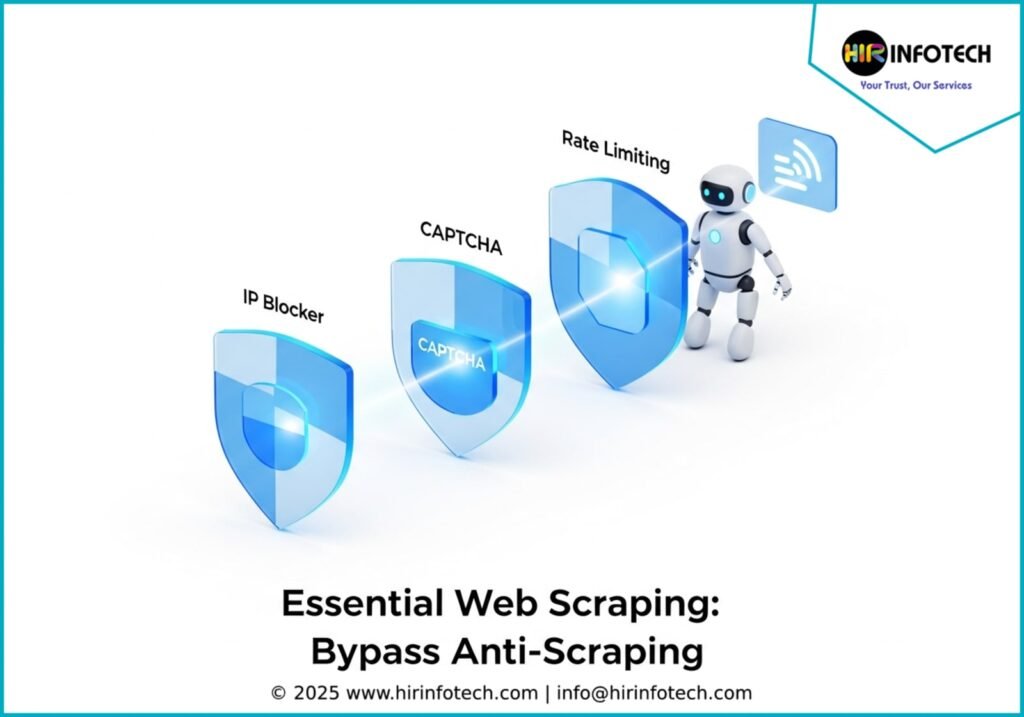
From simple IP address blocking to complex JavaScript challenges, websites use a variety of tactics to deter scrapers. Fortunately, for every measure, there is often a countermeasure.
Proven Strategies to Navigate Anti-Scraping Tools
Successfully extracting data in 2026 requires a sophisticated and adaptable approach. Here are some of the most effective methods for navigating even the most stringent anti-scraping technologies:
1. Master the Art of Disguise with IP Address Rotation
Think of an IP address as your computer’s digital fingerprint. When you repeatedly visit a website from the same IP address to scrape data, it’s a dead giveaway that you’re not a typical user. Most websites monitor IP addresses and will quickly block any that exhibit bot-like behavior.
The solution is IP rotation. By using a pool of different IP addresses, your scraper can make requests from various locations, mimicking the behavior of multiple individual users. This is akin to wearing a different disguise each time you visit. For most websites, this is a highly effective strategy.
However, some high-profile sites employ advanced techniques to detect and blacklist proxies. In these cases, you’ll need to be more strategic. Residential or mobile proxies are often the most reliable options as they are associated with real internet service providers and mobile carriers, making them nearly indistinguishable from legitimate user traffic. Choosing a reputable proxy service provider is the most critical step in this process.
External Link: Learn more about advanced proxy solutions from a leading provider like Bright Data.
2. Mimic Human Behavior with Randomized Requests
Web scrapers, by their nature, are robotic and predictable. They often send requests at precise, regular intervals, a pattern that is easily detectable by anti-scraping systems. Humans, on the other hand, are anything but predictable.
To appear more human, it’s crucial to randomize the timing of your requests. Introduce variable delays between each request to break the pattern of automation. This simple yet effective technique can help you avoid detection by the target website’s anti-scraping software.
It’s also a matter of good digital citizenship. Bombarding a website with frequent requests can overload its servers, negatively impacting the experience for all users. A polite and considerate approach to scraping is not only more effective but also more ethical.
3. Gain Credibility with the Referrer Header
In the world of web traffic, context matters. The “Referrer” header in an HTTP request tells a website where you came from. For instance, if you click a link on Google to visit a site, the Referrer header will indicate that Google sent you.
Many websites use this information to gauge the legitimacy of a visitor. By setting the Referrer header to a common and trusted source like Google, YouTube, or a relevant industry website, you can significantly increase your scraper’s credibility. The target website is more likely to perceive your scraper as a legitimate user directed from a typical source, reducing the chances of being blocked. You can use web analytics tools to identify the most common referrers for your target website.
4. Outsmart Advanced Detection with Headless Browsers
Modern websites often use sophisticated techniques to verify visitors, including the use of cookies, JavaScript, and browser fingerprinting. These methods can make traditional web scraping challenging. This is where headless browsers come to the rescue.
A headless browser is a web browser without a graphical user interface, controlled programmatically. This allows you to simulate a real user’s browsing session with a high degree of accuracy. Tools like Puppeteer and Playwright, often used with an “undetected” version of ChromeDriver, can mimic human-like interactions, making your scraper virtually indistinguishable from a real person. While this method requires more technical expertise to set up, it is one of the most powerful ways to scrape data from even the most heavily protected websites.
5. Conquer the CAPTCHA Challenge
CAPTCHAs are one of the most common and frustrating hurdles for web scrapers. These “Completely Automated Public Turing tests to tell Computers and Humans Apart” are specifically designed to block bots.
Fortunately, there are numerous services dedicated to solving CAPTCHAs. These services, such as Anti-CAPTCHA, use a combination of human solvers and advanced AI to crack these puzzles, allowing your scraper to proceed. While these services come at a cost, they are often a necessary investment for scraping websites that heavily rely on CAPTCHA for protection. It’s important to carefully evaluate different providers to find a balance between cost, speed, and reliability.
External Link: Explore a comprehensive web scraping API solution that includes automated CAPTCHA solving from Oxylabs.
Optimizing for the Future: SEO and AI Engines
In 2026, it’s not enough to just create great content; you also need to ensure it’s discoverable by both traditional search engines and emerging AI-powered platforms like Gemini, ChatGPT, and Perplexity. By following Google’s E-E-A-T (Experience, Expertise, Authoritativeness, and Trust) guidelines, you can establish your content as a credible and valuable resource.
This means creating in-depth, well-researched content that provides real-world insights and is backed by data and authoritative sources. Using relevant keywords and hashtags naturally throughout your text, as well as in your titles and headings, will improve your visibility. Structuring your content with clear headings, short sentences, and bullet points not only enhances readability for your audience but also makes it easier for AI engines to parse and understand your information.
Frequently Asked Questions (FAQs)
1. Is web scraping legal?
The legality of web scraping depends on several factors, including the type of data being collected and the website’s terms of service. Generally, scraping publicly available data is considered legal. However, it’s crucial to avoid scraping personal or copyrighted information. Always review a website’s `robots.txt` file and terms of service, and consult with a legal professional if you have any doubts.
2. Can a website detect my web scraper?
Yes, websites can use various methods to detect web scrapers, such as monitoring IP addresses, analyzing user-agent strings, and using JavaScript challenges. If a website suspects it’s interacting with a bot, it may present CAPTCHAs or block your requests altogether.
3. What is the best programming language for web scraping?
Python is widely regarded as the best language for web scraping due to its simplicity, versatility, and extensive collection of libraries like BeautifulSoup, Scrapy, and Selenium. These tools make it easier to build robust and efficient web scrapers.
4. How can I scrape data from a website that requires a login?
Scraping data from behind a login wall requires your scraper to first authenticate itself. This can be done by simulating the login process, which typically involves sending a POST request with the necessary credentials (username and password) to the website’s login form. Once authenticated, the scraper can then access and extract the desired data.
5. What are the ethical considerations of web scraping?
Ethical web scraping involves respecting the website’s terms of service, not overloading their servers with excessive requests, and not scraping personal or sensitive data. A good rule of thumb is to scrape data in a way that does not negatively impact the website or its users. If a website provides a public API, it’s always better to use that for data access.
6. What is a user-agent and why is it important for web scraping?
A user-agent is a string of text that a browser sends to a website to identify itself. Websites often check the user-agent to determine the type of browser and operating system being used. When web scraping, it’s important to set a realistic user-agent that mimics a common browser to avoid being identified as a bot. Rotating through different user-agents can further enhance your scraper’s stealth.
7. How are AI and machine learning impacting web scraping?
AI and machine learning are revolutionizing web scraping by enabling more intelligent and adaptive data extraction. AI-powered tools can automatically identify and extract data from web pages, even when the site’s layout changes. They can also be used to analyze user behavior and more accurately mimic human interactions to bypass sophisticated anti-scraping measures.
Your Partner in Data Solutions
Navigating the complexities of web scraping and anti-scraping technologies can be a daunting task. At Hir Infotech, we specialize in providing cutting-edge data solutions for businesses of all sizes. Our team of experts can help you overcome any data extraction challenge, ensuring you have the information you need to make informed decisions and stay ahead of the competition.
Ready to unlock the full potential of your data? Contact Hir Infotech today for a free consultation and discover how our tailored web scraping services can transform your business.