Big Data in 2026: How Data-Driven Decisions Are Revolutionizing Business
In today’s hyper-competitive digital marketplace, data is more than just information; it’s the engine of business growth. For any entrepreneur or executive, understanding Big Data is no longer optional—it’s essential for survival and success. The world is rapidly becoming data-driven, and businesses that harness the power of Big Data are the ones that will thrive.
But what exactly is “Big Data”? Simply put, it refers to the massive volumes of data that companies collect every day. This data comes in two forms: structured, like sales figures and customer databases, and unstructured, such as social media comments and customer reviews. The magic of Big Data lies in its potential. When analyzed effectively, it reveals crucial insights that lead to smarter decision-making and strategic business moves.
For mid-to-large companies that frequently handle web scraping, data extraction, and other data-related tasks, Big Data is a game-changer. It allows them to process and analyze vast, complex datasets with incredible speed and efficiency. This frees up valuable resources, enabling them to focus on refining their marketing strategies and streamlining other critical areas of their operations.
As businesses continue to integrate Big Data into their models, it requires a fundamental shift in mindset, especially in how decisions are made and implemented. The insights gleaned from Big Data are transforming every industry, from finance to gaming, and the impact is only set to grow.
The Four Vs of Big Data: A Framework for Understanding
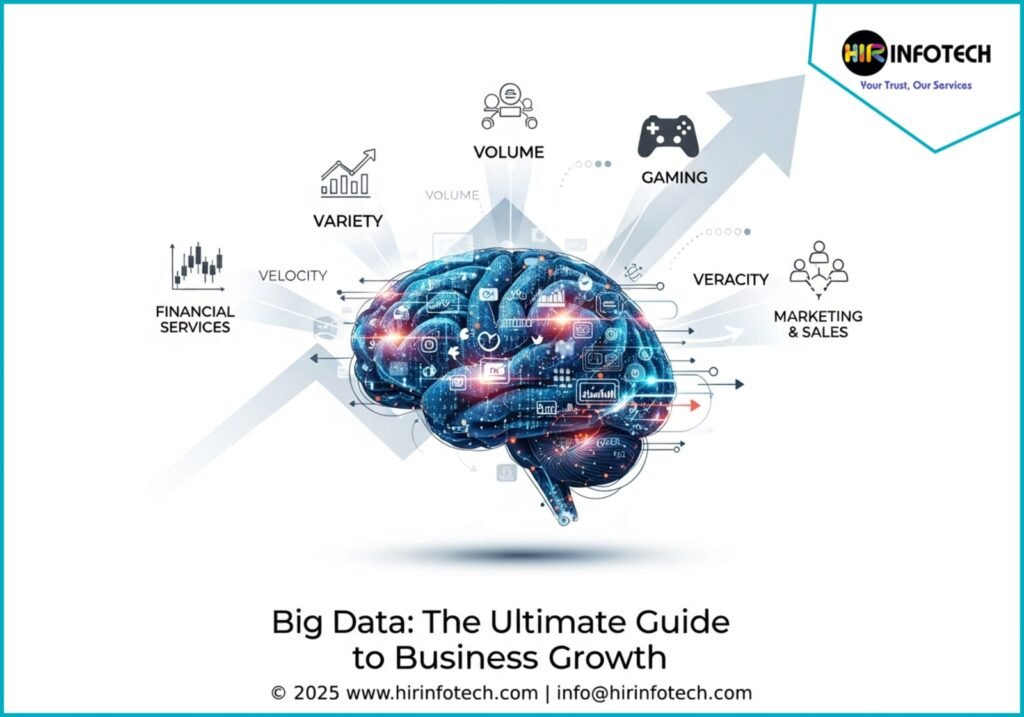
To truly grasp the scale and potential of Big Data, it’s helpful to think in terms of the “Four Vs”:
- Volume: This refers to the sheer amount of data being generated. In 2026, the volume of data is staggering, with companies collecting information from countless sources, including social media, IoT devices, and customer interactions.
- Velocity: Data is being created at an unprecedented speed. For businesses to stay competitive, they need to be able to process and analyze this data in real-time to make timely decisions.
- Variety: Big Data comes in many forms. It’s not just numbers in a spreadsheet; it includes text, images, videos, and more. The ability to analyze these diverse data types is key to unlocking a complete picture of your market and customers.
- Veracity: With such a massive volume of data, ensuring its accuracy and reliability is a significant challenge. Businesses must have processes in place to clean and verify their data to ensure that their insights are based on trustworthy information.
A fifth “V” is also emerging as a critical component:
- Value: Ultimately, the goal of collecting and analyzing Big Data is to create value. Whether it’s through improved customer experiences, more efficient operations, or new revenue streams, the value derived from data is what justifies the investment in Big Data technologies.
Big Data in Action: Transforming Industries in 2026
The theoretical understanding of Big Data is important, but its real-world applications are what truly demonstrate its transformative power. Here’s a closer look at how Big Data is revolutionizing key sectors:
Financial Services: From “Small Data” to Strategic Insights
Before the advent of Big Data, financial services organizations relied on “small data”—such as credit ratings and transaction histories—to make decisions. While useful, this limited view is no longer sufficient in today’s complex digital world. The financial industry now generates an overwhelming amount of data, and Big Data analytics is essential to make sense of it all.
By leveraging Big Data, financial institutions can systematize and organize massive amounts of dispersed information into coherent, actionable insights. This enables them to:
- Enhance Decision-Making: Gain deep insights into market trends and customer behavior to make more informed investment and lending decisions.
- Manage Risk More Effectively: Analyze vast datasets to identify potential risks and fraudulent activities in real-time.
- Personalize Customer Experiences: Understand customer needs and preferences to offer tailored financial products and services.
- Improve Operational Efficiency: Automate processes and optimize workflows to reduce costs and improve productivity.
For example, by analyzing customer data, a bank can predict when a customer might be at risk of closing their account and proactively offer incentives to retain them. Similarly, investment firms can use Big Data to analyze market sentiment from news articles and social media to make more timely and profitable trading decisions.
The Gaming Sector: Personalizing the Player Experience
The gaming industry is another sector where Big Data is having a profound impact. Gaming companies collect vast amounts of data on player behavior, from the games they play to the in-game items they purchase. By analyzing this data, they can:
- Optimize Game Design: Understand which game features are most popular and which ones are causing players to quit, allowing them to create more engaging and enjoyable experiences.
- Personalize Offers and Promotions: By analyzing player data, gaming companies can offer targeted bonuses and promotions that are most likely to appeal to individual players, increasing engagement and revenue.
- Combat Fraud and Cheating: Big Data analytics can be used to identify patterns of behavior that indicate cheating or fraudulent activity, helping to maintain a fair and secure gaming environment for all players.
The ability to personalize the player experience is a key driver of success in the competitive gaming market, and Big Data is the technology that makes it possible.
Marketing and Sales: Understanding the Customer Journey
For marketers, Big Data is a treasure trove of information about their target audience. By gathering and analyzing data from sources like social media, website analytics, and customer surveys, marketers can:
- Gain a Deeper Understanding of Customer Behavior: Go beyond basic demographics to understand what motivates their customers, what their pain points are, and what they expect from a brand.
- Precisely Target Marketing Campaigns: With AI-driven segmentation, marketers can deliver hyper-personalized messages and offers to the right audience at the right time, dramatically increasing the effectiveness of their campaigns.
- Optimize the Customer Journey: By tracking customer interactions across all touchpoints, businesses can identify areas for improvement and create a seamless and enjoyable customer experience from start to finish.
- Fuel Predictive Analytics: Marketers can now forecast customer behavior and buying cycles with incredible accuracy, allowing for proactive campaigns that engage customers before they even realize they’re ready to buy.
Big Data allows businesses to move from a “one-size-fits-all” approach to a highly personalized and data-driven marketing strategy that delivers real results.
Leveraging Web Scraping and Data Extraction for a Competitive Edge
For many businesses, the key to unlocking the power of Big Data lies in their ability to collect it. This is where web scraping and data extraction come in. These powerful techniques allow businesses to automatically gather vast amounts of data from websites and other online sources. This data can then be used to:
- Monitor Competitor Activity: Track competitor pricing, product offerings, and marketing campaigns to stay one step ahead of the competition.
- Conduct Market Research: Gather data on market trends, customer sentiment, and emerging opportunities to inform business strategy.
- Generate Leads: Extract contact information from online directories and social media platforms to build targeted lead lists for sales and marketing efforts.
- Fuel Machine Learning and AI: Web scraping is an essential tool for gathering the massive datasets needed to train and validate machine learning models.
In today’s data-driven world, the ability to efficiently and accurately extract data from the web is a critical competitive advantage.
The Future of Big Data: Smarter, Faster, and More Autonomous
The world of Big Data is constantly evolving. As we look ahead, several key trends are shaping the future of data and analytics:
- The Rise of Generative AI and RAG: Generative AI, combined with retrieval-augmented generation (RAG), is set to supercharge data analytics, enabling businesses to derive insights from their data more quickly and effectively than ever before.
- The Growth of Edge Analytics: With the proliferation of IoT devices, more and more data is being generated at the “edge” of the network. Edge analytics allows this data to be processed in real-time, without the need to send it to a centralized cloud server, enabling faster decision-making in time-sensitive applications.
- A Stronger Focus on Ethical Data Practices: As businesses collect and use more data, there is a growing emphasis on ethical considerations, such as data privacy and explainability.
- The Shift Toward Greener, More Energy-Efficient Infrastructure: The massive data centers required to store and process Big Data consume a significant amount of energy. In the coming years, there will be a greater focus on developing more sustainable and energy-efficient data infrastructure.
The pace of innovation in the Big Data space is relentless. Businesses that can stay ahead of these trends will be well-positioned to thrive in the data-driven economy of the future.
Take the Next Step with Hir Infotech
The world of Big Data can be complex and overwhelming, but you don’t have to navigate it alone. Hir Infotech is a leading provider of data solutions, with over 13 years of experience helping businesses of all sizes unlock the power of their data.
Our team of experts specializes in web scraping, data extraction, and a wide range of other data-related services. We have the technology and the expertise to help you gather, process, and analyze the data you need to make smarter, more informed business decisions.
Ready to transform your business with the power of Big Data? Contact Hir Infotech today for a free consultation and learn how our data solutions can help you achieve your goals.
Frequently Asked Questions (FAQs)
1. What is the biggest challenge for businesses when it comes to Big Data?
One of the biggest challenges is the sheer volume of data. Many businesses struggle to store, manage, and process the massive amounts of data they collect. This can lead to issues with data quality, security, and integration. Another significant challenge is the shortage of skilled data scientists and analysts who can effectively interpret the data and translate it into actionable insights.
2. How can small businesses benefit from Big Data?
While Big Data is often associated with large corporations, small businesses can also reap significant benefits. By leveraging affordable cloud-based analytics tools, small businesses can gain valuable insights into their customers, competitors, and market trends. This can help them to make more informed decisions, improve their marketing efforts, and compete more effectively with larger companies.
3. What is the difference between Big Data and Business Intelligence?
Business Intelligence (BI) typically focuses on analyzing structured data from internal sources to track performance and generate reports. Big Data, on the other hand, involves analyzing both structured and unstructured data from a wide range of sources to uncover hidden patterns, predict future trends, and gain a deeper understanding of the business environment. In essence, Big Data takes Business Intelligence to the next level by providing a more comprehensive and forward-looking view of the business.
4. How does Big Data impact data security and privacy?
The collection and storage of massive amounts of data raise significant security and privacy concerns. Businesses must take steps to protect their data from cyber threats and ensure that they are in compliance with data privacy regulations like GDPR. This includes implementing robust security measures, anonymizing data whenever possible, and being transparent with customers about how their data is being used.
5. What are some of the most popular Big Data analytics tools?
There are a wide variety of Big Data analytics tools available, each with its own strengths and weaknesses. Some of the most popular tools include Apache Hadoop, Apache Spark, Microsoft Power BI, Tableau, and Qlik Sense. The best tool for a particular business will depend on its specific needs and budget.
6. How can web scraping help my business?
Web scraping can provide your business with a wealth of valuable data. It can be used for a wide range of applications, including competitor monitoring, market research, lead generation, and price optimization. By automating the data collection process, web scraping can save you time and money, and provide you with the insights you need to make more informed business decisions.
7. Is web scraping legal?
The legality of web scraping depends on a number of factors, including the type of data being scraped, the website’s terms of service, and the jurisdiction in which you are operating. In general, it is legal to scrape publicly available data, but it is important to be aware of and comply with any applicable laws and regulations. It is always a good idea to consult with a legal professional to ensure that your web scraping activities are in compliance with the law.