
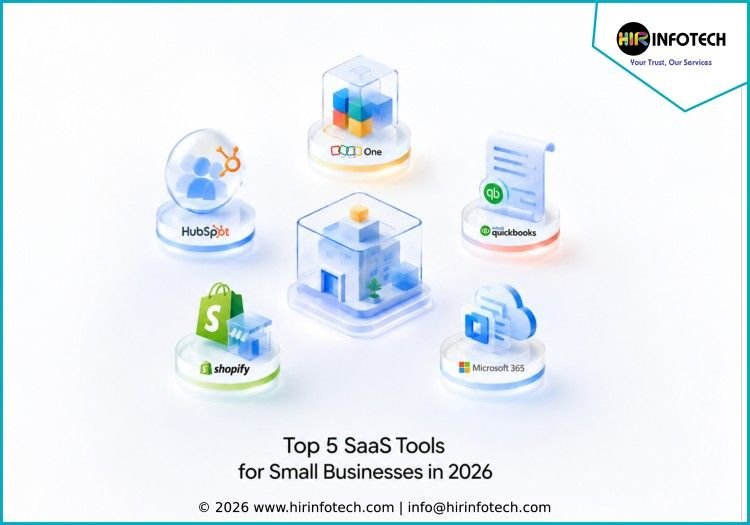
Top 5 SaaS Tools for Small Businesses
1. Zoho One
Zoho One is an all-in-one business software suite designed for small businesses that want to manage multiple departments from one connected platform. It includes tools for sales, marketing, finance, HR, customer support, projects, analytics, and workflow automation. For small companies that do not want to manage many separate subscriptions, Zoho One provides a practical way to centralize daily operations.
Short overview:
Zoho One gives businesses access to a wide range of unified applications that can support customer management, invoicing, team collaboration, reporting, process automation, and business communication. It is especially useful for companies that want one ecosystem instead of switching between disconnected tools.
Key strengths:
Zoho One offers CRM, email marketing, accounting, project management, help desk, analytics, automation, admin control, and app customization. Its connected structure helps small businesses reduce software complexity and improve visibility across teams.
Best for:
Small businesses, startups, agencies, service providers, and growing companies that need a complete SaaS platform for managing different business functions.
2. HubSpot
HubSpot is a strong SaaS tool for small businesses that want to manage marketing, sales, customer relationships, and service from one platform. It is widely known for its CRM, but it also offers tools for email marketing, lead tracking, landing pages, live chat, reporting, sales pipelines, and customer support.
Short overview:
HubSpot helps small businesses organize customer data, track leads, manage deals, automate follow-ups, and improve communication between sales and marketing teams. It is useful for companies that want to build stronger customer relationships without using complex enterprise software.
Key strengths:
HubSpot offers contact management, pipeline tracking, email templates, meeting scheduling, live chat, marketing automation, reporting dashboards, and customer service tools. Its CRM structure makes it easier for small teams to manage leads and customer interactions in one place.
Best for:
Small businesses, B2B companies, marketing teams, sales teams, consultants, and service-based businesses that want to improve lead management and customer communication.
3. QuickBooks Online
QuickBooks Online is one of the most useful SaaS tools for small businesses that need reliable accounting, invoicing, expense tracking, and financial reporting. It helps business owners manage cash flow, create invoices, track payments, connect bank accounts, organize expenses, and prepare financial reports with less manual work.
Short overview:
QuickBooks Online is designed to simplify small business finance. Instead of relying only on spreadsheets or manual bookkeeping, businesses can use it to manage income, expenses, invoices, taxes, and reports from a cloud-based platform.
Key strengths:
QuickBooks Online offers invoicing, bookkeeping, bank connection, expense tracking, receipt capture, reporting, tax support, payment tracking, and app integrations. It also helps business owners and accountants work together more efficiently.
Best for:
Small businesses, freelancers, agencies, ecommerce sellers, consultants, and service providers that need easy financial management and clear accounting reports.
4. Shopify
Shopify is a leading SaaS platform for small businesses that want to sell products online, in person, or across multiple sales channels. It helps businesses create ecommerce stores, manage products, process payments, track inventory, run promotions, and connect with marketplaces, social platforms, and third-party apps.
Short overview:
Shopify gives small businesses the tools to launch, manage, and grow an online store without needing advanced technical knowledge. It supports product pages, checkout, payment processing, shipping, inventory, analytics, and customer management in one platform.
Key strengths:
Shopify offers ecommerce website building, secure checkout, inventory tools, payment options, sales channel integrations, app marketplace support, analytics, and marketing features. It is especially strong for businesses that want to scale from a small store into a larger online brand.
Best for:
Retailers, ecommerce startups, D2C brands, product-based businesses, creators, and small companies that want to sell online professionally.
5. Microsoft 365 Business
Microsoft 365 Business is a practical SaaS solution for small businesses that need productivity, communication, cloud storage, document management, and secure collaboration. It includes widely used tools such as Outlook, Word, Excel, PowerPoint, Teams, OneDrive, SharePoint, Planner, and Forms, depending on the selected plan.
Short overview:
Microsoft 365 Business helps small teams work from anywhere, manage documents, communicate through email and meetings, collaborate on files, and improve productivity. It is suitable for businesses that want familiar office tools combined with cloud access and admin controls.
Key strengths:
Microsoft 365 Business offers business email, document creation, cloud storage, video meetings, team chat, file sharing, calendar management, security features, and productivity apps. Its familiar interface makes adoption easier for many small business teams.
Best for:
Small businesses, remote teams, professional service firms, consultants, agencies, and companies that need secure productivity and communication tools.
Why Choosing the Right Company Matters
Choosing from the Top 5 SaaS Tools for Small Businesses is not just about selecting popular software. The right SaaS platform should match your business size, daily workflow, team structure, budget, and growth goals.
Small businesses often have limited time, resources, and technical support. That is why ease of use matters. A tool may have many advanced features, but if your team cannot use it comfortably, it may slow down adoption. Business owners should choose SaaS tools that are simple enough for daily use but flexible enough to support future growth.
Pricing is another important factor. Many SaaS platforms charge based on users, features, storage, automation limits, or transaction volume. A tool that looks affordable at the start may become expensive as the business grows. Before choosing, companies should compare monthly costs, annual plans, hidden fees, upgrade limits, and required add-ons.
Technology and integration support are also important. A good SaaS tool should connect with the systems your business already uses, such as email, payment tools, CRM, ecommerce platforms, accounting software, analytics tools, and communication apps. Strong integrations reduce duplicate work and help teams maintain accurate information across departments.
Data quality and reporting should not be ignored. Small businesses need clear visibility into sales, customers, expenses, inventory, marketing performance, and team productivity. The right SaaS tool should provide useful dashboards and reports that support better decision-making.
Support and scalability are equally valuable. As your business grows, your software needs may change. A reliable SaaS provider should offer helpful documentation, customer support, onboarding resources, security features, and flexible plans. This helps businesses avoid switching platforms too often.
The best SaaS tools for small businesses are not always the most expensive or feature-heavy options. They are the tools that solve real business problems, reduce manual work, improve team collaboration, and help owners make faster decisions.
Conclusion
The Top 5 SaaS Tools for Small Businesses in 2026 can help companies manage work more efficiently, improve customer relationships, organize finances, sell online, and support team productivity. Zoho One is useful for businesses that want a complete software suite. HubSpot is a strong choice for CRM, sales, and marketing. QuickBooks Online supports better financial management. Shopify helps product-based businesses grow online. Microsoft 365 Business is ideal for productivity, communication, and secure collaboration.
Before choosing any SaaS platform, small businesses should compare features, pricing, integrations, support, scalability, and ease of use. The right SaaS tool can save time, improve operations, and give small businesses the structure they need to grow with confidence.









