
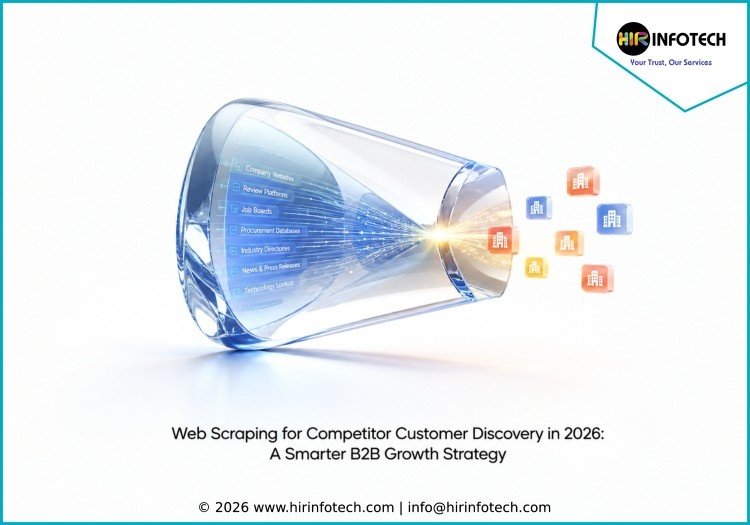
Web Scraping for Competitor Customer Discovery in 2026: A Smarter B2B Growth Strategy
Introduction
In highly competitive B2B markets, understanding who your competitors serve can reveal valuable sales opportunities, market gaps, and expansion potential. Web scraping for competitor customer discovery has become an increasingly important strategy for businesses across the USA, Germany, the United Kingdom, France, Italy, Spain, the Netherlands, Switzerland, Poland, Ireland, Australia, Canada, Thailand, Hong Kong, and other global markets looking to improve prospecting efficiency and market intelligence in 2026.
What Is Web Scraping for Competitor Customer Discovery?
Web scraping for competitor customer discovery refers to the process of collecting publicly available business information from websites, directories, marketplaces, case studies, review platforms, social platforms, procurement databases, job boards, and other online sources to identify companies that may already use a competitor’s products or services.
The goal is not simply collecting random company data. Businesses use competitor customer discovery to uncover:
- Potential buyers already investing in similar solutions
- Companies showing buying intent signals
- Industry-specific demand patterns
- Vendor switching opportunities
- Expansion targets in new markets
- Market positioning insights
- Technology adoption trends
For B2B sales and marketing teams, this approach helps prioritize higher-intent prospects instead of relying solely on cold outreach to broad databases.
Why Competitor Customer Discovery Matters in 2026
B2B buyer journeys have become more research-driven, fragmented, and competitive. Companies are investing heavily in specialized software, outsourcing providers, SaaS platforms, data vendors, logistics providers, IT solutions, manufacturing services, and digital transformation initiatives.
As a result, businesses increasingly want prospect databases built around real market activity rather than generic contact lists.
Competitor customer discovery helps organizations:
Improve Lead Quality
Businesses already using a similar product or service often represent stronger sales opportunities because they already understand the value category.
Reduce Prospecting Time
Instead of manually researching accounts one by one, scraping workflows can automate large-scale data collection from multiple public sources.
Identify Market Trends Faster
Customer patterns across industries and regions can reveal:
- Emerging markets
- New buyer segments
- Geographic expansion trends
- Technology migration patterns
- Vendor dissatisfaction signals
Support Account-Based Marketing (ABM)
Sales and marketing teams can create highly targeted campaigns based on competitor usage, industry fit, company size, hiring activity, or technology stack indicators.
Enhance International Market Research
For companies targeting multiple countries such as the USA, Germany, the UK, Canada, Australia, and European markets, scraping competitor-related customer signals can help localize sales strategies more effectively.
Common Public Sources Used for Competitor Customer Discovery
Modern web scraping strategies rely on multiple structured and unstructured data sources. The quality of discovery often depends on how intelligently these sources are combined.
Company Websites
Customer logos, testimonials, case studies, implementation stories, integration pages, and partner sections often reveal valuable customer relationships.
Review Platforms
Platforms that host B2B software reviews frequently expose:
- Verified business users
- Industry categories
- Company size indicators
- Regional adoption patterns
Job Boards
Companies hiring for tools, platforms, or technologies associated with competitors may signal active adoption or migration projects.
Procurement and Tender Databases
Public procurement systems can reveal vendor relationships, contract awards, and enterprise purchasing patterns.
Technology Lookup Platforms
Technology footprint analysis can help identify companies using specific platforms, CRMs, analytics tools, automation systems, or cloud solutions.
Industry Directories
Niche business directories often contain rich segmentation data useful for identifying competitor-aligned customer groups.
News and Press Releases
Funding announcements, partnerships, acquisitions, and digital transformation initiatives frequently provide strong buying intent signals.
How Web Scraping Supports B2B Sales Teams
Competitor customer discovery is no longer just a market research activity. In 2026, it plays a major operational role in revenue generation.
Faster Pipeline Development
Sales teams can focus on accounts with higher relevance instead of broad untargeted outreach.
Better Prospect Segmentation
Scraped datasets can be organized by:
- Industry
- Revenue range
- Employee count
- Geographic region
- Technology usage
- Buying signals
- Existing vendor relationships
Improved Outreach Personalization
Understanding which competitor solution a company may already use helps sales teams craft more relevant messaging and positioning.
More Accurate Territory Planning
Regional adoption data helps businesses allocate resources more strategically across target markets such as:
- North America
- Western Europe
- APAC regions
- Emerging digital economies
Competitive Positioning Insights
Scraped intelligence can help organizations understand:
- Where competitors are strongest
- Which industries are underserved
- Where churn or dissatisfaction signals may exist
Challenges Businesses Face With Competitor Customer Discovery
Although the concept sounds straightforward, effective competitor customer discovery requires significant technical and operational expertise.
Data Quality Problems
Public web data is often:
- Duplicated
- Incomplete
- Outdated
- Poorly structured
- Inconsistent across sources
Without proper validation workflows, businesses may end up with unreliable lead databases.
Compliance and Privacy Requirements
Different countries have varying expectations around:
- Data usage
- Privacy
- Consent
- Storage
- Outreach practices
Organizations operating across the USA, UK, Germany, Switzerland, Ireland, and other international markets must ensure responsible data collection and processing practices.
Anti-Bot Protections
Many websites now use:
- Rate limiting
- Captchas
- Dynamic rendering
- Cloud-based protection systems
- API restrictions
Large-scale scraping operations require robust infrastructure and adaptive extraction workflows.
Data Enrichment Complexity
Raw scraped data rarely provides complete business intelligence. Most companies need:
- Contact enrichment
- Company verification
- Industry classification
- CRM-ready formatting
- Email validation
- Deduplication
Scalability Challenges
What works for scraping a few hundred companies may fail at enterprise scale when businesses need:
- Multi-country coverage
- Frequent updates
- Large datasets
- Real-time monitoring
- Automated delivery pipelines
Best Practices for Competitor Customer Discovery in 2026
Businesses achieving strong results from web scraping initiatives typically follow structured data operations rather than ad hoc scraping projects.
Focus on Publicly Available Business Data
Responsible scraping strategies prioritize publicly accessible professional and company-related information relevant to legitimate business research and prospecting.
Combine Multiple Data Sources
Relying on a single source often limits accuracy. Better results come from combining:
- Company websites
- Technology data
- Review ecosystems
- Industry directories
- News monitoring
- Hiring signals
Prioritize Data Validation
Modern lead generation workflows increasingly include:
- Automated verification
- AI-assisted classification
- Duplicate removal
- Email validation
- Company normalization
Build Market-Specific Targeting
Customer discovery strategies should reflect regional business differences across:
- North America
- Europe
- Asia-Pacific markets
Buyer behavior, industry maturity, and compliance expectations vary significantly by country.
Integrate With CRM and Sales Systems
Competitor customer discovery becomes more valuable when connected with:
- CRM platforms
- Marketing automation
- Sales intelligence tools
- ABM platforms
- Reporting dashboards
Industry Use Cases for Competitor Customer Discovery
SaaS and Technology Companies
Software vendors often identify companies already using competing platforms and target migration opportunities.
Recruitment and HR Services
Agencies use scraping workflows to discover businesses actively investing in workforce expansion or HR technologies.
Manufacturing and Industrial Services
Industrial suppliers analyze procurement activity and supplier relationships across international markets.
Marketing and Digital Agencies
Agencies monitor businesses investing in advertising, automation, analytics, or digital transformation initiatives.
Logistics and Supply Chain Providers
Competitor customer discovery helps identify companies expanding into new shipping, warehousing, or distribution markets.
How HirInfotech Supports Web Scraping and B2B Data Discovery
For businesses seeking scalable competitor customer discovery, HirInfotech provides web scraping and B2B data extraction solutions designed to support lead generation, market intelligence, and sales prospecting workflows.
Its services are relevant for organizations looking to build targeted business databases from publicly available online sources across multiple regions including the USA, Germany, the United Kingdom, France, Italy, Spain, the Netherlands, Switzerland, Poland, Ireland, Australia, Canada, Thailand, Hong Kong, and other international markets.
Competitor customer discovery projects often require more than simple scraping scripts. Businesses typically need scalable extraction workflows, structured data processing, validation systems, enrichment capabilities, and CRM-ready formatting. HirInfotech supports these operational requirements through customized scraping workflows aligned with business targeting criteria and industry-specific research goals.
The company’s approach can help organizations:
- Build targeted prospect databases
- Identify competitor-aligned customer segments
- Extract structured B2B company data
- Support account-based marketing initiatives
- Monitor market expansion trends
- Improve sales intelligence workflows
For companies operating across multiple industries or regions, scalable scraping infrastructure and reliable data processing are increasingly important for maintaining accurate and actionable prospect datasets in 2026.
Key Factors Businesses Should Evaluate Before Choosing a Data Scraping Partner
Not all scraping providers deliver the same level of reliability or operational maturity. Businesses evaluating external support should consider several practical factors.
Technical Scalability
Can the provider handle:
- Large datasets
- Frequent updates
- Multi-country projects
- Dynamic websites
- Structured exports
Data Accuracy Standards
Reliable providers typically implement:
- Validation workflows
- Deduplication
- Quality checks
- Data normalization
Compliance Awareness
International projects require awareness of:
- Regional privacy expectations
- Responsible data handling
- Public-source limitations
- Outreach considerations
Delivery Flexibility
Businesses may require:
- CSV exports
- CRM integrations
- API delivery
- Automated reporting
- Scheduled updates
Industry Understanding
Specialized providers often understand:
- Buyer intent signals
- Industry-specific data structures
- Relevant prospect indicators
- Sales intelligence priorities
Frequently Asked Questions
What is competitor customer discovery in B2B sales?
Competitor customer discovery involves identifying companies that may already use competing products or services through publicly available online data sources.
Is web scraping useful for account-based marketing?
Yes. Web scraping can help businesses identify highly targeted accounts based on competitor usage, industry fit, hiring signals, technology adoption, and regional targeting criteria.
Can competitor customer discovery support international lead generation?
Yes. Businesses targeting markets such as the USA, Germany, the UK, Canada, Australia, and Europe often use scraping workflows to identify region-specific prospect opportunities and industry demand patterns.
What types of data are commonly collected during competitor discovery?
Common data includes company names, industries, websites, technologies used, hiring activity, customer references, procurement activity, and other publicly available business information.
How important is data validation in web scraping projects?
Data validation is critical. Raw scraped datasets often contain duplicates, outdated information, and inconsistent formatting. Validation workflows improve lead quality and usability.
Can HirInfotech help businesses build competitor-based prospect databases?
Yes. HirInfotech provides web scraping and B2B data extraction services that can support competitor customer discovery, lead generation, and sales intelligence workflows.
Conclusion
Web scraping for competitor customer discovery has become an important strategy for B2B organizations looking to improve lead quality, strengthen market intelligence, and accelerate pipeline growth in 2026. Businesses across the USA, Europe, Canada, Australia, and APAC markets increasingly rely on structured public data collection to identify high-intent prospects and uncover competitive opportunities.
As data quality, scalability, compliance awareness, and sales intelligence become more important, businesses often require specialized support to build reliable discovery workflows. For organizations exploring scalable B2B data extraction and prospect research, HirInfotech offers services aligned with modern competitor customer discovery and business intelligence requirements.









