
Author name: s940m874bi9jjiq5xpiu

Uncategorized

How to Monitor Flash Sales Across Competitor Websites in 2026

How to Monitor Flash Sales Across Competitor Websites in 2026 Introduction Flash sales have become one of the most powerful pricing strategies in ecommerce and retail. Competitors can launch limited-time discounts, bundle offers, coupon campaigns, and promotional events without much notice. For brands, retailers, and marketplace sellers, monitoring these activities is essential for protecting market share, maintaining competitive pricing, and responding quickly to changing customer demand. Why Monitoring Flash Sales Matters for Businesses Flash sales are designed to create urgency and increase conversions within a short period. While they can drive significant revenue for the businesses running them, they can also impact competitors that are unaware of these promotions. In 2026, online shoppers compare prices across multiple platforms before making purchasing decisions. If a competitor launches a major discount campaign and your team discovers it days later, valuable sales opportunities may already be lost. Monitoring competitor flash sales helps businesses: Whether you operate an ecommerce store, retail chain, marketplace business, or consumer brand, visibility into competitor promotions provides a significant strategic advantage. Common Challenges of Tracking Competitor Flash Sales Manually Many businesses still rely on manual monitoring methods such as checking competitor websites, subscribing to newsletters, or reviewing marketplace listings. While these approaches may work for a small number of competitors, they become difficult to manage as product catalogs and promotional activity grow. Limited Monitoring Coverage Flash sales often last only a few hours or a single day. Manual checks may miss these promotions entirely. High Resource Requirements Teams spend significant time reviewing websites, comparing prices, and recording promotional data. Delayed Competitive Response By the time a flash sale is discovered manually, the competitor may have already achieved most of its campaign objectives. Inconsistent Data Collection Different team members may track promotions differently, resulting in incomplete or inaccurate reporting. Scaling Difficulties Monitoring dozens of competitors across multiple regions, marketplaces, and product categories quickly becomes unmanageable without automation. As ecommerce competition increases, businesses require more efficient ways to identify and analyze flash sale activity. How Businesses Can Monitor Flash Sales Effectively Successful flash sale monitoring requires a combination of automation, data collection, alerting systems, and competitive intelligence processes. Track Product Pricing Continuously Continuous pricing monitoring allows businesses to identify sudden discount events as they happen. Instead of checking prices periodically, automated systems can collect pricing information throughout the day and flag significant changes. This approach helps identify: Monitor Promotional Banners and Campaign Pages Many flash sales are announced through homepage banners, category pages, landing pages, and promotional sections. Tracking these elements helps businesses understand: Set Real-Time Alerts Speed is critical when monitoring competitor promotions. Automated alerts can notify teams when: Real-time visibility allows businesses to respond while promotions are still active. Analyze Historical Promotion Data Historical tracking provides valuable insights into competitor behavior. Businesses can identify: Historical analysis supports better forecasting and strategic planning. Technology and Automation in Flash Sale Monitoring Modern competitor monitoring increasingly relies on automated data collection and analytics technologies. Automated monitoring systems can collect information from: Businesses use these systems to gather structured information such as: Advanced monitoring solutions can also track dynamic content, detect changes automatically, and provide centralized reporting dashboards for decision-makers. In 2026, many organizations are moving beyond simple price tracking and adopting comprehensive promotion intelligence strategies that combine competitor monitoring, analytics, and automated reporting. How Hir Infotech Supports Competitor Promotion Monitoring Through Web Scraping For businesses that need reliable visibility into competitor flash sales, web scraping has become one of the most practical and scalable approaches to collecting promotional data. Hir Infotech specializes in custom web scraping solutions that help organizations gather structured information from competitor websites, ecommerce platforms, online marketplaces, and promotional landing pages. When monitoring flash sales, businesses often require more than occasional price checks. They need automated systems capable of tracking pricing updates, promotional banners, discount events, stock availability, and product-level changes across multiple websites simultaneously. Custom web scraping solutions can support these requirements by collecting data on a scheduled basis, detecting significant changes, and delivering actionable insights through reports, dashboards, or business intelligence tools. Rather than relying on generic monitoring tools with limited flexibility, organizations often require customized workflows tailored to their product categories, competitive landscape, and reporting needs. This is particularly important when tracking large catalogs, multiple competitor websites, or region-specific promotional campaigns. By building scalable data collection systems and competitor monitoring workflows, Hir Infotech helps businesses transform raw competitor data into useful market intelligence that supports pricing decisions, promotional planning, and revenue optimization initiatives. Best Practices for Competitor Flash Sale Monitoring in 2026 Prioritize Key Competitors Focus monitoring efforts on competitors that directly impact your market position and sales performance. Monitor Multiple Data Points Price alone rarely tells the complete story. Track promotions, bundles, stock levels, shipping incentives, and campaign messaging. Use Automated Reporting Automated dashboards help teams quickly identify important market changes without reviewing raw data manually. Establish Alert Thresholds Configure alerts for significant discount levels, sudden inventory changes, or promotional launches. Review Trends Regularly Historical analysis often reveals patterns that help businesses anticipate future competitor actions. Organizations that combine automation with strategic analysis typically gain greater value from competitor monitoring initiatives. Frequently Asked Questions How often should competitor flash sales be monitored? Businesses operating in highly competitive ecommerce markets often monitor competitor pricing and promotions continuously or multiple times per day to avoid missing short-duration sales events. What information should be tracked during a flash sale? Key data points include product prices, discount percentages, campaign duration, stock availability, bundle offers, promotional messaging, and featured product categories. Can automated monitoring detect limited-time promotions? Yes. Automated monitoring systems can identify pricing changes, promotional banners, and campaign updates as they appear on competitor websites. Why is historical flash sale data important? Historical data helps businesses identify competitor pricing patterns, seasonal trends, and recurring promotional strategies that support better planning and forecasting. How can web scraping support competitor promotion monitoring? Web scraping enables businesses to collect structured data from competitor websites automatically, making it easier to track flash
Uncategorized

Coupon Code Tracking for D2C Brands in 2026: How to Monitor Promotions, Protect Margins, and Stay Competitive

Coupon Code Tracking for D2C Brands in 2026: How to Monitor Promotions, Protect Margins, and Stay Competitive For direct-to-consumer (D2C) brands, coupon codes have become a critical part of customer acquisition, retention, and conversion strategies. However, as promotional campaigns multiply across websites, affiliates, influencers, and competitors, tracking coupon code activity accurately becomes increasingly difficult. Effective coupon code tracking helps brands understand market trends, protect profitability, and make better pricing decisions in 2026. Why Coupon Code Tracking Matters for D2C Brands D2C brands operate in highly competitive markets where consumers actively search for discounts before making purchasing decisions. Coupon codes influence buying behavior, customer loyalty, and campaign performance. Without proper coupon code tracking, brands may face challenges such as: Tracking coupon codes enables brands to gain visibility into how promotions are being used, where they are being distributed, and how they compare against competitor offers. The Growing Importance of Promotional Intelligence In 2026, consumers often discover deals through coupon websites, influencer partnerships, loyalty platforms, cashback portals, and social media communities. D2C brands need a centralized view of this promotional ecosystem to understand market positioning and customer expectations. Coupon tracking provides valuable insights that support revenue growth while maintaining pricing discipline. Key Challenges D2C Brands Face with Coupon Monitoring Many brands launch promotional campaigns but lack the infrastructure needed to monitor how coupon codes spread across digital channels. Unauthorized Coupon Sharing Exclusive discount codes intended for specific customer groups can quickly appear on coupon aggregators or deal-sharing websites. This often leads to unplanned discounting and reduced campaign control. Competitor Discount Visibility Tracking competitor promotions manually is time-consuming and often incomplete. Competitors may launch flash sales, limited-time discounts, influencer promotions, or region-specific campaigns that are difficult to detect manually. Affiliate and Partner Compliance Issues Affiliate networks can generate significant sales, but improper coupon usage may create attribution conflicts or violate promotional guidelines. Data Fragmentation Promotional data is typically scattered across: Collecting and analyzing this information manually becomes increasingly difficult as brands scale. How Coupon Code Tracking Supports Better Business Decisions Modern coupon monitoring provides more than simple discount visibility. It delivers actionable business intelligence that supports multiple departments. Pricing Strategy Optimization Understanding competitor discount frequency and coupon structures helps brands adjust promotional strategies without unnecessarily reducing margins. Brands can evaluate: Campaign Performance Analysis Tracking coupon usage allows marketing teams to identify which promotions generate the strongest return on investment. This enables businesses to: Competitor Intelligence D2C brands can monitor competitor promotional activity continuously and identify: These insights help businesses react more effectively to changing market conditions. Best Practices for Coupon Code Tracking in 2026 As promotional channels become more fragmented, brands need a structured approach to coupon intelligence. Automate Data Collection Manual tracking cannot keep pace with the volume of promotional activity occurring across the internet. Automated monitoring systems can continuously collect coupon information from multiple sources. This provides real-time visibility into active promotions and emerging discount trends. Monitor Multiple Sources Effective coupon tracking should include: Track Historical Changes Historical coupon data helps brands understand promotional patterns over time. Analyzing long-term trends allows businesses to identify: Integrate Coupon Intelligence with Analytics Coupon monitoring becomes significantly more valuable when connected to business intelligence and reporting systems. Combining promotional data with sales performance metrics enables better forecasting and strategic planning. How HirInfotech Supports Coupon Code Tracking for D2C Brands For D2C brands seeking scalable promotional intelligence, HirInfotech provides customized web data extraction and monitoring solutions that help businesses track coupon activity across digital channels. Rather than relying on manual research, organizations can leverage automated data collection workflows to monitor competitor discounts, promotional campaigns, coupon listings, and offer changes across multiple websites. HirInfotech’s web scraping capabilities can support businesses looking to collect structured promotional data from publicly available sources, enabling marketing, pricing, and eCommerce teams to gain faster access to actionable insights. Businesses often require reliable monitoring of: With growing competition in the D2C sector, access to accurate promotional intelligence can help organizations make informed decisions regarding pricing, customer acquisition, and campaign planning. A structured approach to coupon tracking allows teams to spend less time gathering data and more time acting on meaningful insights. Frequently Asked Questions What is coupon code tracking? Coupon code tracking is the process of monitoring discount codes, promotional offers, and coupon distribution across websites, affiliates, social platforms, and competitor channels to understand promotional performance and market activity. Why is coupon tracking important for D2C brands? D2C brands rely heavily on promotions to drive conversions. Tracking coupon activity helps control discount strategies, measure campaign effectiveness, and monitor competitor pricing behavior. Can coupon tracking help identify competitor promotions? Yes. Monitoring competitor websites and promotional channels can reveal active discounts, seasonal campaigns, and pricing strategies that may impact market positioning. What data sources should be monitored for coupon intelligence? Brands typically monitor coupon directories, affiliate websites, competitor stores, influencer campaigns, social media promotions, and other publicly available promotional sources. How does automated coupon tracking differ from manual monitoring? Automated tracking continuously collects and updates promotional information across multiple sources, providing faster and more comprehensive visibility than manual research methods. How can HirInfotech help with coupon code tracking? HirInfotech offers web scraping and data collection solutions that help businesses monitor publicly available promotional activity, competitor discounts, and coupon listings at scale. Conclusion Coupon Code Tracking for D2C Brands has become an essential component of modern eCommerce strategy. As promotional activity expands across digital channels, businesses need accurate visibility into discount usage, competitor campaigns, and market trends. Effective monitoring helps protect margins, improve campaign performance, and support smarter pricing decisions. For organizations seeking scalable promotional intelligence, web scraping and automated data collection solutions from HirInfotech can provide valuable support in gathering and analyzing coupon-related data efficiently in 2026.

Uncategorized

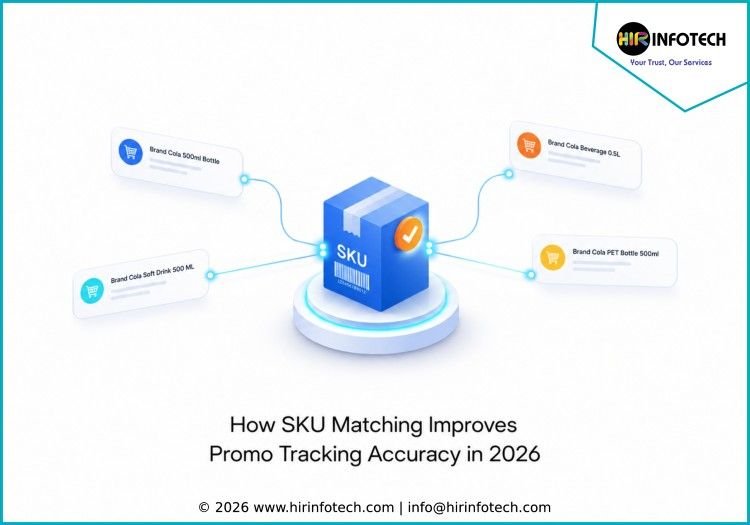
How SKU Matching Improves Promo Tracking Accuracy in 2026

How SKU Matching Improves Promo Tracking Accuracy in 2026 Promotional pricing has become one of the most influential factors affecting consumer purchasing decisions. As retailers and brands compete aggressively through discounts, bundles, BOGO offers, and seasonal campaigns, accurate promotional monitoring has become a business necessity. However, tracking promotions across multiple retailers becomes difficult when identical products are listed differently. This is where SKU matching plays a critical role in improving promo tracking accuracy. Why Accurate Promo Tracking Matters for Modern Businesses Retailers, manufacturers, eCommerce brands, and market intelligence teams rely on promotional tracking to understand market trends, competitor strategies, and pricing performance. Accurate promotional data helps businesses make informed decisions regarding pricing, inventory management, marketing investments, and revenue forecasting. Without reliable promo tracking, businesses may: As retail ecosystems continue to expand across marketplaces, grocery chains, online stores, and omnichannel environments, maintaining promotional data accuracy has become increasingly challenging. What Is SKU Matching and Why Is It Important? SKU matching is the process of identifying and linking identical products across multiple retailers, marketplaces, catalogs, and databases despite differences in naming conventions, descriptions, packaging formats, or product listings. SKU stands for Stock Keeping Unit, a unique identifier used by businesses to track inventory and products. However, retailers often use different product titles, descriptions, abbreviations, and categorization methods. For example, a beverage product may appear as: Although these listings represent the same product, they may appear as separate items without effective SKU matching. When promo tracking systems fail to identify these products correctly, promotional data becomes fragmented and unreliable. Key Product Attributes Used in SKU Matching Combining these attributes improves product identification accuracy across multiple sources. How SKU Matching Directly Improves Promo Tracking Accuracy SKU matching serves as the foundation of reliable promotional intelligence. Without it, businesses may incorrectly compare products or miss promotions altogether. Eliminates Duplicate Product Records Retail websites frequently display identical products using different naming conventions. Poor matching processes can create duplicate records that distort promotional analysis. Effective SKU matching consolidates duplicate listings into a single product view, improving reporting consistency and data quality. Enables Accurate Competitor Promotion Monitoring Brands often monitor how competitors price and promote similar products across multiple retailers. When products are accurately matched: This visibility helps pricing and category management teams respond more effectively to market changes. Improves BOGO and Bundle Offer Detection Buy-One-Get-One promotions, bundle deals, and multi-buy discounts are often presented differently across retailers. SKU matching helps identify products included within promotional bundles and ensures businesses correctly attribute promotions to the right products. This creates more comprehensive promotional datasets and improves campaign analysis. Enhances Historical Promo Analysis Organizations often analyze historical promotions to identify trends and forecast future pricing strategies. Consistent SKU matching enables businesses to: Without consistent product matching, long-term promotional analysis becomes unreliable. Common Promo Tracking Challenges Without SKU Matching Businesses that rely on manual monitoring or incomplete product matching often face significant operational challenges. Inconsistent Product Naming Retailers frequently use unique naming conventions that make direct product comparisons difficult. Variations in abbreviations, spelling, unit measurements, and formatting create matching complexities. Missing Product Identifiers Not all retailers publish GTINs, UPCs, or manufacturer identifiers. Promo tracking systems must therefore rely on advanced matching techniques using alternative product attributes. Variant Confusion Products often have multiple variants based on: Failure to distinguish these variants can result in inaccurate promotional reporting. Large-Scale Data Processing Requirements Modern retailers may list millions of products. Monitoring promotions across numerous websites requires scalable SKU matching systems capable of handling large datasets efficiently. Manual approaches simply cannot keep pace with today’s market complexity. Technologies Used for Modern SKU Matching in 2026 Advancements in data processing and automation have significantly improved SKU matching accuracy. Rule-Based Matching Rule-based systems compare predefined product attributes such as brand names, model numbers, package sizes, and identifiers. These methods remain useful for highly structured datasets but may struggle with inconsistent retailer listings. Machine Learning-Based Matching Machine learning algorithms analyze patterns across product data to identify probable matches even when naming conventions differ. Benefits include: Natural Language Processing (NLP) NLP techniques help systems understand product descriptions and identify semantic similarities between listings. This is particularly valuable when retailer product titles differ substantially while referring to the same product. Automated Product Data Normalization Normalization standardizes product information before matching occurs. This includes: Normalized datasets improve matching consistency and overall promo tracking reliability. How HirInfotech Supports Accurate Promo Tracking Through Data Intelligence For organizations monitoring competitor pricing, promotions, retailer activity, and market trends, accurate product matching is often the most important component of successful data collection initiatives. HirInfotech supports businesses that require large-scale web data extraction and retail intelligence solutions. By helping organizations collect structured product information from multiple online sources, businesses can build stronger foundations for promotional monitoring, pricing analysis, and competitive intelligence programs. Accurate promotional tracking depends on clean and standardized product data. Through advanced data collection workflows, automation processes, and scalable web scraping solutions, HirInfotech helps organizations gather consistent product information across retailers and marketplaces. This enables businesses to improve product visibility, reduce data inconsistencies, support SKU matching initiatives, and generate more reliable market intelligence. Whether companies operate in retail, eCommerce, consumer goods, manufacturing, or distribution, access to accurate product datasets can significantly improve promotional monitoring capabilities and business decision-making. As promotional activity becomes increasingly dynamic in 2026, businesses require dependable data foundations to maintain competitive visibility and respond quickly to market changes. Frequently Asked Questions What is SKU matching in promo tracking? SKU matching is the process of identifying identical products across multiple retailers or data sources to ensure promotional activities are tracked accurately and consistently. Why is SKU matching important for competitor pricing analysis? Accurate SKU matching ensures businesses compare the correct products when evaluating competitor discounts, pricing strategies, and promotional campaigns. Can SKU matching improve BOGO offer tracking? Yes. SKU matching helps identify products involved in BOGO, bundle, and multi-buy promotions, improving promotional visibility and reporting accuracy. What challenges affect SKU matching accuracy? Common challenges include inconsistent product names, missing identifiers, variant complexity,

Uncategorized

Web Scraping for Seasonal Discount Intelligence: A Strategic Guide for Retail and Ecommerce Brands in 2026

Web Scraping for Seasonal Discount Intelligence: A Strategic Guide for Retail and Ecommerce Brands in 2026 Seasonal promotions have become one of the most powerful drivers of consumer purchasing behavior across the USA, UK, Canada, and Spain. From Black Friday and Cyber Monday to Christmas, Back-to-School, and Summer Clearance campaigns, retailers compete aggressively through discounts and limited-time offers. Businesses that can accurately track and analyze these promotional activities gain a significant competitive advantage. This is where web scraping for seasonal discount intelligence has become a valuable business capability. What Is Seasonal Discount Intelligence and Why Does It Matter? Seasonal discount intelligence refers to the process of monitoring, collecting, analyzing, and interpreting promotional pricing data during key shopping periods. Businesses use this intelligence to understand competitor pricing strategies, promotional trends, discount structures, and consumer purchasing patterns. In 2026, discount monitoring is no longer limited to manually checking competitor websites. Ecommerce markets move rapidly, with prices and promotions changing multiple times per day. Companies that rely on manual tracking often miss important market signals that can affect revenue, customer acquisition, and profitability. Seasonal discount intelligence helps organizations answer critical questions such as: Accurate answers to these questions support smarter pricing decisions and stronger market positioning. How Web Scraping Supports Seasonal Discount Intelligence Web scraping automates the collection of publicly available pricing and promotional information from ecommerce websites, online marketplaces, retail portals, and brand stores. Instead of manually reviewing hundreds of product pages, businesses can continuously gather data at scale and monitor thousands of products simultaneously. Key Data Points Collected Through Web Scraping By combining these data points, companies gain a comprehensive view of the promotional landscape throughout seasonal sales events. Real-Time Monitoring Advantages Modern retail environments require near real-time visibility. Web scraping systems can monitor competitor websites multiple times per day, helping businesses identify sudden pricing changes, emerging promotional trends, and discount escalation strategies before competitors gain market share. This proactive approach allows teams to respond quickly rather than reacting after revenue opportunities have been lost. Business Benefits of Web Scraping for Seasonal Discount Intelligence Organizations across retail, ecommerce, consumer goods, and marketplace sectors increasingly use discount intelligence to improve decision-making. Competitive Pricing Optimization Pricing teams can identify competitor discount levels and adjust pricing strategies accordingly. This enables businesses to remain competitive without unnecessarily sacrificing profit margins. Improved Promotion Planning Historical discount intelligence helps marketing and merchandising teams plan future campaigns more effectively. By understanding previous seasonal patterns, businesses can determine: Market Trend Identification Web scraping enables businesses to uncover emerging market trends across multiple regions. For example, retailers operating in the UK, USA, Canada, and Spain may discover that certain product categories experience earlier discount cycles in one market compared to another. These insights support better inventory planning and campaign execution. Revenue Protection Unexpected competitor discounts can significantly impact sales performance. Continuous monitoring helps organizations detect aggressive pricing strategies quickly and respond appropriately, reducing revenue leakage during critical seasonal periods. Enhanced Category Management Category managers can evaluate how competitors structure discounts across different product segments. This information supports more informed assortment planning and promotional investment decisions. Key Seasonal Events Businesses Should Monitor in 2026 Different regions experience unique promotional calendars. Businesses operating internationally should track discount activity across multiple seasonal events. United States United Kingdom Canada Spain Monitoring these events provides valuable insights into regional pricing behaviors and promotional strategies. Best Practices for Building a Seasonal Discount Intelligence Program Define Clear Business Objectives Before collecting data, organizations should identify the outcomes they want to achieve. Common objectives include competitive pricing analysis, promotion tracking, market trend monitoring, and campaign benchmarking. Monitor Relevant Competitors Not all competitors influence pricing decisions equally. Businesses should prioritize direct competitors, emerging challengers, and major marketplace sellers that affect market dynamics. Ensure Data Quality Accurate discount intelligence depends on reliable data collection processes. Validation mechanisms, automated quality checks, and consistent monitoring help maintain trustworthy datasets. Analyze Historical and Real-Time Data The most effective intelligence programs combine historical promotional data with current market observations. This approach enables businesses to identify recurring patterns while responding to immediate market changes. Integrate Insights into Decision-Making Data collection alone does not create value. Organizations should integrate discount intelligence into pricing systems, merchandising workflows, inventory planning processes, and executive reporting dashboards. How Hirinfotech Supports Seasonal Discount Intelligence Through Web Scraping For organizations seeking scalable seasonal discount monitoring solutions, web scraping expertise plays a critical role in ensuring reliable, accurate, and actionable data collection. Hirinfotech specializes in web scraping services designed to help businesses collect structured data from ecommerce platforms, retail websites, marketplaces, and online product catalogs. By automating the extraction of pricing information, promotional offers, discount details, and product availability data, businesses can gain greater visibility into market dynamics throughout seasonal sales periods. For companies operating across the USA, UK, Canada, and Spain, access to regional promotional intelligence can support more informed pricing decisions, competitive benchmarking, and campaign planning. Rather than relying on manual monitoring methods, organizations can leverage automated data collection workflows capable of tracking large volumes of products and promotions consistently. As seasonal sales become increasingly competitive, businesses require dependable data pipelines, scalable scraping infrastructure, data validation processes, and customized reporting capabilities. Hirinfotech’s web scraping services can help organizations gather the information necessary to monitor evolving promotional strategies, identify emerging discount trends, and support data-driven commercial decisions. The value of seasonal discount intelligence ultimately depends on the quality, consistency, and relevance of the collected data, making specialized web scraping expertise an important component of successful retail intelligence programs. Frequently Asked Questions What is seasonal discount intelligence? Seasonal discount intelligence is the process of collecting and analyzing promotional pricing data during key sales periods to understand competitor strategies, market trends, and customer purchasing behavior. How does web scraping help track seasonal discounts? Web scraping automatically gathers publicly available pricing, discount, and promotional information from websites, enabling businesses to monitor competitors at scale and in near real time. Which industries benefit most from seasonal discount intelligence? Retail, ecommerce, consumer electronics, fashion, home goods,

Uncategorized

How to Build a Promo Monitoring Dashboard in 2026

How to Build a Promo Monitoring Dashboard in 2026 Promotions influence pricing strategy, customer acquisition, competitive positioning, and revenue growth. Yet many businesses still rely on spreadsheets and manual checks to track competitor discounts and offers. A promo monitoring dashboard provides a centralized way to capture, analyze, and act on promotional data in real time, helping businesses make faster and more informed decisions. What Is a Promo Monitoring Dashboard? A promo monitoring dashboard is a centralized reporting system that tracks promotional activities across websites, marketplaces, ecommerce platforms, mobile apps, and retail channels. It collects information about discounts, coupon codes, flash sales, bundle offers, buy-one-get-one (BOGO) deals, seasonal campaigns, and other promotional activities. The purpose of the dashboard is to provide visibility into market pricing and promotional trends so decision-makers can respond strategically. A modern promo monitoring dashboard typically includes: As businesses become increasingly data-driven in 2026, promotional intelligence is no longer a nice-to-have capability. It has become a critical component of pricing and revenue optimization. Why Businesses Need Promo Monitoring Dashboards in 2026 Promotional activity has become more dynamic than ever. Retailers frequently launch limited-time discounts, loyalty incentives, bundle offers, personalized pricing campaigns, and seasonal sales events. Without a structured monitoring process, businesses may miss important market signals that directly impact performance. Faster Competitive Response When competitors launch aggressive promotions, delayed reactions can lead to lost sales opportunities. A dashboard allows teams to identify changes quickly and evaluate appropriate responses. Improved Pricing Decisions Pricing teams can compare discounts across competitors and categories to understand market positioning more accurately. Better Revenue Protection Frequent promotions can erode margins if not managed carefully. Monitoring competitor activity helps businesses balance competitiveness with profitability. Enhanced Marketing Planning Historical promotion data reveals seasonal patterns and campaign trends that marketing teams can use when planning future initiatives. Stronger Category Intelligence Organizations gain visibility into which product categories experience the highest promotional pressure and where opportunities may exist. Key Components of an Effective Promo Monitoring Dashboard Building a useful dashboard requires more than simply collecting discount data. The dashboard should transform raw promotional information into actionable insights. Data Collection Layer The foundation of the dashboard is data acquisition. Common sources include: Automated web scraping and data extraction technologies are typically used to collect this information at scale. Promotion Classification Engine Raw promotional data should be categorized into meaningful groups. Examples include: This classification enables more accurate reporting and analysis. Data Validation and Cleaning Promotion data often contains duplicates, expired offers, and formatting inconsistencies. An effective dashboard should include processes for: Clean data improves reporting accuracy and business confidence. Visualization Layer Executives and analysts need clear visual insights. Useful dashboard visualizations include: Alerting and Notifications Real-time notifications ensure important market changes are not missed. Examples include: Step-by-Step Process to Build a Promo Monitoring Dashboard Step 1: Define Business Objectives Start by identifying the questions the dashboard should answer. Examples include: Clear objectives guide dashboard design and data requirements. Step 2: Identify Target Competitors and Sources Create a list of websites, marketplaces, and retail channels to monitor. Prioritize sources based on: Monitoring too many sources initially can complicate implementation. Step 3: Build Automated Data Collection Pipelines Automated scraping systems collect promotional information on a scheduled basis. Important data points often include: Automation eliminates manual monitoring and improves data coverage. Step 4: Create a Centralized Data Repository Store collected information in a structured database. This repository serves as the foundation for analytics, reporting, and historical comparisons. Organizations often use cloud databases and data warehouses to support scalability. Step 5: Design Dashboard Metrics Choose metrics that support decision-making. Common KPI examples include: Step 6: Develop Interactive Visualizations Interactive dashboards allow users to explore promotional data from multiple perspectives. Useful filtering options include: This flexibility improves usability across departments. Step 7: Implement Automated Alerts Notifications should focus on events that require attention. Examples include: Alerting transforms monitoring into actionable intelligence. Common Challenges When Building Promo Monitoring Dashboards Data Volume and Complexity Large retailers may launch thousands of promotional changes each day. Managing this volume requires scalable infrastructure and automation. Website Structure Changes Retail websites frequently update layouts and content structures. Monitoring systems must be maintained to ensure consistent data extraction. Promotion Standardization Different retailers describe offers differently. Normalizing promotion formats is essential for meaningful comparisons. Data Quality Issues Expired promotions, duplicate records, and incomplete information can reduce dashboard accuracy if validation processes are not implemented. Real-Time Monitoring Requirements Some industries require near real-time updates. This increases technical complexity but can significantly improve competitive responsiveness. How HirInfotech Supports Promo Monitoring and Competitive Intelligence For businesses seeking scalable promo monitoring solutions, HirInfotech provides specialized web scraping and data extraction services that help organizations collect, process, and analyze promotional intelligence efficiently. Promo monitoring dashboards depend on reliable, accurate, and continuously updated data. HirInfotech helps businesses automate the collection of promotional information from ecommerce websites, marketplaces, retail platforms, and digital channels through custom web scraping solutions. Organizations often face challenges such as tracking thousands of product listings, identifying new discounts, monitoring BOGO offers, detecting pricing changes, and maintaining data quality across multiple competitors. HirInfotech’s expertise in web data extraction helps address these operational requirements by building tailored data collection workflows designed for scale. The company’s capabilities support businesses that need ongoing visibility into market activity, competitor campaigns, promotional trends, and pricing behavior. By delivering structured and actionable datasets, organizations can build reporting systems and promo monitoring dashboards that improve decision-making across pricing, marketing, merchandising, and revenue management teams. As promotional activity continues to increase across digital commerce channels in 2026, automated data collection and monitoring infrastructure play a critical role in maintaining competitive awareness and operational efficiency. Frequently Asked Questions What is the main purpose of a promo monitoring dashboard? A promo monitoring dashboard helps businesses track competitor promotions, discounts, coupon campaigns, and pricing trends in a centralized system for better decision-making. What data should be included in a promo monitoring dashboard? Key data points include product information, original and discounted prices, discount percentages, promotion types,

Uncategorized

Promotional Banner Scraping for Ecommerce Websites: A Smarter Way to Monitor Offers and Competitor Campaigns in 2026

Promotional Banner Scraping for Ecommerce Websites: A Smarter Way to Monitor Offers and Competitor Campaigns in 2026 Promotional banners remain one of the most influential elements on ecommerce websites, driving visibility for discounts, seasonal campaigns, product launches, and limited-time offers. As online competition intensifies across the USA, UK, Canada, and Germany, businesses are increasingly using promotional banner scraping to monitor market activity, identify trends, and make faster pricing and merchandising decisions. What Is Promotional Banner Scraping for Ecommerce Websites? Promotional banner scraping is the process of automatically collecting banner content displayed across ecommerce websites. These banners often contain valuable information such as discounts, promotional codes, flash sales, buy-one-get-one offers, seasonal campaigns, category-specific deals, and new product announcements. Instead of manually checking dozens or hundreds of ecommerce sites daily, businesses can use automated scraping systems to extract banner data at scale and track promotional activity in real time. Banner scraping typically captures: For ecommerce businesses, retailers, marketplaces, manufacturers, and market intelligence teams, banner data provides direct visibility into competitor marketing strategies and promotional behavior. Why Promotional Banner Monitoring Matters in 2026 The ecommerce landscape has become increasingly promotion-driven. Consumers regularly compare prices, discounts, and special offers before making purchasing decisions. As a result, promotional banners have evolved into critical competitive signals. Monitoring promotional activity helps businesses understand: In markets such as the USA, UK, Canada, and Germany, major ecommerce brands frequently update homepage banners multiple times per day. Manual monitoring often fails to capture these rapid changes. Automated banner scraping provides continuous visibility into promotional movements, helping businesses react faster and make more informed commercial decisions. Key Business Benefits of Promotional Banner Scraping Competitive Intelligence Promotional banners reveal how competitors position products, discounts, and campaigns. Tracking this information allows businesses to understand marketing priorities and respond strategically. Pricing and Discount Monitoring Banner scraping helps identify market-wide discount trends and promotional intensity. Retailers can adjust pricing strategies based on real-time competitive intelligence rather than assumptions. Campaign Benchmarking Marketing teams can compare their campaigns against competitor promotions to evaluate visibility, messaging, timing, and offer structure. Seasonal Trend Analysis Events such as Black Friday, Cyber Monday, Christmas, Boxing Day, Prime Day, and Back-to-School promotions create substantial market activity. Banner data helps organizations understand how competitors prepare and execute seasonal campaigns. Promotion Tracking Across Multiple Markets Global ecommerce brands operating across the USA, UK, Canada, and Germany often run different promotional strategies for each market. Banner scraping enables businesses to monitor regional variations efficiently. Market Research and Reporting Historical banner data provides valuable insights for merchandising teams, category managers, pricing analysts, and executive leadership when evaluating long-term promotional trends. Best Practices for Implementing Promotional Banner Scraping Projects Successful banner scraping requires more than simply extracting webpage content. Organizations should focus on building scalable, reliable, and actionable data collection workflows. Identify Relevant Competitors Start by creating a targeted list of ecommerce websites that directly influence your market. This ensures collected data remains relevant and useful. Monitor Multiple Website Locations Promotions may appear across: Comprehensive monitoring improves visibility into the complete promotional strategy. Capture Banner Changes Frequently Many ecommerce sites update promotions throughout the day. Scheduled scraping intervals help capture short-lived campaigns and flash sales before they disappear. Structure the Data Properly Collected information should be organized into reporting systems that allow filtering by: Use Automated Reporting Businesses gain greater value when banner data is integrated into dashboards, alerts, spreadsheets, or business intelligence platforms that support ongoing decision-making. How Hirinfotech Supports Ecommerce Banner Scraping Requirements For organizations seeking reliable promotional monitoring solutions, Hirinfotech provides specialized banner scraping services designed to help businesses collect, organize, and analyze ecommerce promotional data at scale. The company’s expertise in ecommerce web scraping enables businesses to track promotional banners across multiple online retailers, marketplaces, and brand websites operating in competitive markets such as the USA, UK, Canada, and Germany. Rather than relying on manual monitoring processes, Hirinfotech develops automated scraping workflows that capture banner content, promotional messaging, discount information, campaign updates, and competitive intelligence from targeted ecommerce platforms. These solutions can support a variety of business objectives, including competitor analysis, pricing intelligence, market research, promotional tracking, campaign benchmarking, and retail analytics. By focusing on scalable data extraction, structured reporting, and customized monitoring requirements, Hirinfotech helps ecommerce businesses transform promotional banner activity into actionable insights that support smarter marketing, merchandising, and strategic decision-making. As promotional competition continues to increase throughout 2026, organizations require accurate and timely market intelligence. Dedicated banner scraping solutions provide a practical approach to staying informed about changing offers, campaigns, and customer acquisition strategies across the ecommerce landscape. Frequently Asked Questions What is promotional banner scraping? Promotional banner scraping is the automated extraction of marketing banner content from ecommerce websites to track discounts, promotions, campaign messaging, and competitor activities. Why do ecommerce companies monitor promotional banners? Businesses monitor promotional banners to gain competitive intelligence, understand discount trends, benchmark campaigns, and identify market opportunities more efficiently. Can banner scraping track promotions across different countries? Yes. Banner scraping systems can monitor country-specific ecommerce websites and regional versions of online stores operating in markets such as the USA, UK, Canada, and Germany. What types of promotional information can be collected? Banner scraping can collect discount offers, promotional codes, sale announcements, seasonal campaigns, product launches, category promotions, and marketing messages displayed on ecommerce websites. How frequently should promotional banners be monitored? The ideal frequency depends on business goals. Highly competitive ecommerce sectors often benefit from hourly or daily monitoring to capture rapidly changing promotions. How can Hirinfotech help with ecommerce banner scraping? Hirinfotech provides customized ecommerce banner scraping solutions that automate promotional monitoring, collect structured competitive intelligence, and support data-driven decision-making for ecommerce businesses. Conclusion Promotional banner scraping for ecommerce websites has become an essential capability for businesses seeking greater visibility into competitor campaigns, discount strategies, and market trends in 2026. Automated banner monitoring enables organizations to capture valuable promotional intelligence that would otherwise be difficult to track manually. Whether the goal is pricing analysis, campaign benchmarking, market research, or promotional trend monitoring,

Scroll to Top