Uncategorized

Uncategorized

Which Industries Use Web Scraping for Lead Generation in 2026?

Which Industries Use Web Scraping for Lead Generation in 2026? Introduction Lead generation in 2026 depends heavily on accurate, scalable, and real-time business data. Companies across industries now use web scraping to collect publicly available information for prospecting, market expansion, recruitment, outreach, and sales intelligence. From SaaS providers to healthcare firms, businesses increasingly rely on automated data extraction to build targeted lead pipelines efficiently. Why Web Scraping Has Become Essential for Lead Generation Traditional lead generation methods often produce outdated or incomplete contact databases. Purchased lead lists quickly lose value because business information changes constantly. Companies now prefer web scraping because it allows them to collect fresh, structured, and industry-specific data directly from public online sources. Web scraping helps businesses gather: Modern lead generation strategies require scalable and continuously updated data collection processes. This is especially important for organizations operating across the USA, Germany, the United Kingdom, France, Italy, Spain, the Netherlands, Switzerland, Poland, Ireland, Australia, Canada, Thailand, Hong Kong, and other competitive markets where customer acquisition costs continue to rise. How Web Scraping Supports Modern Lead Generation Web scraping automates the extraction of publicly available information from websites, directories, marketplaces, review platforms, search engines, and business listings. In lead generation workflows, businesses commonly use scraping to: Identify Potential Buyers Companies scrape industry directories, B2B platforms, and niche marketplaces to identify businesses matching their ideal customer profile. Build Segmented Prospect Lists Scraped data allows organizations to segment prospects based on: Monitor Market Changes Businesses use scraping to monitor company growth, hiring trends, funding announcements, and new product launches that may indicate buying intent. Improve Sales Outreach Sales teams enrich CRM databases with accurate company information, making outreach campaigns more targeted and relevant. Scale International Prospecting Global businesses use web scraping to expand prospect databases across multiple countries without relying solely on local data vendors. Industries That Use Web Scraping for Lead Generation SaaS and Technology Companies Software companies are among the biggest users of web scraping for lead generation. SaaS providers continuously search for businesses that may require CRM systems, cybersecurity solutions, marketing automation, cloud infrastructure, or AI tools. Technology companies scrape: For example, a cybersecurity SaaS company may scrape organizations actively hiring IT security professionals, indicating potential demand for security software. In 2026, technology vendors increasingly use scraping combined with AI-based lead scoring to prioritize high-conversion prospects. E-Commerce and Retail Retailers and e-commerce service providers use web scraping to identify merchants, online stores, and marketplace sellers. Lead generation use cases include: Marketing agencies, logistics firms, payment processors, and fulfillment providers often use scraped retail data to target businesses needing operational support. Real Estate The real estate sector relies heavily on location-based lead generation. Agencies, brokers, property investment firms, and construction companies use scraping to identify opportunities and prospects. Common sources include: Real estate companies scrape data to identify: In markets such as the USA, Canada, Australia, and the United Kingdom, automated property data collection has become a major competitive advantage. Recruitment and HR Services Recruitment agencies use web scraping extensively to generate employer leads and candidate databases. Scraping workflows often target: Recruiters identify businesses with active hiring demand and build outreach campaigns around industries experiencing talent shortages. HR software companies also scrape hiring trends to target organizations likely to need recruitment platforms, payroll systems, or workforce management tools. Healthcare and Medical Services Healthcare organizations increasingly use web scraping for B2B lead generation, especially in pharmaceutical, medical equipment, diagnostics, and healthcare SaaS sectors. Lead generation targets include: Healthcare businesses often scrape: Because healthcare data compliance is critical, businesses focus on collecting only publicly available business information and maintaining regional regulatory compliance. Financial Services and FinTech Banks, insurance companies, lenders, accounting firms, and FinTech providers use web scraping to identify businesses requiring financial services. Typical use cases include: FinTech companies particularly rely on scraping to discover underserved small and medium-sized businesses in international markets. Countries such as Germany, Switzerland, Ireland, and Hong Kong have become important lead generation markets for cross-border financial services. Manufacturing and Industrial Businesses Manufacturers use web scraping to build supplier databases, identify distributors, and generate industrial sales leads. Industrial lead generation commonly involves scraping: Businesses in sectors like automotive, electronics, machinery, and chemicals use scraped data to identify procurement teams and operational buyers. Manufacturing companies operating across Europe and North America often use multilingual scraping strategies to support regional expansion. Digital Marketing Agencies Marketing agencies rely heavily on web scraping to build prospect databases for SEO, PPC, web development, branding, and social media services. Agencies scrape: Agencies also analyze: This helps identify businesses likely to need digital marketing services. Travel and Hospitality Hotels, travel agencies, tour operators, booking platforms, and hospitality service providers use web scraping for partnership development and B2B outreach. Lead generation targets include: Hospitality businesses often scrape booking platforms and local directories to identify partnership opportunities and regional expansion targets. Education and EdTech Educational institutions and EdTech providers use web scraping to identify schools, universities, training centers, and online education providers. Lead generation use cases include: EdTech firms particularly focus on scraping public institutional databases and academic directories. Logistics and Supply Chain Logistics providers use web scraping to identify importers, exporters, manufacturers, retailers, and e-commerce businesses needing shipping or warehousing solutions. Data sources include: Global logistics firms increasingly rely on automated lead generation to support international operations across Europe, North America, and Asia-Pacific markets. Compliance and Legal Considerations in 2026 Web scraping for lead generation must follow responsible and compliant practices. Businesses operating in the USA, Europe, and international markets must consider: Modern lead generation workflows focus on collecting publicly available business information rather than personal or sensitive data. Responsible scraping practices include: Compliance has become a major factor in evaluating lead generation vendors and data providers in 2026. Why Businesses Use Specialized Web Scraping Providers Building large-scale lead generation infrastructure internally requires technical expertise, automation systems, proxy management, data validation, compliance monitoring, and scalable cloud infrastructure. Many organizations partner with specialized providers to manage: For businesses targeting multiple countries and industries, outsourcing
Uncategorized

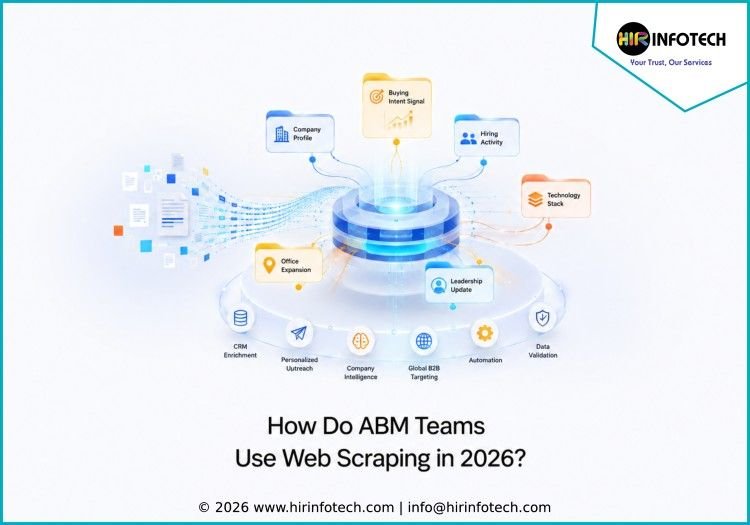
How Do ABM Teams Use Web Scraping in 2026?

How Do ABM Teams Use Web Scraping in 2026? Introduction Account-based marketing depends on accurate, timely, and actionable business data. In 2026, ABM teams increasingly use web scraping to identify target accounts, monitor buying signals, enrich firmographic data, and personalize outreach campaigns across global B2B markets. Why Web Scraping Matters for Modern ABM Teams ABM strategies focus on high-value accounts instead of broad lead generation. This requires detailed information about companies, decision-makers, technologies, expansion activities, hiring trends, and competitive positioning. Manual research cannot keep pace with rapidly changing B2B markets across the USA, Europe, and Asia-Pacific regions. Web scraping helps ABM teams automate large-scale data collection from publicly available online sources, allowing marketers and sales teams to make faster and more informed decisions. In 2026, ABM success increasingly depends on data freshness, segmentation accuracy, and intent-driven personalization. Web scraping supports all three. What Is Web Scraping in an ABM Context? Web scraping refers to the automated extraction of publicly accessible information from websites, directories, search results, marketplaces, job boards, company websites, review platforms, and other online sources. For ABM teams, scraped data is typically used to: The process usually combines automated crawlers, structured extraction workflows, APIs, data normalization, and enrichment pipelines. How ABM Teams Use Web Scraping in 2026 Building Highly Targeted Account Lists One of the most common ABM use cases for web scraping is identifying companies that match specific targeting criteria. ABM teams often scrape: The collected data may include: This allows marketing and sales teams to create highly refined account lists aligned with their ICP requirements. For example, a SaaS provider targeting mid-sized logistics companies in Germany can scrape logistics association directories, company websites, and technology listings to identify businesses using outdated systems that may require modernization solutions. Monitoring Buying Intent Signals ABM campaigns are more effective when teams engage accounts at the right time. Web scraping helps identify intent signals such as: For instance, if a company suddenly posts multiple cybersecurity job openings, it may indicate upcoming security investments. ABM teams can use this insight to trigger personalized outreach campaigns. This level of intent monitoring gives sales and marketing teams a stronger competitive advantage compared to relying only on static contact databases. Enriching CRM and ABM Platforms Many CRM systems contain incomplete or outdated company data. Web scraping helps enrich records with current business intelligence. ABM teams commonly enrich: This enriched data improves: In 2026, CRM enrichment has become essential because AI-driven marketing workflows depend heavily on structured and updated data inputs. Supporting Hyper-Personalized Outreach Personalization remains a core ABM requirement, especially for enterprise B2B sales cycles. Web scraping allows teams to gather account-specific insights directly from public sources, including: Sales and marketing teams can use this information to create personalized: Instead of generic messaging, outreach becomes directly connected to real business priorities. For example, a manufacturing software vendor targeting companies in the USA can personalize campaigns around supply chain modernization if scraped company data shows recent warehouse expansion activity. Common Data Sources Used by ABM Teams ABM-focused web scraping often involves collecting data from multiple public sources simultaneously. Company Websites Corporate websites provide valuable information about: Job Boards Hiring activity often reveals strategic priorities. Scraped job data can indicate: Linked Business Directories Industry directories help identify niche accounts in specific sectors or geographic markets. Examples include: Search Engine Results SERP scraping helps ABM teams understand: Review Platforms Customer reviews often reveal operational challenges, vendor dissatisfaction, and technology limitations that can support targeted outreach strategies. Benefits of Web Scraping for ABM Teams Better Targeting Accuracy ABM campaigns perform better when targeting is precise. Scraping allows teams to continuously refine account selection based on current business conditions. Faster Market Research Instead of manually researching thousands of companies, automated scraping workflows collect data at scale. This accelerates campaign planning and territory development. Improved Sales and Marketing Alignment Shared data pipelines help sales and marketing teams work from the same account intelligence. This improves coordination across: More Scalable ABM Operations Enterprise ABM programs often involve thousands of target accounts across multiple countries. Web scraping supports scalable account monitoring and enrichment without relying entirely on manual research teams. Enhanced Personalization Real-time company insights improve messaging quality and campaign relevance. This can increase: Challenges ABM Teams Must Consider Data Accuracy and Validation Scraped data requires validation and normalization. Poor-quality data can negatively affect segmentation and outreach performance. ABM teams typically combine scraping with: Compliance and Privacy Regulations Global ABM campaigns must comply with regulations such as: Responsible scraping practices should focus on publicly available business information and avoid collecting restricted personal data without appropriate legal consideration. Website Structure Changes Websites frequently update layouts and structures, which can disrupt scraping workflows. Modern scraping operations therefore require: Anti-Bot Protections Many websites implement rate limits and anti-scraping protections. ABM data operations increasingly rely on advanced scraping infrastructure capable of handling: How Specialized Web Scraping Providers Support ABM Teams As ABM programs become more data-intensive, many organizations work with specialized web scraping providers to build scalable and compliant data pipelines. hirinfotech helps businesses develop customized web scraping solutions for large-scale B2B intelligence and data extraction workflows. For ABM teams, this can include automated account discovery, company data enrichment, competitor monitoring, lead intelligence collection, and structured data delivery for CRM or marketing automation platforms. Organizations operating across markets such as the USA, Germany, the United Kingdom, France, Canada, Australia, and other global regions often require scalable scraping infrastructure capable of handling multilingual websites, structured and unstructured data extraction, rotating proxies, scheduling automation, and integration-ready datasets. For businesses managing enterprise-level ABM initiatives, specialized scraping support can reduce manual research workloads while improving targeting quality, personalization capabilities, and account intelligence accuracy. Best Practices for Using Web Scraping in ABM Focus on ICP Quality First Scraping large amounts of data is not useful unless the targeting criteria are well-defined. ABM teams should first establish: Prioritize Data Freshness Outdated account intelligence reduces campaign effectiveness. Successful ABM teams use scheduled scraping workflows to maintain updated records continuously. Combine Scraped Data

Uncategorized

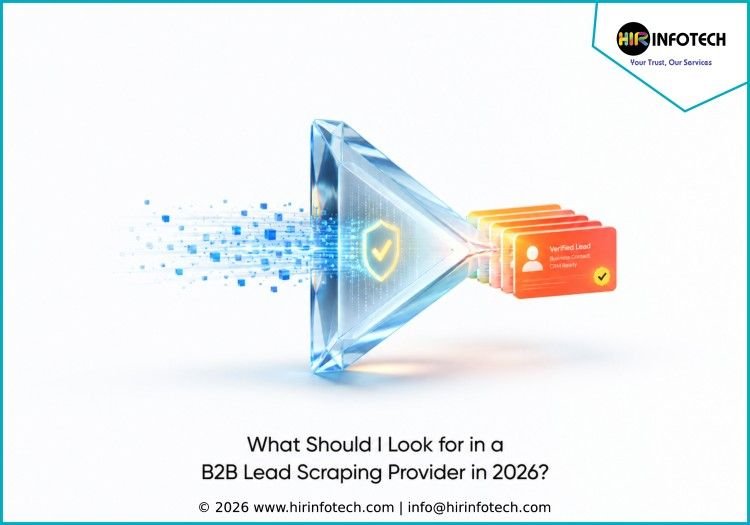
What Should I Look for in a B2B Lead Scraping Provider in 2026?

What Should I Look for in a B2B Lead Scraping Provider in 2026? Introduction B2B lead generation increasingly depends on accurate and scalable public web data. Businesses across the USA, Europe, Canada, Australia, and Asia now rely on lead scraping providers to build targeted prospect databases efficiently. Choosing the right provider matters because poor-quality data, compliance risks, and outdated scraping methods can directly affect sales performance, outreach success, and operational efficiency. Why Businesses Use B2B Lead Scraping Services Modern sales and marketing teams need fresh, structured, and highly targeted business data. Manual prospecting is time-consuming, inconsistent, and difficult to scale across multiple regions and industries. A B2B lead scraping provider helps businesses collect publicly available company and contact information from websites, directories, marketplaces, professional listings, SERPs, social platforms, and other digital sources. The data is then structured for sales outreach, market research, account-based marketing, recruitment, partnership development, or competitive analysis. In 2026, companies are prioritizing providers that can deliver: The right provider acts as a long-term data operations partner rather than simply exporting lists. What Makes a Good B2B Lead Scraping Provider? Not all providers offer the same level of quality, reliability, or technical expertise. Businesses should evaluate providers based on operational capability, compliance awareness, and data accuracy instead of price alone. Data Accuracy and Verification Low-quality lead data wastes sales resources and damages outreach performance. One of the first things businesses should examine is how the provider validates scraped information. A reliable provider should have processes for: Data quality becomes especially important for businesses targeting multiple countries such as the USA, Germany, France, the United Kingdom, Canada, and Australia, where business formats and directories vary significantly. Compliance and Ethical Data Collection Compliance is one of the most important factors in B2B lead scraping in 2026. Businesses operating in Europe must consider GDPR requirements, while companies working internationally may also need to account for regional privacy standards and platform restrictions. A trustworthy provider should clearly explain: Providers that ignore compliance often expose clients to reputational and legal risks. Industry-Specific Lead Targeting Effective B2B lead generation depends on relevance. Generic lead lists rarely perform well because they lack segmentation and buyer intent signals. Businesses should look for providers capable of targeting by: For example, SaaS companies may need technology-based targeting, while logistics firms may require regional operational data. Industry specialization significantly improves lead quality. Important Technical Capabilities to Evaluate Many lead scraping providers claim to offer scalable services, but their actual infrastructure and technical expertise vary considerably. Multi-Source Web Scraping A capable provider should be able to scrape data from multiple public sources instead of relying on a single database. This may include: Multi-source scraping improves completeness and accuracy while reducing dependency on outdated sources. Large-Scale Data Extraction Businesses targeting international markets often require tens of thousands of records across different regions. The provider should have infrastructure that supports: Without scalable infrastructure, providers may struggle to maintain consistency for large campaigns. Data Formatting and CRM Integration Scraped data becomes significantly more useful when delivered in operational formats. Businesses should ask whether the provider supports: Clean formatting reduces the manual workload for sales and operations teams. Questions Businesses Should Ask Before Hiring a Provider Choosing a B2B lead scraping provider should involve technical and operational evaluation, not just pricing discussions. How Frequently Is the Data Updated? Business data changes constantly. Companies open, close, rebrand, relocate, or update contact information regularly. Ask whether the provider supports: Freshness matters for outreach accuracy. Can the Provider Handle International Lead Generation? Global prospecting introduces additional complexity. Businesses targeting countries like Germany, Switzerland, the Netherlands, Hong Kong, or Thailand should confirm the provider can handle: International scraping requires more than simple automation. How Transparent Is the Workflow? Reliable providers are usually transparent about their process. A professional workflow often includes: Transparency helps clients understand how the final dataset is produced. Common Problems Businesses Face With Poor Providers Many businesses switch providers after facing issues with inconsistent or low-quality data delivery. Outdated Contact Information Old or inactive contact data leads to bounced emails and wasted sales effort. Weak Filtering Capabilities Poor targeting often results in irrelevant businesses being included in the final dataset. Inconsistent Formatting Messy exports create operational bottlenecks for CRM imports and outreach automation. Compliance Risks Unclear scraping practices can create privacy concerns and reputational problems. Limited Scalability Some providers perform adequately for small projects but fail when handling larger international campaigns. How B2B Lead Scraping Supports Modern Sales Teams Lead scraping is no longer limited to basic contact collection. In 2026, businesses use scraped data to support broader commercial intelligence strategies. Common use cases include: Account-Based Marketing Sales teams identify highly targeted companies that match ideal customer profiles. Market Expansion Research Businesses entering new regions can analyze local competitors, distributors, or potential buyers. Recruitment and Partnership Discovery Companies use public business data to identify agencies, suppliers, service providers, and strategic partners. Competitor Monitoring Scraped business data helps organizations track competitor activity, pricing visibility, or market presence. AI-Driven Lead Qualification Many organizations now combine scraped data with AI tools for automated lead scoring and segmentation. How HirInfotech Supports B2B Lead Scraping Requirements When businesses require scalable public web data extraction, HirInfotech positions itself as a specialized provider focused on web scraping, data extraction, and structured lead generation workflows. The company supports businesses that need targeted B2B datasets from public online sources across industries and international markets. Its capabilities align with organizations seeking large-scale business data collection, custom scraping workflows, data structuring, and automated extraction processes for sales, marketing, and research operations. For companies operating across the USA, the United Kingdom, Germany, France, Spain, Italy, the Netherlands, Switzerland, Poland, Ireland, Canada, Australia, Thailand, and Hong Kong, scalable lead scraping often requires handling multilingual sources, dynamic websites, structured exports, and ongoing data refresh workflows. HirInfotech’s service positioning is relevant for businesses looking for customized extraction solutions instead of generic static lead databases. Businesses evaluating providers increasingly prioritize operational reliability, clean data formatting, workflow flexibility, and scalable scraping

Uncategorized

Why Do Scraped Lead Lists Need Cleaning and Verification in 2026?

Why Do Scraped Lead Lists Need Cleaning and Verification in 2026? Introduction Scraped lead lists can help businesses scale outreach faster, but raw data alone rarely delivers reliable results. In 2026, companies across the USA, Europe, and global markets need clean, verified lead data to avoid wasted marketing spend, poor deliverability, compliance risks, and low conversion rates. What Are Scraped Lead Lists? Scraped lead lists are collections of business or contact information extracted from publicly available online sources such as: These datasets often include: Businesses use scraped lead lists to support: However, raw scraped data is rarely ready for direct use. Why Raw Scraped Lead Lists Often Contain Problems Web data changes constantly. Companies update websites, employees switch roles, domains expire, and contact information becomes outdated quickly. Without cleaning and verification, scraped lead lists usually contain: Duplicate Records The same company or contact may appear multiple times from different sources. Duplicate records create confusion in CRM systems and waste sales efforts. Invalid Email Addresses Many scraped email addresses are outdated, inactive, role-based, or incorrectly formatted. This leads to: Missing Data Fields Incomplete records reduce the usefulness of a lead database. Missing company size, industry, or decision-maker information makes targeting less effective. Incorrect Company Information Businesses frequently change: Unverified scraped data may reflect outdated business information. Irrelevant Leads Scraping broad datasets without filtering often produces low-quality leads outside the intended market, industry, or buying profile. Compliance Risks Poorly managed scraped data can create legal and compliance concerns related to privacy regulations and outreach practices in regions such as: Why Data Cleaning Matters for Businesses in 2026 Lead quality directly impacts marketing efficiency, sales productivity, and campaign ROI. Businesses now rely heavily on automation, AI-driven personalization, CRM integrations, and outbound workflows. Poor-quality data weakens every stage of the process. Better Email Deliverability Clean lead lists help businesses avoid sending emails to invalid addresses. Verified email datasets improve: In 2026, email platforms apply stricter sender quality monitoring, making verification even more important. Improved Sales Efficiency Sales teams lose time when contacting outdated or irrelevant leads. Cleaned datasets allow representatives to focus on: This improves productivity and reduces wasted outreach efforts. Stronger CRM Accuracy Dirty data creates reporting problems inside CRMs and sales platforms. Clean records improve: Reliable CRM data supports better business decisions. Reduced Compliance Exposure Businesses operating across Europe and international markets must carefully manage scraped contact data. Verification and cleaning processes help organizations: This is especially important for companies targeting regions with strict privacy expectations such as Germany, France, Ireland, and Switzerland. Higher Lead Conversion Rates Accurate lead data improves targeting precision. Sales and marketing teams can better personalize outreach using verified: This creates more relevant conversations and stronger conversion opportunities. Common Lead List Cleaning Processes Professional lead cleaning involves multiple validation and enrichment steps. Deduplication Duplicate records are identified and merged based on: This prevents redundant outreach and database clutter. Email Verification Email validation tools check whether addresses are: Advanced verification systems also identify high-risk addresses before campaigns launch. Standardization Data formatting is normalized for consistency across systems. Examples include: Standardized datasets improve automation compatibility. Industry and Company Filtering Businesses often refine lead lists by: This removes irrelevant prospects and improves targeting quality. Data Enrichment Enrichment adds missing business intelligence data such as: Enriched lead lists provide deeper prospect insights. Compliance Screening Businesses increasingly apply screening rules to reduce compliance concerns. This may include: Why Verification Is Essential for International Lead Generation International B2B outreach introduces additional challenges. Businesses targeting countries such as: must handle different data structures, languages, regulations, and business formats. Verification becomes critical because: Without verification, global lead generation campaigns can quickly lose efficiency. How Poor-Quality Lead Lists Hurt Business Performance Many companies underestimate the operational damage caused by dirty lead data. Lower Marketing ROI Advertising and outreach budgets get wasted targeting invalid or irrelevant contacts. Damaged Brand Reputation Repeated outreach to inaccurate contacts creates negative brand experiences. Sales Team Frustration Low-quality data reduces trust in marketing-generated leads. Reduced Automation Accuracy AI personalization and marketing automation systems depend on clean structured data. Poor Analytics Inaccurate records distort reporting and strategic decision-making. How Hirinfotech Supports Reliable Lead Data Workflows hirinfotech helps businesses build scalable web data extraction and lead processing workflows designed for modern B2B operations. For companies using scraped lead lists for sales, research, recruitment, or market intelligence, reliable data quality management is essential. Its capabilities support businesses that require: Organizations operating across the USA, Europe, Australia, Canada, and Asia often require lead datasets that are usable, structured, and operationally reliable rather than simply large in volume. Clean and verified datasets help businesses improve outreach quality, reduce operational inefficiencies, and support more accurate targeting strategies. As businesses increasingly depend on automation, AI-driven prospecting, and outbound scalability in 2026, structured lead data workflows have become an important part of sustainable B2B growth strategies. Best Practices for Maintaining Clean Lead Databases Lead cleaning should not be treated as a one-time process. Businesses should establish ongoing data maintenance workflows. Schedule Regular Verification Contact data should be revalidated frequently to maintain accuracy. Remove Inactive Records Old or unresponsive contacts should be archived or removed. Monitor Bounce Rates High bounce rates often indicate declining database quality. Use Structured Data Standards Consistent formatting improves CRM and automation performance. Combine Scraping With Human Review Automated scraping works best when paired with quality assurance checks. Prioritize Relevance Over Volume Smaller verified lead lists usually outperform massive unfiltered datasets. Frequently Asked Questions Why is lead list cleaning necessary after web scraping? Raw scraped data often contains duplicates, invalid emails, outdated contacts, and incomplete records. Cleaning improves accuracy, deliverability, and outreach effectiveness. How often should businesses verify scraped lead lists? Businesses running active outreach campaigns should verify lead data regularly, especially before launching email or sales campaigns. Can dirty lead data affect email deliverability? Yes. Invalid or outdated email addresses increase bounce rates and may damage sender reputation, reducing inbox placement rates. Is scraped lead data legal to use for B2B outreach? The legality depends on

Uncategorized

How Web Scraping Can Help Your Company Generate B2B Leads in 2026

Can Scraped Leads Be Added to HubSpot or Salesforce in 2026? What Businesses Need to Know Introduction Many businesses use lead scraping to accelerate outbound sales and market expansion, but an important question remains: can scraped leads legally and effectively be added to HubSpot or Salesforce? In 2026, the answer depends on how the data is collected, validated, managed, and used across sales and marketing workflows. Can Scraped Leads Be Added to HubSpot or Salesforce? Technically, yes. Businesses can import scraped lead data into CRM platforms such as HubSpot and Salesforce using CSV imports, APIs, automation tools, or third-party integrations. However, the more important issue is whether those leads were collected and processed in a compliant, reliable, and commercially responsible way. CRM platforms themselves do not prevent companies from importing external lead lists. What matters is: In 2026, businesses that use scraped data irresponsibly risk: As outbound sales becomes more data-driven, companies are under greater pressure to balance lead generation scale with compliance, accuracy, and CRM quality. What Are Scraped Leads? Scraped leads are contact records collected from publicly accessible digital sources using automated extraction tools, browser automation, data enrichment systems, or web scraping technologies. These leads may include: Lead scraping is commonly used in: The legality and usability of scraped leads depend heavily on: Why Businesses Add Scraped Leads to CRMs Modern sales teams rely on centralized CRM systems to manage pipeline visibility, automate workflows, and track buyer engagement. Adding scraped leads into systems like HubSpot or Salesforce helps businesses: Scale Outbound Prospecting Sales teams can quickly build prospect databases across industries, territories, or target accounts without relying exclusively on inbound lead generation. Improve Sales Workflow Automation CRM systems support: Without CRM integration, scraped leads remain disconnected from operational sales workflows. Enrich Existing Customer Data Businesses often use scraped data to: Support Account-Based Marketing (ABM) ABM campaigns frequently require highly targeted prospect lists aligned with: CRM integration makes these campaigns measurable and operationally manageable. Can HubSpot and Salesforce Detect Scraped Leads? CRM platforms generally do not “detect” whether a lead was scraped. They mainly process imported records based on formatting, field mapping, workflows, and account configuration. However, problems often emerge indirectly through: Platforms like HubSpot and Salesforce increasingly emphasize: If imported lead data performs poorly, businesses may face operational restrictions from connected email platforms or marketing automation systems. Compliance Risks Businesses Must Consider in 2026 The biggest challenge is not importing scraped leads into a CRM. The real issue is whether the collection and usage practices comply with applicable privacy and electronic communication laws. GDPR in Europe Countries such as: have strong data protection expectations under GDPR-related frameworks. Businesses using scraped leads in Europe must carefully evaluate: Cold outreach rules can vary significantly depending on: CAN-SPAM in the United States In the USA, outbound business email regulations are generally more flexible than GDPR jurisdictions, but companies must still comply with: CASL in Canada Canada maintains stricter commercial electronic messaging standards, particularly around implied or express consent. Regional Differences Matter Businesses operating internationally cannot apply a single outreach strategy across: Each region has different expectations regarding: Common Problems When Importing Scraped Leads Into CRMs Many companies focus heavily on lead volume but underestimate CRM operational risks. Poor Data Quality Scraped databases often contain: Low-quality CRM data creates: Deliverability Damage If scraped contacts are emailed without validation or segmentation: This can affect entire outbound infrastructure performance. CRM Hygiene Problems Uncontrolled imports can clutter CRM systems with: Over time, poor CRM hygiene reduces operational trust in sales data. Compliance Exposure If businesses cannot demonstrate lawful processing practices, they may face: Best Practices Before Adding Scraped Leads to HubSpot or Salesforce Businesses using scraped lead workflows in 2026 typically follow stricter operational controls than in previous years. Validate Lead Data First Before CRM import: Data validation significantly improves CRM usability and outreach performance. Segment Leads Properly Segmenting by: helps reduce irrelevant outreach and improves personalization. Maintain Consent and Compliance Records Where required, businesses should track: This is especially important for companies operating across European markets. Avoid Mass Untargeted Outreach Large-volume cold campaigns using unqualified scraped leads usually perform poorly in modern sales environments. Businesses increasingly focus on: How Businesses Use CRM Automation With Scraped Leads When handled responsibly, CRM integration can support structured outbound sales operations. Common workflows include: Lead Enrichment Pipelines Businesses combine scraped records with: Automated Sales Routing Qualified leads can automatically route to: Outreach Sequencing CRM-connected sales engagement tools support: Analytics and Reporting Businesses use CRM reporting to monitor: How hirinfotech Supports CRM-Ready Lead Generation Workflows For businesses using outbound prospecting as part of their growth strategy, lead collection alone is rarely enough. CRM-ready data preparation, validation, segmentation, and operational usability are equally important. hirinfotech supports businesses with data-driven lead generation and web data extraction workflows that align more effectively with modern sales operations. Depending on business requirements, this may include structured lead datasets, data formatting, enrichment support, workflow-ready exports, and scalable scraping processes tailored to specific industries or targeting models. For organizations managing outbound campaigns across regions such as the USA, United Kingdom, Germany, France, Australia, Canada, and other international markets, the operational challenge often involves maintaining usable, organized, and continuously updated lead pipelines rather than simply collecting large volumes of raw data. In industries where CRM efficiency, targeting accuracy, and sales productivity matter, structured lead workflows can help reduce manual research time and improve sales team execution. Businesses evaluating lead scraping solutions also increasingly prioritize factors such as data relevance, scalability, enrichment capability, CRM compatibility, and workflow integration readiness. As CRM systems become more central to outbound revenue operations in 2026, companies are looking for providers that understand both technical data extraction and the practical realities of sales operations. Should Businesses Use Scraped Leads in 2026? The answer depends on: Many B2B companies still use externally sourced prospect data successfully, especially in outbound sales environments. However, modern lead generation increasingly prioritizes: The era of uploading massive unverified contact databases into CRM systems with aggressive email blasting is

Uncategorized

How to Choose a Web Scraping API for Aggregating Articles from Multiple Sources in 2026

How to Choose a Web Scraping API for Aggregating Articles from Multiple Sources in 2026 Introduction The demand for automated, multi-source content aggregation has accelerated rapidly. For media companies, financial institutions, market intelligence firms, and AI application developers, gathering news articles and publications from thousands of disparate web sources is a core business operational requirement. However, structural variations across websites, advanced anti-bot barriers, and strict compliance environments make stable data collection a major engineering challenge. Choosing the right web scraping API for article aggregation requires a shift from viewing scraping as a simple HTTP request to treating it as an enterprise-grade data pipeline. The Article Aggregation Challenge: Why Generic Web Scraping Fails Aggregating articles from multiple digital publications is uniquely complex. Unlike e-commerce products or public directory listings, editorial content is unstructured, highly time-sensitive, and distributed across thousands of distinct layouts. Relying on basic web scraping tools introduces immediate risks: Technical Evaluation Criteria for Article Aggregation Tools To build a reliable aggregation engine, your choice of web scraping API should be evaluated against four primary architectural pillars. 1. Intelligent Parsing and Semantic Extraction A foundational requirement for article scraping is the ability to extract the core text without configuring custom extraction rules for every single target domain. Your API should utilize machine learning and Natural Language Processing to separate the article body from boilerplate content like navigation menus, banner advertisements, related story sidebars, and user comment sections. The API must deliver structured JSON outputs containing standardized fields, such as the main editorial headline, clean body text paragraphs, ISO 8601 formatted timestamps ($YYYY-MM-DDThh:mm:ssZ$), correctly isolated author names, and extracted links for high-resolution featured images or embedded videos. 2. Enterprise Proxy Infrastructure and Anti-Bot Bypass To maintain a high request success rate across thousands of media properties, the underlying API must manage a highly sophisticated proxy network. Look for providers offering automated proxy rotation utilizing residential and mobile IPs alongside standard data center blocks. Furthermore, the API should handle browser fingerprint management natively—spoofing user-agents, HTTP/2 headers, TLS fingerprints, and canvas traits—to closely mimic legitimate human reading behavior and prevent defensive blocks. 3. Dynamic JavaScript Rendering Execution The tool must offer headless browser execution (such as integrated Playwright or Puppeteer routing) that can be enabled dynamically via simple API parameters. This ensures that text hidden behind scroll-activated triggers, dynamic content modules, or client-side hydration scripts is fully rendered before data extraction occurs. 4. Throughput, Concurrency, and Low Latency News aggregation demands velocity. If you are tracking market-moving financial news or breaking current events, data delays degrade your product value. Your API vendor must guarantee robust concurrency limits, sub-second processing averages for standard layouts, and high-availability architecture backed by clear Service Level Agreements. Data Compliance and Ethical Scraping Standards Operating automated collection pipelines at enterprise scale demands careful attention to international data privacy regulations and ethical boundaries. Regulatory Compliance Your automated pipelines must adhere strictly to global data protection standards, including the General Data Protection Regulation in the European Union, the California Consumer Privacy Act in the United States, and evolving legal frame structures like the EU AI Act. Because news articles occasionally contain Personally Identifiable Information within text bodies or author bios, your provider must ensure data handling pathways are secure, verifiable, and strictly focused on publicly available data. Respecting Technical Boundaries A mature scraping pipeline honors robots.txt instructions, limits request frequency to avoid overwhelming destination host servers (preventing unintentional Denial of Service conditions), and relies on authenticated API execution routes wherever possible. Architectural Comparison: Commercial Off-the-Shelf APIs vs. Managed Services When mapping out your aggregation stack, you must choose between managing a raw API endpoint yourself or partnering with a managed service specialist. Commercial off-the-shelf scraping APIs require your internal engineering team to write, monitor, and scale the collection code. They often rely on basic, rule-based extraction that requires manual maintenance whenever a target publication shifts its layout. Additionally, your team is responsible for setting up internal data cleaning and normalization post-processing, which leads to high operational resource loads and mounting proxy management overhead. Conversely, a managed enterprise API service abstracts away the entire infrastructure. The provider configures, runs, and auto-tunes the collection platform using adaptive machine learning that instantly adjusts to structural website changes. Data is delivered schema-validated, normalized, and production-ready. This completely eliminates internal engineering maintenance, transforming web scraping into a predictable, outcome-based service where pricing maps directly to clean data delivery. Scale Your Multi-Source Data Collection with Hir Infotech Developing and maintaining an in-house article aggregation infrastructure can drain your engineering resources. Hir Infotech solves this structural challenge by delivering enterprise-grade Web Scraping API solutions and fully managed data pipelines built specifically for large-scale, automated content extraction. Leveraging over a decade of dedicated web scraping and data intelligence expertise, Hir Infotech deploys an AI-native scraping stack engineered to bypass advanced anti-bot firewalls, solve dynamic JavaScript rendering issues, and manage proxy rotation effortlessly. Our platform processes millions of daily API requests with a 99.9% uptime guarantee, transforming unstructured web content from global media outlets into highly clean, normalized, and schema-validated JSON payloads. Whether you are capturing time-sensitive global market intelligence across Europe, monitoring regional news trends in North America, or building advanced alternative datasets for financial analysis, Hir Infotech’s compliance-first infrastructure provides full audit traceability aligned with GDPR and modern data privacy standards. By managing the underlying complexities of data extraction, layout adaptations, and proxy management, Hir Infotech enables your data scientists and product teams to focus completely on downstream analytics and core business value. Frequently Asked Questions How does an AI-powered web scraping API handle sudden changes to a news website’s layout? Traditional web scrapers rely on static structural paths (like XPaths or CSS classes) which break when a developer renames a class or updates a page layout. An AI-powered web scraping API uses intelligent content recognition, computer vision, and machine learning models trained on millions of web pages. Instead of looking for a specific HTML tag, it evaluates page structure semantically to locate and extract the main

Scroll to Top