Harnessing Big Data: The Future of Bankruptcy Prediction and Management
When we talk about big data in finance, the conversation often turns to complex actuarial models in the insurance industry or the use of data analytics for stock market predictions. However, another critical area of finance is being revolutionized by big data: bankruptcy proceedings. While bankruptcy is a challenging topic, its intersection with data solutions offers powerful tools for prediction, management, and recovery. For mid-to-large companies navigating the complexities of the modern economy, understanding this synergy is no longer optional—it’s a strategic imperative.
In 2026, the financial landscape is more data-driven than ever. The ability to collect, process, and analyze vast datasets is the cornerstone of informed decision-making. This is especially true for companies facing financial distress. Big data, powered by artificial intelligence (AI) and machine learning (ML), offers a beacon of hope, providing clarity and foresight in turbulent times. This post will explore the evolving role of data solutions in the bankruptcy process, demystifying the technology and offering actionable insights for your business.
The Proactive Power of Big Data in Predicting Bankruptcy
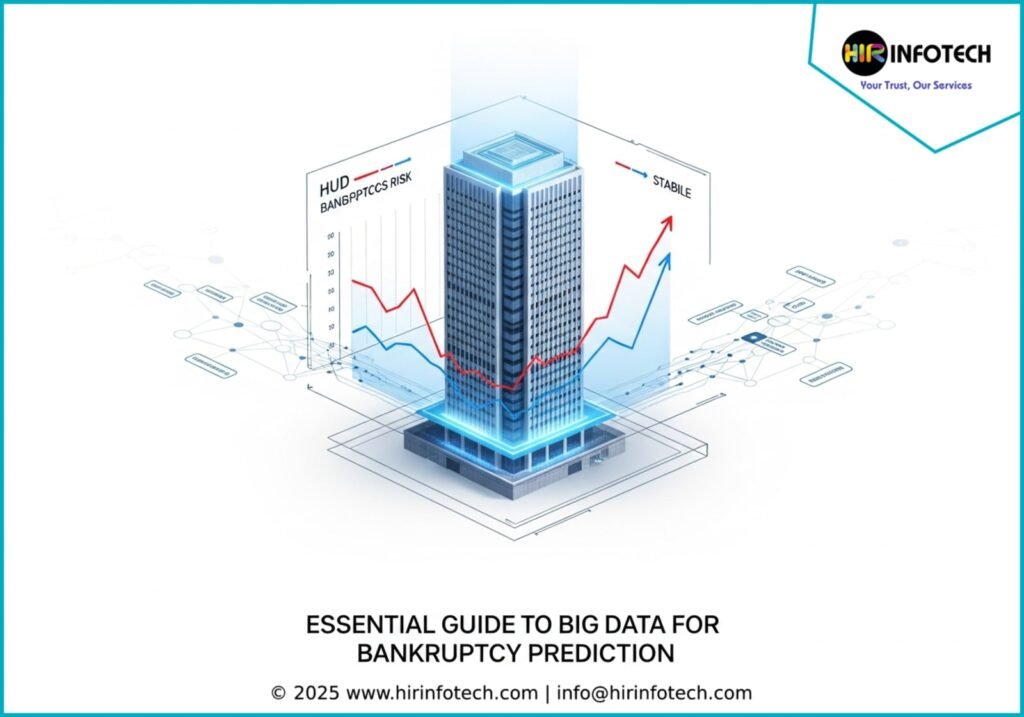
The age-old approach to financial distress was reactive. Companies often found themselves in hot water before they even realized the severity of the situation. Today, big data allows for a proactive stance, enabling businesses to predict the likelihood of bankruptcy with remarkable accuracy. This isn’t science fiction; it’s the reality of modern data analytics.
Early Warning Systems Fueled by Data
Imagine having a financial “weather forecast” for your company. That’s essentially what predictive analytics offers. By analyzing a multitude of data points, these systems can identify early warning signs of insolvency that might otherwise go unnoticed. This goes far beyond traditional financial ratios. Modern predictive models incorporate a wide array of data sources, including:
- Market Trends: Analyzing industry-wide data to spot downturns that could impact your business.
- Customer Behavior: Tracking changes in purchasing patterns and payment histories.
- Supply Chain Disruptions: Monitoring global events and logistical data to anticipate potential disruptions.
- Social Media Sentiment: Gauging public perception and brand reputation in real-time.
By integrating these diverse datasets, companies can build a comprehensive picture of their financial health and the external factors that could influence it. This allows for timely interventions, such as securing new financing, restructuring debt, or pivoting business strategies before a crisis escalates.
Web Scraping: A Key Tool for Financial Foresight
A significant portion of the valuable data needed for these predictive models exists on the web. This is where web scraping, or web data extraction, becomes an invaluable tool. It’s the automated process of gathering large amounts of data from websites. For financial analysis, this can include:
- Competitor Pricing and Performance: Keeping a close eye on your rivals’ strategies and financial health.
- Regulatory Changes: Automatically tracking updates from government and financial regulatory bodies.
- Economic Indicators: Aggregating data from sources like the Bureau of Labor Statistics and the Federal Reserve.
- News and Public Filings: Monitoring news outlets and public financial statements for any red flags.
Think of web scraping as a tireless research assistant, constantly collecting and organizing the critical information your business needs to stay ahead of the curve. It’s a foundational element of a robust, data-driven approach to risk management.
Navigating Voluntary Administration with Data-Driven Insights
When a company is unable to pay its debts, it is considered insolvent. In such cases, directors may opt for voluntary administration, a process designed to provide professional financial assistance and potentially save the business from liquidation. Big data plays a crucial role in making this process more effective and transparent.
Informed Decision-Making for Directors and Creditors
During voluntary administration, an external administrator is appointed to assess the company’s financial situation and propose a course of action to creditors. This is where comprehensive data analysis becomes critical. The administrator must present creditors with three potential outcomes:
- Immediate Liquidation: Winding up the company and selling its assets to pay off debts.
- Return to Director Control: Allowing the company to continue operating under its existing leadership, with a plan to manage its debts.
- Deed of Company Arrangement (DOCA): A binding agreement between the company and its creditors to settle its debts, often for a reduced amount, over a period of time.
Big data allows the administrator to model the potential financial outcomes of each option with greater accuracy. By analyzing historical data from similar cases and incorporating real-time market information, they can provide creditors with a clearer picture of the risks and potential returns associated with each path. This data-backed approach fosters greater trust and facilitates more informed decision-making among all stakeholders.
The Role of Data in Mergers and Acquisitions
In many voluntary administration scenarios, the possibility of being acquired by another company arises. This is another area where big data is a game-changer. The acquiring company needs to conduct thorough due diligence, and this involves a deep dive into the distressed company’s data. This includes:
- Customer Data: Understanding the customer base, their value, and the potential for retention.
- Operational Data: Assessing the efficiency of business processes and identifying areas for improvement.
- Financial Data: A granular analysis of revenue streams, costs, and liabilities.
The seamless transfer and analysis of this data are crucial for a successful acquisition. Data solutions providers can facilitate this process, ensuring that the data is clean, organized, and ready for analysis. This can significantly expedite the due diligence process and increase the likelihood of a favorable outcome for the struggling company.
Establishing Topical Authority and E-E-A-T in Your Data Strategy
In the digital age, it’s not enough to simply have data; you need to be a trusted authority in your domain. This is where Google’s E-E-A-T (Experience, Expertise, Authoritativeness, and Trust) framework comes into play. For companies in the data solutions industry, demonstrating E-E-A-T is paramount for attracting and retaining clients. Here’s how to apply it:
- Experience: Share case studies and real-world examples of how your data solutions have helped companies navigate financial challenges. Showcase your hands-on experience in the field.
- Expertise: Publish in-depth articles, white papers, and webinars that demonstrate your deep understanding of data analytics, web scraping, and financial risk management.
- Authoritativeness: Earn backlinks from reputable financial and tech publications. Encourage your team of experts to build their professional presence on platforms like LinkedIn.
- Trust: Be transparent about your methodologies and data sources. Display client testimonials and industry certifications prominently on your website. Ensure your website is secure with HTTPS.
By consistently creating high-quality, informative content that adheres to E-E-A-T principles, you not only improve your search engine rankings but also build a brand that clients can trust with their most sensitive financial data.
The Future is Data-Driven: Are You Prepared?
The role of big data in bankruptcy proceedings is no longer a futuristic concept; it’s a present-day reality. For mid-to-large companies, embracing a data-driven approach to financial management is not just about gaining a competitive edge; it’s about survival. By leveraging the power of predictive analytics, web scraping, and robust data management, you can identify risks before they become crises, navigate challenging financial situations with greater clarity, and build a more resilient and profitable business.
The world of data is constantly evolving, and staying ahead of the trends is key. As we look towards the future, the integration of AI and machine learning will only become more sophisticated, offering even more powerful tools for financial forecasting and risk management. Now is the time to invest in your data capabilities and partner with experts who can help you unlock the full potential of your data.
Frequently Asked Questions (FAQs)
1. What is the primary benefit of using big data in bankruptcy prediction?
The main advantage is the ability to proactively identify early warning signs of financial distress, allowing companies to take corrective action before a crisis escalates.
2. How does web scraping help in financial risk management?
Web scraping automates the collection of vast amounts of public data from the internet, such as competitor information, market trends, and regulatory changes, providing a comprehensive view of the business landscape. For more on this, see this insightful article from Forbes.
3. Is big data only useful for large corporations?
While large corporations generate massive amounts of data, the principles and tools of big data analytics are scalable and can provide significant benefits to mid-sized companies as well.
4. What is a Deed of Company Arrangement (DOCA)?
A DOCA is a legally binding agreement between a company in voluntary administration and its creditors to settle its debts, often allowing the company to continue trading.
5. How can I ensure the data I’m using for financial analysis is accurate and reliable?
It’s crucial to partner with a reputable data solutions provider that has robust data quality and governance processes in place to ensure the accuracy and integrity of your data.
6. What is E-E-A-T and why is it important for my business?
E-E-A-T stands for Experience, Expertise, Authoritativeness, and Trust. It’s a framework used by Google to assess the quality of content. For businesses, demonstrating E-E-A-T helps build credibility and trust with both search engines and potential customers. Learn more about it from Google’s Search Central.
7. How is AI changing the landscape of bankruptcy prediction?
AI and machine learning algorithms can analyze complex datasets and identify subtle patterns that traditional statistical models might miss, leading to more accurate and timely bankruptcy predictions.
Take the Next Step Towards a Data-Driven Future
Don’t wait for financial uncertainty to become a crisis. Empower your business with the foresight and clarity that only a robust data strategy can provide. At Hir Infotech, we specialize in providing comprehensive data solutions, including web scraping, data extraction, and data analytics, tailored to the unique needs of your business. Our team of experts is ready to help you harness the power of your data to mitigate risks, optimize performance, and drive growth.
Contact us today for a free consultation and discover how Hir Infotech can be your trusted partner in navigating the complexities of the modern financial landscape.
#BigData #BankruptcyPrediction #DataAnalytics #FinancialTechnology #RiskManagement #WebScraping #DataExtraction #BusinessIntelligence #AI #MachineLearning