The Future of Devices is Transformed by IoT and Big Data
When people discuss the big data revolution, they often mention industries like insurance, finance, and security. While these sectors are vital, the average person doesn’t always see their direct impact. However, you don’t need to apply for a loan to witness data’s enormous influence. A quick visit to a gadget store reveals how data has reshaped many aspects of our daily lives. The evolution of the gadget industry clearly shows a shift in focus from aesthetics to functionality. Modern technology is sleeker, more compact, and more user-friendly than ever before. Today’s gadgets, from cameras and music players to vacuums and alarm clocks, are more personalized, serving their primary purpose in a way that is highly relevant to the individual user.
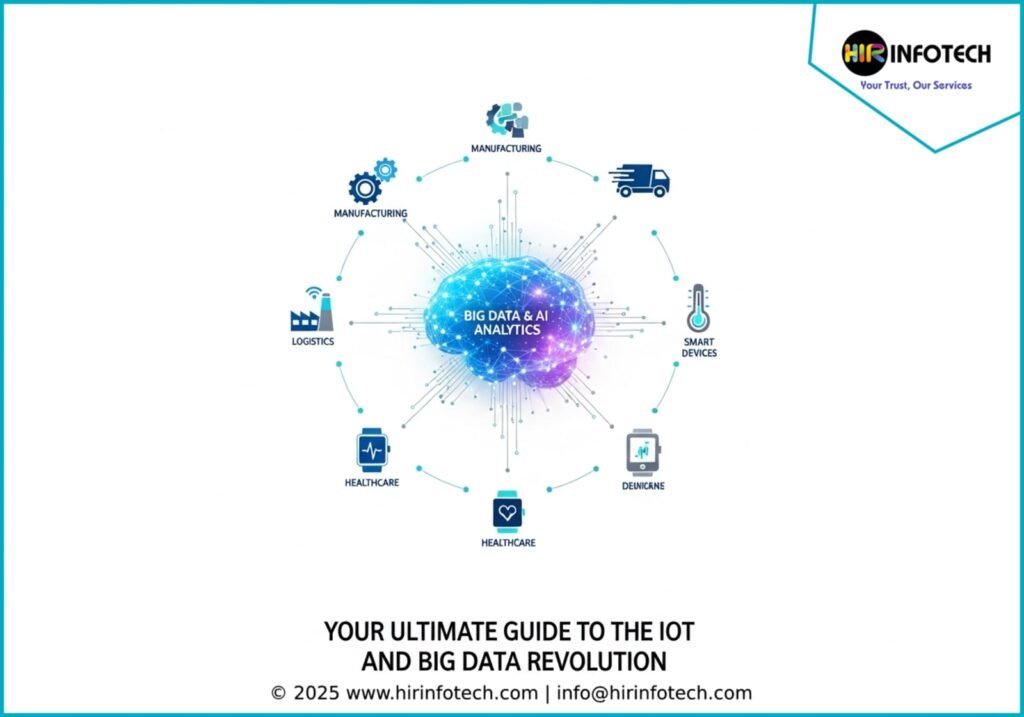
The synergy between the Internet of Things (IoT) and Big Data is at the heart of this transformation. IoT devices, the billions of physical objects connected to the internet, are constantly collecting and transmitting vast amounts of data. This is where Big Data comes in—providing the tools and techniques to analyze this massive, unstructured data in real-time, unlocking valuable insights that drive innovation and efficiency. Businesses are increasingly leveraging this powerful combination to automate processes, reduce human intervention, and make smarter, data-driven decisions. In fact, companies that implement IoT have seen an average efficiency improvement of 12%.
The Symbiotic Relationship of IoT and Big Data
To understand the future, we must first grasp the fundamental connection between IoT and Big Data. Think of IoT devices as the sensory organs of a vast digital nervous system, constantly gathering information from the physical world. These sensors can be anything from a simple thermostat in your home to sophisticated machinery on a factory floor.
The data they collect is incredibly diverse and voluminous, encompassing everything from temperature and location to performance metrics and user behavior. This is the “Big Data” that, on its own, is just a stream of raw information. The magic happens when Big Data analytics are applied to this stream. Advanced analytics, often powered by Artificial Intelligence (AI) and Machine Learning (ML), can sift through this data to identify patterns, predict outcomes, and trigger automated actions. This relationship is cyclical and mutually beneficial; IoT provides the data that fuels Big Data analytics, and in turn, the insights from Big Data make IoT devices smarter and more useful.
Transforming Industries: Real-World Applications
The impact of IoT and Big Data extends far beyond consumer gadgets. Entire industries are being reshaped by the ability to collect and analyze data from the physical world. This is not a distant future; it’s happening now, and the pace of change is accelerating.
Manufacturing: The Dawn of the Smart Factory
The manufacturing sector is a prime example of IoT and Big Data in action. Factories are increasingly equipped with sensors that monitor every aspect of the production process. This “Industrial IoT” (IIoT) generates a constant flow of data that can be used to:
- Predictive Maintenance: Instead of waiting for machinery to break down, AI algorithms can analyze performance data to predict when a part is likely to fail. This allows for proactive maintenance, significantly reducing downtime and saving costs. German airline Lufthansa, for instance, uses a network of sensors on its aircraft to predict when components will need repairs, enhancing safety and efficiency.
- Optimize Production: By analyzing data from the production line, manufacturers can identify bottlenecks and inefficiencies. This allows them to streamline processes, reduce waste, and improve overall productivity.
- Enhance Quality Control: IoT sensors can monitor product quality in real-time, detecting defects much earlier in the production process than traditional methods.
Logistics and Supply Chain: A New Era of Transparency
The logistics industry is being revolutionized by the ability to track goods and vehicles in real-time. IoT sensors on packages and in delivery trucks provide a constant stream of location and condition data. This allows companies like UPS to:
- Optimize Routes: UPS’s ORION (On-Road Integrated Optimization and Navigation) system uses on-board sensors and advanced algorithms to determine the most efficient routes for its drivers, saving millions of gallons of fuel each year.
- Ensure Product Integrity: For sensitive goods like pharmaceuticals or fresh produce, sensors can monitor temperature and humidity, ensuring that they are transported under the right conditions.
- Improve Fleet Management: By tracking vehicle performance and driver behavior, logistics companies can improve fuel efficiency, reduce maintenance costs, and enhance driver safety.
Healthcare: Personalized and Proactive Care
In healthcare, IoT devices are enabling a shift from reactive to proactive and personalized care. Wearable devices like smartwatches and fitness trackers monitor vital signs and activity levels, providing a continuous stream of health data. This data can be used to:
- Remote Patient Monitoring: Doctors can monitor patients with chronic conditions remotely, receiving alerts if their vital signs fall outside of a safe range. This can help to prevent hospital readmissions and improve patient outcomes.
- Personalized Treatment Plans: By analyzing a patient’s health data, doctors can develop more personalized and effective treatment plans.
- Improve Hospital Efficiency: IoT sensors can be used to track medical equipment, monitor patient flow, and even ensure that healthcare workers are washing their hands properly, improving both efficiency and patient safety.
For a deeper dive into how different industries are being reshaped, explore more about the transformative impact of IoT and Big Data.
The Future is Now: Smart Devices in Our Everyday Lives
While the industrial applications are transformative, the most visible impact of IoT and Big Data for many is in the devices we use every day. These smart gadgets are no longer novelties; they are becoming an integral part of our homes and lifestyles.
Smart Garbage Cans: The End of the Grocery List?
It may sound futuristic, but smart garbage cans are a prime example of how IoT and Big Data can simplify our daily routines. These devices can scan the barcodes of items as you throw them away, automatically adding them to your digital grocery list. This eliminates the all-too-common experience of getting to the store and realizing you forgot to write down that you finished the milk. It’s a simple convenience, but one that highlights the potential of connected devices to anticipate our needs.
Smart Bedside Lighting: A Data-Driven Approach to Better Sleep
Getting a good night’s sleep is crucial for our overall health, and Big Data can help. Smart bedside lamps have evolved beyond simply changing colors. Modern devices can track your sleep patterns and adjust the lighting and sound to help you fall asleep faster and wake up more refreshed. By analyzing your sleep data over time, these lamps can learn what works best for you, creating a personalized sleep environment.
The Smart Fork: Mindful Eating with a Technological Twist
In our fast-paced world, many of us eat too quickly, which can lead to a variety of health problems. The Hapifork is a smart fork that uses sensors to track your eating habits. It vibrates to alert you when you’re eating too fast, helping you to slow down and chew your food more thoroughly. An accompanying app allows you to view real-time stats about your meals, empowering you to make healthier choices.
Smart Socks: Running Smarter, Not Harder
For runners, smart socks like the Sensoria Smart Sock offer a new level of performance tracking. These socks are embedded with sensors that can track your speed, distance, and even the impact of your foot on the ground. This data can help you to improve your running form, reduce the risk of injury, and create personalized workout plans to help you achieve your fitness goals.
To learn more about the innovative ways IoT and Big Data are working together, read about these five successful examples.
The Road Ahead: Challenges and Opportunities
The future of IoT and Big Data is incredibly promising, with the potential to create a more efficient, personalized, and sustainable world. However, there are also challenges that need to be addressed. Data security and privacy are paramount, especially as more and more sensitive data is being collected. There is also a need for greater interoperability between different IoT devices and platforms to ensure that they can work together seamlessly.
Despite these challenges, the opportunities are immense. The global market for IoT big data solutions is projected to reach nearly $51 billion by 2026. As technology continues to advance, we can expect to see even more innovative applications of IoT and Big Data that will transform our lives in ways we can only begin to imagine. From smart cities that optimize traffic flow and energy consumption to precision agriculture that helps us to feed a growing global population, the possibilities are virtually limitless.
For more insights into the future of data solutions, consider this exploration of emerging trends and innovations.
Frequently Asked Questions
1. What is the future of IoT and big data?
The future of IoT and Big Data is one of exponential growth and deeper integration into our lives and industries. The market for IoT big data solutions is expected to be valued at almost $51 billion by 2026. Technological advancements will continue to drive the demand for reliable and flexible systems, advanced analytical tools, and scalable data storage.
2. How do IoT and big data work together?
IoT and Big Data have a symbiotic relationship. Businesses use IoT devices to collect vast amounts of data from the physical world. Because this data is often unstructured, Big Data analytics are used to process and analyze the information in real-time. This allows businesses to gain valuable insights that can be used to improve decision-making, optimize processes, and create new products and services.
3. What is the future impact of IoT?
Over the next decade, IoT will become even more pervasive, generating enormous amounts of data. This data will be managed and processed by big data analytics to create value for individuals, businesses, and society as a whole. We can expect to see significant advancements in areas like smart cities, autonomous vehicles, personalized healthcare, and sustainable energy.
4. How can my business leverage IoT and Big Data?
Businesses of all sizes can benefit from IoT and Big Data. Start by identifying areas of your business where data-driven insights could have the biggest impact. This could be anything from optimizing your supply chain to improving your customer experience. Once you have a clear goal in mind, you can start to explore different IoT and Big Data solutions that can help you to achieve it.
5. What are the biggest challenges of implementing IoT and Big Data?
The biggest challenges of implementing IoT and Big Data include data security, data privacy, and the complexity of managing and analyzing large volumes of data. It’s crucial to have a robust security strategy in place to protect your data from cyber threats. You also need to be transparent with your customers about how you are collecting and using their data.
6. How can I get started with IoT and Big Data?
The best way to get started with IoT and Big Data is to partner with a company that has expertise in this area. They can help you to develop a strategy, choose the right technologies, and implement a solution that meets your specific needs.
7. What is E-E-A-T and why is it important?
E-E-A-T stands for Experience, Expertise, Authoritativeness, and Trustworthiness. It’s a framework used by Google to evaluate the quality of web content. For a blog post like this, it’s important to demonstrate E-E-A-T by providing accurate, well-researched information from credible sources. This helps to build trust with readers and improve your search engine rankings.
Are you ready to unlock the power of your data? Contact Hir Infotech today to learn how our expert data solutions can help your business thrive in the age of IoT and Big Data. From web scraping and data extraction to advanced data analytics, we have the tools and expertise to turn your data into a strategic asset.
#IoT #BigData #DataSolutions #FutureofTech #DigitalTransformation #BusinessIntelligence #DataAnalytics #SmartTechnology #Innovation #HirInfotech