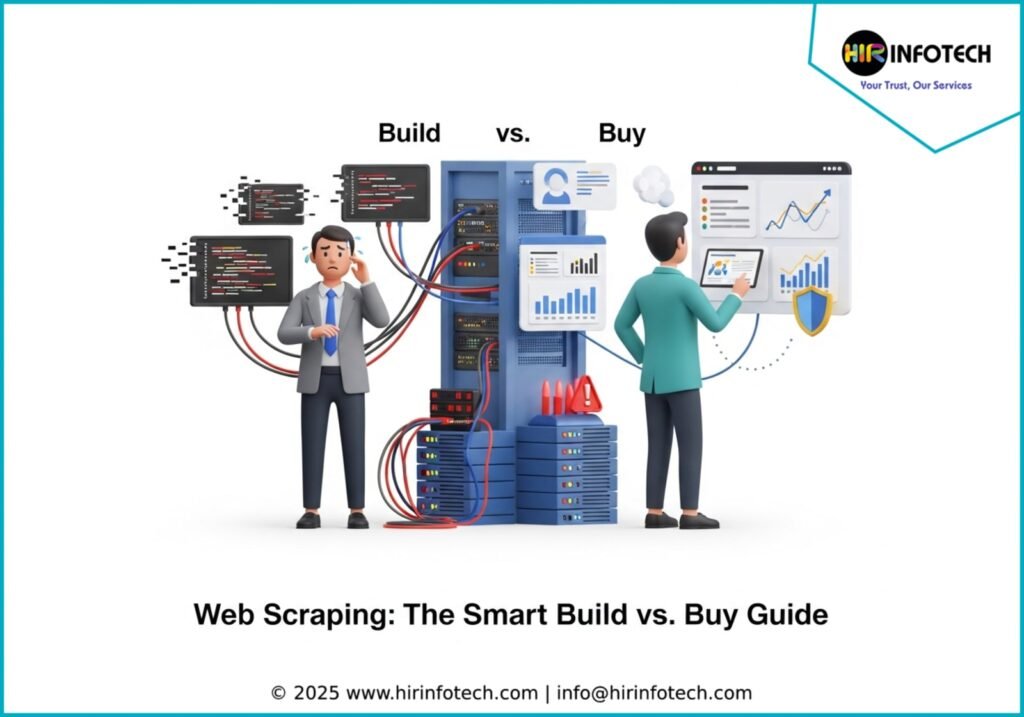
Web Scraping: Build or Buy? The 2026 Guide for Smart Businesses
In today’s data-driven world, harnessing the power of web data is no longer just an advantage—it’s a necessity. Companies across the globe are leveraging web scraping to gather vast amounts of information, transforming unstructured online content into organized, actionable insights. This process of data extraction from numerous websites is fundamental for everything from competitive analysis to market research and AI development.
As we move further into 2026, the demand for sophisticated data solutions continues to surge. The web scraping software market alone is projected to more than double from $1.01 billion in 2024 to $2.49 billion by 2032. This growth highlights a critical decision facing many mid to large-sized companies: should you build your own web scraping tools or partner with an expert service?
While the idea of a custom-built, in-house scraper might seem appealing, the reality is often a complex, costly, and resource-intensive endeavor. This blog post will explore the significant responsibilities and hidden challenges of building your own web scraper and make a clear case for why entrusting this critical task to professionals is the smarter, more strategic choice for your business.
The Hidden Complexities of Building Your Own Web Scraper
Embarking on the journey of building a web scraper from scratch is a significant undertaking. It’s not just about writing a few lines of code; it’s about architecting a robust, scalable, and resilient system capable of navigating the ever-changing landscape of the internet. For a non-technical audience, it’s crucial to understand that a web scraper is not a “set it and forget it” tool. It’s a dynamic piece of software that requires constant attention.
The Perpetual Cycle of Maintenance
One of the most underestimated aspects of in-house web scraping is the relentless need for maintenance. Websites are not static entities; they are constantly evolving. Website structures change, layouts are updated, and anti-scraping technologies become more sophisticated. When these changes occur, your custom-built scraper can break, rendering it useless until a developer intervenes. This creates a continuous cycle of monitoring, debugging, and redevelopment that can drain your internal resources.
Navigating a Labyrinth of Anti-Scraping Technologies
Modern websites employ a battery of defenses to prevent automated scraping. These can range from simple IP bans to complex systems like CAPTCHAs, browser fingerprinting, and dynamic content loading with JavaScript. Overcoming these hurdles requires advanced technical expertise. Developers need to implement sophisticated techniques like:
- IP Rotation: Using a vast pool of proxies to avoid being blocked.
- User-Agent Rotation: Mimicking requests from different browsers and devices.
- Headless Browsers: Using tools that can render JavaScript to access dynamically loaded content.
- CAPTCHA Solving Services: Integrating third-party services to solve CAPTCHAs automatically.
Each of these solutions adds another layer of complexity and cost to your in-house project.
The Soaring Costs of a DIY Approach
While it might seem cheaper initially to build your own scraper, the long-term costs can quickly spiral out of control. Consider the following expenses:
- Developer Salaries: Skilled developers with web scraping expertise command high salaries. A production-grade scraper isn’t a one-person job; you’ll likely need a team that includes backend developers, data engineers, and potentially a DevOps specialist.
- Infrastructure Costs: You’ll need servers to run your scrapers, databases to store the extracted data, and monitoring systems to ensure everything is running smoothly. These costs can range from thousands to tens of thousands of dollars per month, depending on the scale of your operations.
- Ongoing Maintenance: As mentioned, maintenance is a significant and continuous cost. Your development team will spend a considerable portion of their time fixing broken scrapers instead of working on other value-adding projects.
- Opportunity Costs: Every hour your team spends on building and maintaining scrapers is an hour not spent on your core business activities. This can lead to delays in product development, marketing initiatives, and other critical business functions.
For a mid-sized company, the annual cost of an in-house web scraping solution can easily reach into the hundreds of thousands of dollars.
Why Partnering with Web Scraping Experts is the Strategic Choice
Given the complexities and costs of a DIY approach, it’s no surprise that many businesses are turning to professional web scraping services. Outsourcing your data extraction needs offers a multitude of benefits that can save you time, money, and headaches in the long run.
1. Unmatched Expertise and Specialization
Professional web scraping providers live and breathe data extraction. They have dedicated teams of experts who are well-versed in the latest technologies and techniques for navigating the complexities of the web. This specialized knowledge allows them to build robust and efficient scrapers that can handle even the most challenging websites.
2. Guaranteed Data Quality and Reliability
The ultimate goal of web scraping is to obtain high-quality, accurate data. Inaccurate or incomplete data is not just useless; it can lead to flawed analysis and poor business decisions. Reputable web scraping services have rigorous quality assurance processes in place to ensure the data they deliver is clean, structured, and reliable. This includes data validation, cleaning, and deduplication, ensuring you receive data you can trust.
3. Scalability and Flexibility on Demand
Your data needs will likely change over time. You might need to scrape more websites, extract larger volumes of data, or adjust the frequency of your data collection. A professional web scraping service can easily scale their operations up or down to meet your evolving requirements. This flexibility allows you to adapt to market changes and new business opportunities without having to worry about the underlying infrastructure.
4. Staying Ahead of the Technological Curve
The world of web scraping is in a constant state of flux, with new anti-scraping technologies and data extraction techniques emerging all the time. As we look towards 2026 and beyond, the integration of AI and machine learning into web scraping is set to revolutionize the field. AI-powered scrapers will be able to adapt to website changes automatically, understand the context of data, and even predict where to find the information they need. By partnering with a forward-thinking web scraping provider, you can leverage these cutting-edge technologies without having to invest in your own research and development.
5. Ensuring Legal and Ethical Compliance
Web scraping exists in a complex legal and ethical landscape. It’s crucial to respect website terms of service, robots.txt files, and data privacy regulations like GDPR and CCPA. Ethical web scraping practices are essential to avoid legal trouble and protect your company’s reputation. Established web scraping services have a deep understanding of these legal and ethical considerations and can ensure that your data is collected in a responsible and compliant manner.
6. Focusing on Your Core Competencies
By outsourcing your web scraping needs, you free up your internal resources to focus on what they do best: growing your business. Instead of getting bogged down in the technical details of data extraction, your team can concentrate on analyzing the data you receive and turning it into actionable insights that drive your business forward.
To learn more about the broader data science landscape, you can explore authoritative resources like Data Science Central, a comprehensive hub for data practitioners, and SmartData Collective, which offers insights into business intelligence and data management. For those interested in the more technical aspects and community-driven knowledge, the Kaggle blog provides a wealth of information from data scientists around the world.
Making the Right Choice for Your Business
The decision to build or buy a web scraping solution is a critical one that can have a significant impact on your business’s success. While the allure of a custom-built tool can be tempting, the reality is that the complexities, costs, and ongoing maintenance associated with a DIY approach often outweigh the perceived benefits.
By partnering with a professional web scraping service like Hir Infotech, you gain access to a team of experts, cutting-edge technology, and a commitment to data quality and compliance. This allows you to harness the power of web data without the burden of building and maintaining your own infrastructure, freeing you to focus on what truly matters: driving your business forward with data-driven insights.
Ready to unlock the full potential of web data for your business?
Contact our data extraction experts today for a free consultation. Let us show you how our analytical insights can enhance your business processes while saving you valuable time and money.
Frequently Asked Questions (FAQs)
1. What is web scraping and why is it essential for businesses in 2026?
Web scraping is the automated process of extracting large amounts of data from websites. In 2026, it is more critical than ever for businesses to stay competitive. It allows companies to gather real-time data for market research, competitor analysis, price monitoring, lead generation, and building AI and machine learning models. Access to this data enables businesses to make faster, more informed decisions.
2. Can’t my in-house IT team just build a simple scraper?
While a skilled developer can certainly build a basic scraper for a simple website, the complexity escalates quickly. Modern websites are dynamic and employ sophisticated anti-scraping measures. A simple scraper will likely break frequently, require constant maintenance, and struggle to scale. A professional service has the experience and infrastructure to handle these challenges effectively.
3. How much does it cost to outsource web scraping?
The cost of outsourcing web scraping varies depending on the scope and complexity of the project. Factors that influence the price include the number of websites being scraped, the volume of data being extracted, the frequency of data collection, and the complexity of the data extraction process. However, when you factor in the costs of developer salaries, infrastructure, and ongoing maintenance, outsourcing is often the more cost-effective option in the long run.
4. How do I know if the scraped data is accurate?
Data quality is paramount. Reputable web scraping services have robust quality assurance processes in place. This includes multiple layers of validation to check for accuracy, completeness, and consistency. They can also implement custom data cleaning and structuring rules to ensure the data is delivered in a format that is ready for analysis.
5. Is web scraping legal and ethical?
Web scraping is legal, but it must be done ethically and in compliance with relevant laws and regulations. This includes respecting a website’s terms of service and `robots.txt` file, not scraping personal data without consent, and avoiding overloading a website’s servers. A professional web scraping service will be well-versed in these legal and ethical considerations and will ensure that your data is collected responsibly.
6. How is the data delivered once it’s scraped?
Professional web scraping services offer a variety of data delivery options to suit your needs. Common formats include CSV, JSON, and XML. The data can be delivered via API, webhook, or uploaded directly to your cloud storage platform, such as Amazon S3, Google Cloud Storage, or Microsoft Azure.
7. What is the difference between web scraping and using an API?
An API (Application Programming Interface) is a structured way for websites to provide data to third parties. When an API is available, it is generally the preferred method for data collection as it is more stable and reliable. However, many websites do not offer APIs, or their APIs do not provide all the necessary data. Web scraping allows you to extract data from any website, regardless of whether an API is available.