
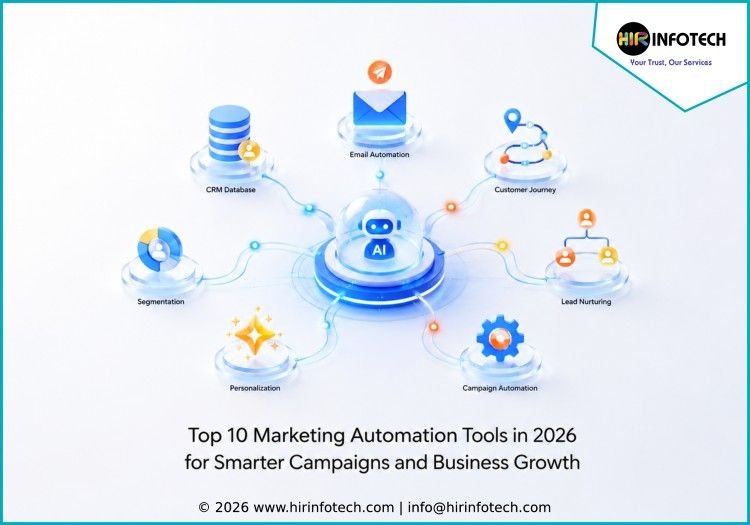
Top 10 Marketing Automation Tools
1. HubSpot Marketing Hub
Short overview:
HubSpot Marketing Hub is a popular marketing automation platform that helps businesses manage email campaigns, landing pages, forms, lead nurturing, CRM workflows, and campaign reporting. It is useful for companies that want marketing, sales, and customer data connected in one system. HubSpot is especially strong for inbound marketing and growing B2B teams.
Key strengths:
Email automation, CRM integration, lead nurturing, landing pages, forms, campaign analytics, workflows, segmentation, and AI-supported content tools.
Best for:
B2B companies, SaaS businesses, startups, agencies, sales-led teams, and companies needing connected marketing and CRM automation.
2. Salesforce Marketing Cloud
Short overview:
Salesforce Marketing Cloud is an enterprise-level marketing automation platform built for customer journeys, email marketing, personalization, advertising, analytics, and cross-channel engagement. It helps businesses connect marketing activities with CRM data and customer behavior. Salesforce Marketing Cloud is useful for large companies that need advanced segmentation, automation, and customer lifecycle management.
Key strengths:
Customer journey automation, CRM integration, AI personalization, email campaigns, segmentation, analytics, cross-channel marketing, and enterprise scalability.
Best for:
Enterprises, large B2B teams, retail brands, financial services, healthcare companies, and businesses with complex customer journeys.
3. Adobe Marketo Engage
Short overview:
Adobe Marketo Engage is a marketing automation platform designed for B2B lead management, account-based marketing, email campaigns, lead scoring, and campaign measurement. It helps businesses nurture prospects through longer buying cycles and align marketing activity with sales goals. Marketo is especially useful for companies that need advanced B2B automation and detailed campaign control.
Key strengths:
Lead management, email automation, account-based marketing, lead scoring, campaign tracking, personalization, and sales alignment.
Best for:
B2B enterprises, SaaS companies, demand generation teams, revenue marketing teams, and organizations with complex sales funnels.
4. ActiveCampaign
Short overview:
ActiveCampaign combines email marketing, marketing automation, CRM, sales automation, and customer experience tools in one platform. It is known for flexible automation workflows that help businesses personalize emails, score leads, segment audiences, and manage customer follow-ups. ActiveCampaign is a practical choice for companies that want strong automation without enterprise-level complexity.
Key strengths:
Email automation, CRM features, audience segmentation, lead scoring, customer journeys, sales automation, and behavior-based triggers.
Best for:
Small businesses, growing companies, agencies, consultants, eCommerce brands, and teams needing flexible marketing automation.
5. Klaviyo
Short overview:
Klaviyo is a marketing automation platform widely used by eCommerce and direct-to-consumer brands. It helps businesses automate email and SMS campaigns based on customer behavior, purchase history, browsing activity, and engagement. Klaviyo is especially useful for brands that want personalized customer journeys, abandoned cart flows, product recommendations, and retention-focused campaigns.
Key strengths:
Email automation, SMS marketing, eCommerce segmentation, customer behavior tracking, predictive analytics, personalization, and store integrations.
Best for:
eCommerce brands, DTC businesses, online retailers, customer retention teams, and companies focused on personalized shopping journeys.
6. Mailchimp
Short overview:
Mailchimp is a well-known marketing automation tool for email campaigns, customer journeys, landing pages, audience segmentation, and campaign reporting. It is easy to use, making it a practical option for small businesses and startups. Mailchimp also supports AI-assisted content suggestions, send-time optimization, and basic automation for customer communication.
Key strengths:
Email marketing, journey automation, audience segmentation, templates, landing pages, reporting, AI recommendations, and simple campaign setup.
Best for:
Small businesses, startups, creators, local companies, service providers, and teams starting with email marketing automation.
7. Brevo
Short overview:
Brevo is a marketing automation and customer communication platform that supports email, SMS, WhatsApp, CRM, live chat, and transactional messaging. It helps businesses automate customer journeys, segment contacts, send campaigns, and manage communication from one place. Brevo is useful for companies looking for affordable automation with multiple communication channels.
Key strengths:
Email automation, SMS campaigns, WhatsApp messaging, CRM tools, transactional emails, segmentation, campaign analytics, and customer communication workflows.
Best for:
Small businesses, eCommerce brands, service companies, startups, agencies, and teams needing budget-friendly marketing automation.
8. Omnisend
Short overview:
Omnisend is a marketing automation platform built mainly for eCommerce businesses. It helps online stores automate email, SMS, push notifications, cart recovery, product recommendations, and customer reactivation campaigns. Omnisend is useful for brands that want ready-made automation workflows designed around online shopping behavior and customer lifecycle stages.
Key strengths:
Email automation, SMS marketing, push notifications, cart recovery, eCommerce workflows, segmentation, product recommendations, and campaign reports.
Best for:
Online stores, Shopify brands, WooCommerce businesses, DTC companies, retail marketers, and eCommerce growth teams.
9. Customer.io
Short overview:
Customer.io is a customer engagement and marketing automation platform designed for behavior-based messaging. It helps businesses send targeted emails, push notifications, SMS, and in-app messages based on user actions and lifecycle stages. Customer.io is especially useful for SaaS companies and digital products that need event-driven communication.
Key strengths:
Behavior-based automation, lifecycle messaging, email campaigns, push notifications, in-app messaging, segmentation, and customer journey workflows.
Best for:
SaaS companies, product teams, growth marketers, subscription businesses, mobile apps, and digital-first businesses.
10. Drip
Short overview:
Drip is an eCommerce marketing automation platform focused on email, SMS, segmentation, and customer lifecycle campaigns. It helps brands create personalized workflows based on customer behavior, purchases, browsing activity, and engagement. Drip is useful for online businesses that want stronger customer retention, repeat purchases, and revenue-focused automation.
Key strengths:
Email automation, SMS marketing, eCommerce segmentation, customer behavior tracking, revenue reporting, personalization, and lifecycle workflows.
Best for:
eCommerce brands, online retailers, DTC companies, small marketing teams, and businesses focused on customer retention.
Why Choosing the Right Company Matters
Choosing from the Top 10 Marketing Automation Tools is important because the right platform can directly affect lead quality, customer engagement, campaign performance, and revenue growth.
Every business has different marketing needs. A B2B company may need lead scoring, CRM integration, account-based marketing, and long nurture workflows. An eCommerce brand may need cart recovery, product recommendations, SMS automation, and customer retention campaigns. A small business may need simple email automation, while an enterprise may need advanced personalization and governance.
Pricing should be compared carefully. Marketing automation tools may charge by contacts, users, emails, SMS volume, automation features, CRM access, or enterprise plans. A tool that looks affordable at first may become expensive as the contact list and campaign volume grow.
Data quality also matters. Marketing automation depends on accurate contact information, clean segments, reliable customer behavior data, and proper tracking. Poor data can lead to wrong targeting, low engagement, duplicate messages, and weak reporting.
Technology and integrations are equally important. The best marketing automation tools should connect with CRM systems, eCommerce platforms, analytics tools, ad platforms, customer support software, forms, landing pages, and sales tools. Strong integrations help teams reduce manual work and create smoother customer journeys.
Support and scalability should not be ignored. As campaigns grow, businesses may need advanced reporting, better permissions, custom workflows, stronger deliverability support, and reliable customer service. The right platform should support both current needs and future growth.
The best marketing automation tool is the one that fits your business model, budget, team skills, customer data, and long-term growth strategy.
Conclusion
The Top 10 Marketing Automation Tools in 2026—HubSpot Marketing Hub, Salesforce Marketing Cloud, Adobe Marketo Engage, ActiveCampaign, Klaviyo, Mailchimp, Brevo, Omnisend, Customer.io, and Drip—help businesses automate campaigns, nurture leads, personalize communication, and improve customer engagement.
HubSpot and Salesforce Marketing Cloud are strong for connected CRM and marketing workflows. Adobe Marketo Engage is useful for B2B demand generation. ActiveCampaign, Mailchimp, and Brevo support flexible automation for growing teams. Klaviyo, Omnisend, and Drip are strong for eCommerce, while Customer.io works well for behavior-based lifecycle messaging.
Before choosing a platform, businesses should compare pricing, automation features, data quality, integrations, ease of use, support, and scalability. With the right marketing automation tool, companies can reduce manual work, improve personalization, and build stronger campaigns in 2026.









