
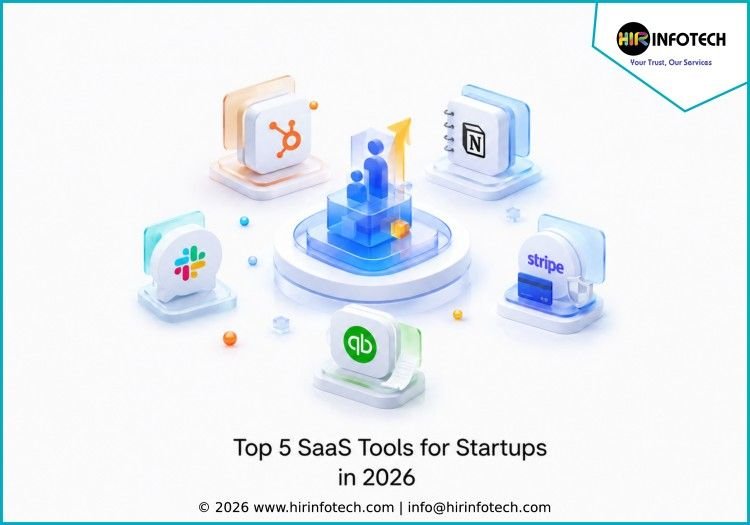
Top 5 SaaS Tools for Startups
1. HubSpot
Short overview:
HubSpot is a powerful SaaS platform for startups that need customer relationship management, marketing automation, lead tracking, sales pipelines, email campaigns, and customer support tools in one place. It helps early-stage teams organize contacts, manage deals, automate follow-ups, and track customer interactions. For startups trying to build a predictable sales and marketing process, HubSpot offers a strong foundation.
Key strengths:
HubSpot offers CRM, marketing automation, email tools, sales tracking, landing pages, forms, live chat, reporting dashboards, and customer service features. Its free and scalable plans make it useful for startups at different stages.
Best for:
Startups, SaaS companies, B2B teams, agencies, consultants, and growing businesses that need CRM, marketing, and sales automation.
2. Notion
Short overview:
Notion is a flexible workspace platform that helps startups manage documents, projects, knowledge bases, meeting notes, product roadmaps, task lists, and internal processes. It is useful for small teams that want one place to organize company information without using too many separate tools. Startups can use Notion for planning, collaboration, onboarding, content calendars, investor updates, and team documentation.
Key strengths:
Notion provides customizable pages, databases, templates, team collaboration, project tracking, wikis, notes, AI features, and workflow organization. Its flexible structure allows startups to build systems that match their working style.
Best for:
Early-stage startups, remote teams, product teams, founders, content teams, and companies that need a simple workspace for planning and documentation.
3. Slack
Short overview:
Slack is a business communication SaaS tool that helps startup teams stay connected through channels, direct messages, file sharing, app integrations, and team updates. It reduces the need for long email threads and helps teams communicate faster. Startups use Slack to manage internal discussions, project updates, customer alerts, engineering notifications, and cross-functional collaboration.
Key strengths:
Slack offers organized channels, direct messaging, file sharing, workflow automation, app integrations, searchable conversations, audio huddles, and team collaboration features. It connects well with tools such as project management platforms, CRM systems, cloud storage, and development apps.
Best for:
Remote startups, hybrid teams, product companies, marketing teams, software teams, and businesses that need fast internal communication.
4. Stripe
Short overview:
Stripe is a widely used SaaS payment platform that helps startups accept online payments, manage subscriptions, process invoices, handle billing, and support global transactions. It is especially useful for SaaS startups, ecommerce companies, marketplaces, and digital businesses that need secure payment infrastructure. Stripe helps founders launch payment systems faster without building complex financial technology from scratch.
Key strengths:
Stripe offers payment processing, subscription billing, invoicing, checkout pages, fraud prevention, global payment support, tax tools, reporting, and developer-friendly APIs. Its flexibility makes it suitable for both simple payment collection and more advanced revenue models.
Best for:
SaaS startups, ecommerce brands, marketplaces, subscription businesses, online service providers, and companies selling digital products.
5. QuickBooks Online
Short overview:
QuickBooks Online is a cloud accounting SaaS tool that helps startups manage invoicing, expenses, cash flow, reports, taxes, and financial records. Many startups begin with spreadsheets, but as revenue, expenses, and vendors grow, financial management becomes more complex. QuickBooks Online gives founders and finance teams a clearer view of business performance.
Key strengths:
QuickBooks Online offers invoicing, expense tracking, bank connections, receipt capture, financial reports, tax support, payment tracking, and accountant collaboration. It helps startups reduce manual bookkeeping and maintain cleaner financial records.
Best for:
Startups, small businesses, agencies, consultants, ecommerce sellers, founders, and finance teams that need simple and reliable accounting software.
Why Choosing the Right Company Matters
Choosing from the Top 5 SaaS Tools for Startups is not only about selecting popular software. The right tool should solve a real business problem, support your current workflow, and scale as your startup grows.
Startups usually work with limited budgets, small teams, and fast-changing priorities. That means every SaaS platform should be selected carefully. A tool may look attractive because it has many features, but if your team does not use those features daily, it may add cost without improving productivity.
Pricing is one of the first factors to compare. Many SaaS tools charge based on users, contacts, storage, transactions, automation limits, or advanced features. A platform that is affordable for a team of five may become expensive when the company grows to 30 or 50 employees. Startups should review free plans, startup discounts, upgrade costs, billing terms, and add-ons before committing.
Technology and integrations also matter. A good SaaS tool should work well with the systems your startup already uses. For example, CRM tools should connect with email platforms, payment tools should connect with accounting software, and communication platforms should integrate with project management systems. Strong integrations reduce duplicate work and help teams keep data consistent.
Data quality is another important factor. Startups need accurate customer data, financial records, sales reports, project updates, and performance insights. Poor data can create confusion, missed opportunities, weak forecasting, and slower decision-making. The best SaaS tools help teams track information clearly and turn daily activity into useful business insight.
Support and onboarding should also be considered. Startup teams often do not have large technical departments. They need tools with simple setup, clear documentation, helpful support, and easy training resources. A tool that is difficult to understand can slow down work instead of improving it.
Scalability is equally important. Startups may begin with simple workflows, but as they grow, they need stronger permissions, reporting, automation, security, and team management. Choosing scalable SaaS tools can help businesses avoid frequent platform changes later.
The best SaaS tools for startups are not always the most expensive or advanced platforms. They are the tools that make daily operations easier, improve collaboration, save time, and help founders focus on growth.
Conclusion
The Top 5 SaaS Tools for Startups in 2026 can help new and growing companies manage customers, communication, documentation, payments, and finance with better control. HubSpot supports sales and marketing growth. Notion helps teams organize work and knowledge. Slack improves communication. Stripe simplifies payments and subscriptions. QuickBooks Online helps startups manage accounting and financial visibility.
Before choosing any SaaS platform, startups should compare pricing, features, integrations, ease of use, data quality, support, and scalability. The right SaaS tools can reduce manual work, improve team productivity, and give startups the systems they need to grow with confidence.









