Author name: s940m874bi9jjiq5xpiu

Uncategorized

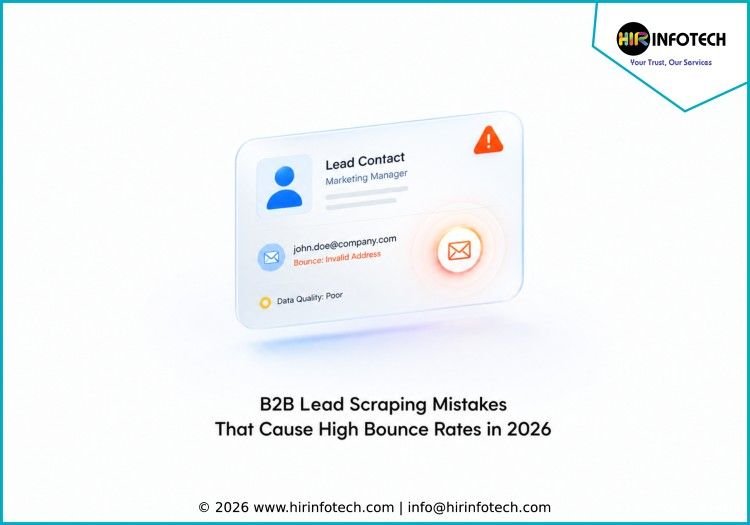
B2B Lead Scraping Mistakes That Cause High Bounce Rates in 2026

B2B Lead Scraping Mistakes That Cause High Bounce Rates in 2026 Many businesses invest heavily in B2B lead generation but still struggle with poor engagement, low conversions, and high bounce rates. In 2026, the problem is often not the outreach channel itself but the quality and relevance of the scraped lead data behind it. Poor scraping practices can quickly damage campaign performance, sender reputation, and buyer trust across global markets. Why Poor B2B Lead Scraping Leads to High Bounce Rates B2B lead scraping helps companies collect business contact information, firmographic data, decision-maker details, and company insights from publicly available sources. However, scraping inaccurate, outdated, or irrelevant data creates serious downstream problems for sales and marketing teams. High bounce rates are one of the clearest indicators of poor lead data quality. When emails fail to reach valid inboxes, businesses waste advertising budgets, reduce campaign effectiveness, and risk domain reputation issues. For companies targeting markets such as the USA, Germany, the United Kingdom, France, Canada, Australia, and other international business regions, data accuracy expectations have become significantly stricter in 2026. Modern B2B buyers also expect highly relevant outreach. Generic or poorly targeted campaigns based on weak scraping practices often trigger spam complaints, unsubscribes, and engagement decline. Common B2B Lead Scraping Mistakes That Damage Campaign Performance Scraping Outdated Business Directories One of the most common mistakes is relying on outdated business listings or abandoned directories. Many public databases contain inactive domains, old employee records, or discontinued company information. This issue becomes especially problematic in fast-moving industries where employee turnover is high and company structures change frequently. Outdated data often results in: In regions such as Europe, maintaining accurate business data is particularly important because privacy regulations and email deliverability standards continue to evolve. Ignoring Email Verification Processes Scraping emails without validation is another major contributor to bounce rates. Many businesses collect thousands of contacts but skip verification workflows to save time. As a result, campaigns are sent to invalid domains, disposable emails, typo-based addresses, or inactive inboxes. Modern B2B lead generation requires layered validation processes that may include: Without these processes, even large lead databases can become unusable for outbound campaigns. Scraping Irrelevant Audience Segments Another common mistake is prioritizing lead quantity over relevance. Many organizations scrape broad contact lists without aligning the data to their ideal customer profile. This leads to outreach campaigns targeting businesses outside the intended industry, company size, region, or decision-making role. Low relevance affects: For example, a SaaS provider targeting enterprise procurement leaders in Germany will likely experience poor engagement if scraped lists include small retail businesses or non-decision-makers. Using Poorly Structured Scraping Automation Automated scraping tools can collect massive volumes of data quickly, but poor configuration creates data inconsistency and quality issues. Common automation problems include: Inaccurate automation workflows can introduce large-scale errors into CRM systems and outbound platforms. Businesses operating across multiple international markets such as the USA, France, Spain, Switzerland, or Hong Kong often require region-specific data normalization standards to maintain accuracy. How High Bounce Rates Affect B2B Sales and Marketing Operations Reduced Sender Reputation Email providers increasingly monitor sender behavior and bounce performance. High bounce rates signal poor list hygiene and may reduce overall deliverability. Over time, domains with repeated bounce issues may experience: Recovering sender reputation can take months and often requires significant infrastructure adjustments. Wasted Marketing Budget Low-quality scraped leads create unnecessary spending across outreach campaigns, sales operations, and CRM management. Businesses may waste resources on: For companies scaling internationally across countries such as Canada, Ireland, Australia, or the Netherlands, inefficient lead data can significantly increase customer acquisition costs. Poor Sales Team Productivity Sales teams depend on reliable lead data to prioritize outreach and build relationships with qualified prospects. When scraped lists contain inaccurate or irrelevant information, sales representatives spend valuable time chasing unqualified contacts or correcting bad records. This reduces: Best Practices to Reduce Bounce Rates in B2B Lead Scraping Build Clearly Defined Lead Criteria Before scraping begins, businesses should define clear targeting criteria based on: Well-defined targeting improves lead relevance and reduces unnecessary data collection. Use Multi-Step Data Validation Modern lead generation workflows should include multiple quality checkpoints before data enters sales systems. Effective validation processes may include: These processes help maintain healthier databases and stronger outreach performance. Monitor Compliance and Regional Regulations Compliance requirements vary significantly across countries. Businesses targeting the European Union, including Germany, France, Italy, Spain, Poland, Ireland, and the Netherlands, must consider GDPR-related responsibilities when handling business contact data. Organizations targeting the USA, Canada, Australia, Hong Kong, or Thailand may also need to follow region-specific privacy and communication standards. Responsible lead scraping involves transparent data handling, proper storage controls, and compliant outreach practices. Continuously Refresh Lead Databases B2B data decays quickly due to role changes, company restructuring, acquisitions, and employee turnover. Successful organizations regularly refresh scraped data rather than relying on static databases for long periods. Continuous enrichment and validation help reduce bounce rates and improve long-term campaign performance. Why Businesses Need Specialized B2B Lead Data Support As B2B lead generation becomes more data-driven in 2026, companies increasingly require structured, scalable, and reliable data collection processes. hirinfotech supports businesses with web scraping and lead data extraction services designed to help organizations build cleaner, more targeted B2B prospect databases. Its capabilities align with businesses seeking scalable lead research, structured data collection, and customized extraction workflows for outbound sales and marketing operations. For companies targeting international markets such as the USA, Germany, the United Kingdom, Canada, Australia, and Europe, maintaining accurate business data has become essential for improving outreach performance and reducing operational inefficiencies. Effective lead scraping today involves far more than simply collecting contact lists. Businesses often require: Specialized providers can help organizations reduce manual research workloads while improving the reliability and usability of lead databases for long-term sales and marketing initiatives. Frequently Asked Questions What is the biggest cause of high bounce rates in B2B lead scraping? The most common cause is outdated or unverified contact data. Invalid email addresses, inactive domains, and incorrect employee
Uncategorized

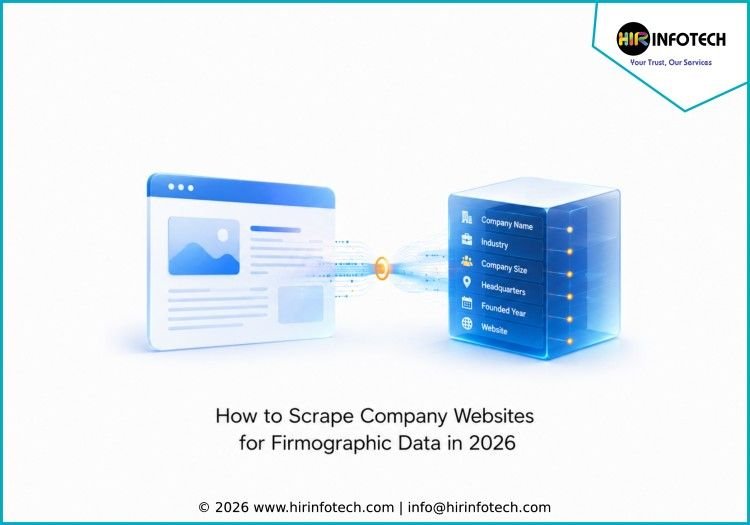
How to Scrape Company Websites for Firmographic Data in 2026

How to Scrape Company Websites for Firmographic Data in 2026 Introduction Firmographic data has become a critical asset for B2B sales, marketing, and market intelligence teams in 2026. Businesses across the USA, Germany, the United Kingdom, France, Italy, Spain, the Netherlands, Switzerland, Poland, Ireland, Australia, Canada, Thailand, Hong Kong, and other global markets increasingly rely on company website scraping to build accurate prospect databases, improve segmentation, and support data-driven outreach strategies. What Is Firmographic Data? Firmographic data refers to descriptive business information used to categorize and evaluate companies for B2B targeting and analysis. It serves a similar purpose to demographic data in consumer marketing but focuses on organizations instead of individuals. Common firmographic data points include: Sales and marketing teams use this information to identify ideal customer profiles, prioritize accounts, personalize outreach, and improve lead qualification. Why Businesses Scrape Company Websites for Firmographic Data Public company websites remain one of the most reliable sources of business intelligence. Unlike outdated lead lists or generic directories, official websites often contain current operational and positioning information directly maintained by the business itself. In 2026, businesses use website scraping for firmographic intelligence to support: Account-Based Marketing (ABM) B2B marketing teams use firmographic datasets to identify target accounts that match specific criteria such as company size, industry, geographic region, or operational maturity. Sales Prospecting Sales teams build prospect lists using structured company information gathered from websites, directories, and public business pages. Market Expansion Research Businesses entering new regions such as Germany, Canada, or Australia often scrape public company data to analyze local market opportunities and competitor landscapes. Competitive Intelligence Companies monitor competitor positioning, service offerings, partnerships, hiring activity, and geographic expansion through structured website data extraction. Vendor and Partnership Discovery Procurement and partnership teams use firmographic intelligence to identify suitable vendors, distributors, suppliers, or channel partners. How Website Scraping for Firmographic Data Works The process typically combines automated crawling, structured extraction logic, data normalization, and validation workflows. Step 1: Identifying Target Sources The first step involves defining which company websites or public business directories should be scraped. Common sources include: The target source depends heavily on the business objective and industry focus. Step 2: Crawling Website Pages Web crawlers systematically visit website pages and identify sections containing business-relevant information. Typical target pages include: Modern scraping systems can also detect structured schema markup, metadata, and embedded business information. Step 3: Extracting Firmographic Data Once pages are identified, extraction logic captures specific data fields. This often includes: Advanced systems use AI-assisted parsing and NLP models to classify and organize unstructured company information. Step 4: Data Cleaning and Normalization Raw scraped data is rarely ready for direct business use. Normalization typically includes: Data quality directly affects sales and marketing performance, making this step essential. Step 5: Data Enrichment and Validation Many organizations enrich scraped firmographic records using external validation workflows or additional public sources. This may involve: High-quality enrichment improves segmentation and targeting accuracy. Key Challenges in Scraping Company Websites While firmographic scraping offers strong business value, it also introduces operational and compliance challenges. Website Structure Variability Every website is built differently. Some use static HTML, while others rely heavily on JavaScript frameworks or dynamically loaded content. Scraping systems must handle: International websites across Europe or Asia may also present multilingual formatting complexities. Data Accuracy Problems Public business information is not always complete or updated. Common issues include: Without validation pipelines, scraped datasets can quickly lose value. Compliance and Legal Considerations Businesses scraping company websites in regions such as the European Union must pay close attention to regulatory expectations. Relevant considerations may include: In 2026, responsible data acquisition practices are increasingly important for enterprise buyers and compliance teams. Infrastructure Scalability Large-scale scraping projects often require: Poor infrastructure planning can result in blocked requests, incomplete datasets, or unstable extraction performance. Best Practices for Scraping Firmographic Data in 2026 Businesses that rely on scraped company intelligence are increasingly prioritizing quality, compliance, and operational reliability over simple data volume. Focus on Publicly Available Business Information Responsible scraping projects focus on publicly accessible business-level information rather than sensitive personal data. This reduces compliance risk while improving enterprise usability. Use Structured Extraction Logic Reliable extraction frameworks should use: Structured extraction improves long-term scalability and consistency. Validate Data Continuously Firmographic datasets become outdated quickly. Modern workflows increasingly include: Continuous validation improves lead quality and campaign performance. Segment Data Based on Business Goals Different teams require different firmographic attributes. For example: Data collection should align with practical business use cases. Maintain Regional Compliance Awareness Businesses operating across the USA, Germany, France, the United Kingdom, Switzerland, Canada, Australia, and other regions should account for location-specific compliance expectations. Cross-border data workflows often require additional governance and internal review processes. Industry Use Cases for Firmographic Website Scraping SaaS and Technology Companies Technology providers use firmographic intelligence to identify companies based on software adoption, growth stage, funding activity, or infrastructure maturity. Recruitment and Staffing Firms Recruiters scrape company data to identify expanding businesses, hiring trends, and potential client accounts. Manufacturing and Industrial Businesses Manufacturers often use business intelligence datasets to identify distributors, suppliers, and regional buyers. Financial and Consulting Services Professional services firms use firmographic datasets for account targeting, market analysis, and partnership discovery. E-commerce and Retail Technology Providers Retail-focused technology businesses analyze company websites to identify operational scale, logistics maturity, and platform usage. How HirInfotech Supports Firmographic Data Collection Projects hirinfotech provides web scraping and data extraction services that support businesses looking to build structured B2B datasets from public web sources. For organizations working on lead generation, market research, sales intelligence, or operational targeting, firmographic data extraction often requires more than basic scraping scripts. Projects typically involve large-scale crawling, structured data extraction, validation workflows, deduplication, and integration-ready formatting. Businesses operating across regions such as the USA, Germany, the United Kingdom, France, Spain, the Netherlands, Switzerland, Canada, Australia, and Hong Kong may also require scalable infrastructure capable of handling multilingual and region-specific business sources. HirInfotech’s service capabilities are relevant for companies that need: For businesses evaluating firmographic intelligence

Uncategorized

Web Scraping for ABM Account Research: Smarter B2B Targeting Strategies in 2026

Web Scraping for ABM Account Research: Smarter B2B Targeting Strategies in 2026 Introduction Account-based marketing depends on precision. In 2026, B2B teams are under pressure to identify the right accounts faster, understand buying intent earlier, and personalize outreach at scale. Web scraping for ABM account research has become an increasingly valuable approach for businesses looking to build accurate, data-driven target account strategies across competitive global markets. Why ABM Account Research Matters More in 2026 Traditional lead generation often focuses on volume. ABM takes a different approach by concentrating sales and marketing efforts on high-value accounts that closely match an organization’s ideal customer profile. The challenge is that effective ABM requires deep account intelligence. Businesses need reliable information about: Manually gathering this information across hundreds or thousands of target accounts is difficult, expensive, and time-consuming. This is where web scraping has become strategically important for modern B2B revenue teams. What Is Web Scraping for ABM Account Research? Web scraping for ABM account research involves extracting publicly available business information from websites, directories, marketplaces, social platforms, company pages, job boards, review portals, and other online sources to support account intelligence and targeting strategies. Instead of relying solely on static databases, businesses can continuously collect and organize relevant account-level data from multiple sources. This process helps teams: In 2026, many B2B organizations use scraping workflows alongside CRM systems, marketing automation platforms, enrichment tools, and AI-driven scoring systems to improve account selection and campaign performance. The Growing Data Challenges in ABM ABM success depends heavily on data quality. However, many organizations struggle with outdated or incomplete account information. Common challenges include: Inaccurate Company Data Business databases often become outdated quickly due to leadership changes, mergers, hiring growth, technology migrations, and geographic expansion. Limited Intent Visibility Many companies lack visibility into early-stage buying signals that appear publicly across websites, hiring pages, partner ecosystems, and content activity. Fragmented Research Processes Sales and marketing teams frequently rely on multiple disconnected sources, leading to inconsistent account intelligence. Slow Manual Research Researching enterprise accounts manually can consume significant time, especially for global campaigns targeting industries across the USA, Germany, the United Kingdom, France, Canada, Australia, and other international markets. Poor Personalization Without detailed account insights, ABM campaigns often become generic and fail to engage decision-makers effectively. How Web Scraping Supports Better ABM Strategies Building More Accurate Target Account Lists Web scraping enables organizations to identify companies that align with specific qualification criteria. Businesses can collect information such as: This helps teams build more refined target account lists based on real market signals rather than broad assumptions. Identifying Buying Intent Signals Intent-based ABM has become increasingly important in 2026. Scraped data can reveal signals such as: These indicators help sales teams prioritize accounts that may already be evaluating relevant solutions. Improving Personalization Modern B2B buyers expect relevant outreach. Scraped account intelligence supports: This improves engagement rates and creates more meaningful sales conversations. Enriching CRM and Marketing Automation Systems Many ABM programs struggle because CRM records are incomplete or outdated. Web scraping workflows can help enrich systems with: This allows marketing and sales teams to maintain cleaner and more actionable databases. Key Data Sources Used in ABM Account Research Different industries require different research strategies. However, common public data sources include: Company Websites Corporate websites provide valuable information about services, leadership, expansion plans, partnerships, and positioning. Job Boards and Hiring Pages Hiring activity often reveals technology adoption, operational priorities, and investment areas. Business Directories Industry directories can help identify niche companies, regional providers, and specialized service organizations. Review Platforms Review sites offer insight into customer sentiment, competitor relationships, and software ecosystems. News and Press Releases Press announcements frequently reveal growth activity, acquisitions, funding rounds, and strategic initiatives. Industry Portals Vertical-specific websites can provide highly targeted account intelligence for sectors such as SaaS, manufacturing, healthcare, logistics, fintech, and professional services. Industry Applications of ABM Research Through Web Scraping SaaS and Technology Technology companies use ABM research to identify businesses adopting complementary platforms, scaling operations, or expanding infrastructure. Manufacturing Manufacturers often analyze supplier ecosystems, regional production expansion, and procurement activity. Financial Services Financial organizations may monitor regulatory changes, digital transformation initiatives, and enterprise modernization efforts. Healthcare Healthcare providers and vendors frequently research organizational growth, facility expansion, and technology adoption trends. Professional Services Consulting firms, agencies, and B2B service providers use ABM research to identify companies experiencing operational or growth-related challenges. Regional Considerations for Global ABM Campaigns Organizations targeting international markets must account for regional differences in compliance, data availability, language, and market behavior. United States The USA remains one of the largest ABM markets, with strong demand for data-driven targeting and enterprise personalization. Germany and France European markets require careful attention to GDPR compliance, data handling transparency, and responsible enrichment practices. United Kingdom and Ireland B2B organizations in these markets increasingly rely on intent-based targeting and localized account intelligence. Canada and Australia Companies operating in Canada and Australia often prioritize scalable ABM programs for technology, SaaS, and enterprise services. Hong Kong and Thailand Businesses expanding into Asia-Pacific regions frequently use account research to identify regional distributors, enterprise buyers, and cross-border growth opportunities. Compliance and Responsible Data Practices Responsible data collection has become a major priority in 2026. Organizations implementing web scraping for ABM research should consider: ABM research initiatives should focus on lawful, transparent, and business-relevant use of publicly available information. Technology and Automation in Modern ABM Research ABM account research is no longer entirely manual. Modern workflows often involve: AI has also improved the ability to prioritize accounts based on fit, engagement potential, and market behavior. However, automation alone is not enough. Data quality validation, contextual analysis, and ongoing maintenance remain essential for effective ABM execution. Choosing the Right Web Scraping Partner for ABM Research Businesses evaluating external support for ABM research should look beyond simple data extraction capabilities. Important evaluation criteria include: Data Accuracy Reliable account research requires strong validation and enrichment processes. Scalability ABM programs often evolve quickly across industries and geographic markets. Customization Different organizations require different account

Uncategorized

How to Build Lead Lists Without Buying Static Databases in 2026

How to Build Lead Lists Without Buying Static Databases in 2026 Introduction Many businesses still rely on purchased lead databases that become outdated almost immediately. In 2026, companies across the USA, Germany, the United Kingdom, France, Italy, Spain, the Netherlands, Switzerland, Poland, Ireland, Australia, Canada, Thailand, Hong Kong, and other global markets are shifting toward dynamic lead generation strategies that prioritize accuracy, compliance, and long-term sales value. Why Static Lead Databases Are Losing Value For years, companies purchased large contact databases hoping to accelerate outreach and sales prospecting. The problem is that static databases degrade quickly. Decision-makers change roles. Companies rebrand. Email addresses become invalid. Entire datasets become irrelevant within months. For B2B teams, outdated lead data creates several operational problems: This is especially important for companies operating in highly regulated regions such as Germany, France, the Netherlands, Switzerland, Ireland, and the United Kingdom, where data privacy expectations and consent requirements are significantly stricter. Modern sales and marketing teams now prefer continuously updated lead sourcing workflows instead of one-time database purchases. What Businesses Use Instead of Static Lead Databases Instead of buying outdated lists, businesses are building lead pipelines using real-time public business data, intent signals, web research, and structured lead generation workflows. This approach focuses on identifying companies and contacts based on current market activity rather than relying on stale records. Modern lead list building typically combines: The result is a lead database that remains more relevant, accurate, and commercially useful over time. Why Dynamic Lead Building Matters in 2026 B2B buying behavior has changed significantly. Sales teams no longer want massive spreadsheets filled with low-quality contacts. They want targeted, segmented, decision-maker-focused prospect lists connected to real buying signals. In 2026, businesses increasingly evaluate lead quality based on: This is particularly valuable for organizations targeting multiple international markets such as the USA, Canada, Australia, Hong Kong, and European countries where localized targeting improves campaign performance. Dynamic lead sourcing allows businesses to adjust outreach based on real-time business conditions rather than relying on outdated snapshots. Key Steps to Build Lead Lists Without Buying Databases Define a Clear Ideal Customer Profile The first step is identifying the exact type of business you want to target. Without a clear ICP, even large lead datasets become difficult to use effectively. An effective B2B lead profile usually includes: For example, a SaaS company targeting logistics firms in the United Kingdom requires a very different prospecting strategy than a manufacturing supplier targeting enterprises in Germany or Italy. Well-defined targeting improves both lead relevance and sales conversion potential. Use Public Business Sources Strategically Modern lead generation increasingly depends on publicly available business information. This may include: The goal is not simply collecting contacts. It is identifying businesses actively operating within your target market. When structured correctly, public-source lead generation produces highly targeted prospect lists aligned with current business activity. Build Segmented Lead Pipelines One of the biggest mistakes companies make is storing all leads in a single generic database. High-performing sales teams organize lead lists into structured segments based on: Industry Vertical Different industries require different messaging, compliance considerations, and outreach strategies. Market Region Businesses in the USA, Germany, France, or Hong Kong often respond differently to outreach styles and communication timing. Company Size Enterprise lead generation differs significantly from SMB prospecting. Buyer Role Marketing leaders, procurement managers, operations teams, and technical stakeholders have different priorities and evaluation criteria. Segmentation improves personalization, campaign performance, and CRM usability. Validate and Enrich Contact Data Lead generation quality depends heavily on data validation. Without verification processes, even newly sourced data becomes unreliable. Modern lead enrichment workflows often include: Accurate data improves deliverability and reduces wasted outreach effort. For organizations operating in regions such as the United Kingdom, Ireland, Germany, Switzerland, and the Netherlands, maintaining accurate and permission-aware data handling processes is also important from a compliance perspective. Combine Automation With Human Oversight Automation has become essential for scalable lead sourcing, but fully automated lead generation without quality control often creates poor datasets. Effective lead operations combine: This hybrid approach helps businesses maintain both scale and accuracy. Companies relying entirely on automated scraping tools without verification frequently struggle with incomplete records, irrelevant contacts, or compliance concerns. Common Problems With Purchased Lead Databases Businesses moving away from static databases often cite the same recurring issues. Rapid Data Decay B2B data becomes outdated quickly. Employees change jobs, companies restructure, and contact information becomes invalid. Limited Targeting Precision Purchased lists are often too broad and poorly segmented for modern account-based sales strategies. Compliance and Risk Concerns Depending on the region, poorly sourced data can create regulatory and reputational risks. This is especially relevant for companies operating across European markets where data handling expectations are more stringent. Poor CRM Quality Low-quality data creates operational problems inside sales and marketing systems. Teams spend time cleaning data instead of engaging qualified prospects. Weak Conversion Performance Outdated contacts and irrelevant companies reduce response rates and negatively impact outbound ROI. How Web Data and Lead Intelligence Improve Prospecting Modern B2B lead generation increasingly focuses on lead intelligence rather than raw contact volume. Instead of purchasing fixed databases, companies analyze business indicators such as: These signals help sales teams prioritize businesses with higher engagement potential. Lead intelligence also improves personalization because outreach can be aligned with actual business context. How Businesses Scale Lead List Building Internationally Building lead lists across countries requires localized understanding. A strategy that works in the USA may not work identically in Germany, France, or Poland. International lead generation typically requires adjustments in: Companies targeting multiple regions often benefit from structured lead research workflows designed specifically for international B2B markets. How Hirinfotech Supports Modern Lead List Building hirinfotech helps businesses build scalable lead generation workflows using web research, structured data extraction, business intelligence collection, and customized prospect database development. For organizations trying to move away from outdated purchased databases, Hirinfotech supports more targeted lead sourcing approaches based on business relevance, segmentation, and real-time data collection strategies. Its capabilities are particularly relevant for companies that

Uncategorized

Web Scraping for Recruitment Agency Lead Generation in 2026

Web Scraping for Recruitment Agency Lead Generation in 2026 Introduction Recruitment agencies face increasing pressure to find qualified clients faster, build targeted prospect databases, and maintain a consistent sales pipeline. In 2026, web scraping has become one of the most effective ways for recruitment firms to collect business intelligence, identify hiring companies, and generate highly relevant leads across global markets. Why Recruitment Agencies Are Investing in Lead Generation Data Recruitment is highly competitive across markets such as the USA, Germany, the United Kingdom, France, Canada, Australia, and other international hiring hubs. Agencies are no longer relying solely on referrals or outdated lead databases. Modern recruitment sales teams need access to: The challenge is that this information is distributed across multiple public platforms, company websites, job portals, business directories, and professional networks. Manual research is slow, inconsistent, and difficult to scale. This is where web scraping becomes commercially valuable for recruitment agency lead generation. What Is Web Scraping for Recruitment Agency Lead Generation? Web scraping is the process of automatically collecting publicly available data from websites and online platforms in a structured format. For recruitment agencies, web scraping is commonly used to gather: The collected data can then be organized into lead databases for outreach, CRM enrichment, sales prospecting, recruitment marketing, or business development campaigns. Unlike generic purchased lead lists, scraped recruitment data can be customized around specific hiring patterns, industries, locations, or recruitment niches. Why Recruitment Agencies Use Web Scraping in 2026 Recruitment agencies increasingly require data-driven business development strategies. Traditional outbound prospecting methods often struggle with outdated contact information and low targeting accuracy. Web scraping supports lead generation by improving: Lead Relevance Recruitment agencies can target businesses actively advertising roles instead of broad, untargeted company lists. For example: This improves sales efficiency and outreach quality. Speed of Prospect Discovery Manually researching thousands of companies across multiple countries is operationally expensive. Automated web scraping allows agencies to: Geographic Expansion Agencies targeting markets like the USA, Germany, the UK, Switzerland, or Australia often require region-specific hiring intelligence. Web scraping can help identify: This is particularly useful for agencies expanding internationally. CRM and Sales Pipeline Enrichment Recruitment firms frequently integrate scraped data into: This enables better segmentation, scoring, automation, and outbound targeting. Common Data Sources Used for Recruitment Lead Generation Recruitment lead scraping typically involves collecting public business data from multiple sources. Job Boards and Career Platforms Job advertisements provide strong hiring intent signals. Recruitment agencies often monitor: These signals help prioritize outreach opportunities. Company Career Pages Many companies advertise positions directly on their websites before using external recruitment agencies. Scraping career pages helps agencies identify: Business Directories Industry directories can provide: This helps agencies build targeted lead lists by sector or location. Professional and Industry Platforms Some recruitment firms use public professional data sources to identify: This improves outreach personalization and account targeting. Key Benefits of Web Scraping for Recruitment Agencies Improved Lead Quality Recruitment agencies benefit more from relevant leads than from large, untargeted databases. Web scraping allows precise filtering based on: This increases conversion potential. Better Outreach Timing Timing matters in recruitment sales. Agencies that contact businesses during active hiring cycles are more likely to secure recruitment partnerships. Scraped hiring signals help agencies approach prospects at the right time. Scalable Business Development As recruitment agencies grow, manual prospecting becomes difficult to maintain. Web scraping enables: This supports long-term sales scalability. Market Intelligence Scraped hiring data can reveal broader industry trends, including: Recruitment firms can use this intelligence to refine their market positioning. Important Compliance Considerations in 2026 Web scraping for recruitment lead generation must be approached responsibly. Businesses operating in countries such as Germany, France, the Netherlands, Ireland, Switzerland, and the United Kingdom must pay close attention to privacy and data protection expectations. Important considerations include: Recruitment agencies increasingly prioritize compliant data acquisition strategies to reduce operational and legal risk. Challenges Recruitment Agencies Face with Web Scraping While web scraping offers major advantages, implementation quality matters significantly. Data Accuracy Problems Poor scraping practices often result in: Lead quality directly affects outreach performance. Website Blocking and Anti-Bot Systems Many websites now use: Large-scale scraping projects require proper infrastructure management. Multi-Region Data Complexity International recruitment agencies targeting countries like: often need localized data handling, multilingual processing, and region-specific lead segmentation. Ongoing Maintenance Websites frequently change layouts and structures. Scraping systems require: Without proper support, scraped data quality quickly declines. How Recruitment Agencies Can Build Effective Lead Generation Workflows Successful recruitment lead generation usually combines web scraping with broader sales and data workflows. Define Ideal Client Profiles Before collecting data, agencies should clearly define: This improves lead precision. Focus on Hiring Intent Signals Not every company is equally valuable. Strong indicators include: These signals often correlate with recruitment outsourcing needs. Combine Automation with Human Review Automated data collection works best when combined with: Human oversight remains important for high-quality prospecting. Keep Databases Updated Recruitment markets change rapidly. Agencies should refresh data regularly to maintain: How Hirinfotech Supports Recruitment Lead Generation Through Web Scraping hirinfotech provides web scraping solutions that help businesses collect, organize, and manage large-scale public web data for operational and commercial use cases, including recruitment agency lead generation. For recruitment firms operating across markets such as the USA, United Kingdom, Germany, France, Canada, Australia, and other international regions, scalable data collection has become increasingly important for identifying hiring companies and improving outbound targeting. Hirinfotech’s web scraping capabilities can support recruitment-related workflows such as: Because recruitment lead generation often involves dynamic websites and continuously changing hiring data, reliable scraping infrastructure, data formatting, and ongoing workflow maintenance are essential for maintaining data quality. Businesses also increasingly require scalable delivery models, structured exports, automation support, and region-specific data handling when targeting international recruitment markets. For agencies seeking customized lead acquisition workflows instead of generic purchased lists, professionally managed web scraping services can provide greater flexibility, targeting precision, and operational scalability. Choosing a Web Scraping Partner for Recruitment Data Recruitment agencies should evaluate providers carefully before outsourcing scraping projects. Important evaluation factors include:

Uncategorized

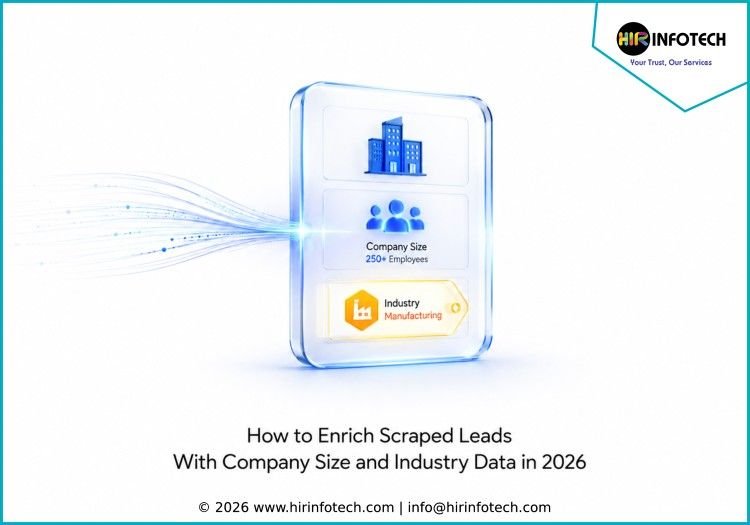
How to Enrich Scraped Leads With Company Size and Industry Data in 2026

How to Enrich Scraped Leads With Company Size and Industry Data in 2026 Introduction Scraping B2B leads is only the first step in building a usable sales pipeline. Without accurate company size and industry data, lead lists often lack the context needed for targeting, qualification, and personalization. In 2026, businesses across the USA, Germany, the United Kingdom, France, Canada, Australia, and other global markets increasingly rely on enriched lead data to improve sales efficiency and campaign performance. Why Lead Enrichment Matters in Modern B2B Sales Raw scraped leads rarely provide enough information for effective decision-making. A list containing only company names, websites, or email addresses creates operational limitations for sales and marketing teams. Lead enrichment adds meaningful business intelligence to existing records. Two of the most valuable enrichment fields are: These attributes help businesses understand whether a lead matches their ideal customer profile, purchasing potential, and market relevance. For B2B organizations operating across multiple countries and industries, enriched lead data improves: Without enrichment, teams often waste resources pursuing businesses that are too small, outside their target industry, or operationally unsuitable. What Company Size Data Actually Includes Company size enrichment goes beyond employee count alone. Modern B2B datasets may include several indicators that help estimate business scale and commercial potential. Common company size attributes include: Employee Count This is one of the most widely used enrichment fields. It helps sales teams determine whether a business fits SMB, mid-market, or enterprise targeting criteria. Examples: Revenue Estimates Revenue-based enrichment can support account scoring and enterprise qualification strategies. For example: Office Locations and Geographic Presence Multi-location businesses often indicate operational maturity and larger procurement potential. Technology Footprint In some cases, enrichment systems also identify: These signals help businesses align sales strategies with organizational complexity and digital maturity. Why Industry Classification Is Critical for Lead Quality Industry data provides the context needed to determine whether a prospect is commercially relevant. A scraped email list without industry classification creates several challenges: Industry enrichment solves these problems by categorizing businesses into standardized sectors. Examples include: In international markets like Germany, Switzerland, France, and the Netherlands, industry segmentation is particularly important because regulations, procurement practices, and buyer expectations vary significantly between sectors. How Businesses Enrich Scraped Leads in 2026 Lead enrichment has become significantly more sophisticated in recent years. Businesses now combine web scraping, AI-assisted matching, API integrations, and verification systems to improve dataset quality. Matching Domains Against Business Databases One common approach involves matching company websites or domains against business intelligence databases. This process helps retrieve: The accuracy of this process depends heavily on: Using Public Business Data Sources Many enrichment workflows use publicly available business information from: Public data remains especially important in regions with strict privacy and compliance expectations, such as the European Union. AI-Assisted Industry Classification Modern enrichment systems increasingly use AI models to classify businesses based on: This helps improve classification accuracy when companies do not explicitly define their industry category. For example, AI systems can distinguish between: Even when the original data source lacks standardized labels. CRM and Sales Platform Integration Enriched lead datasets are often integrated directly into: This allows businesses to automate: Common Challenges in Lead Enrichment Although enrichment improves lead quality, poor implementation can create serious operational problems. Inconsistent Industry Labels Different databases may classify companies differently. For example: May all refer to similar organizations. Without normalization rules, CRM segmentation becomes unreliable. Outdated Company Data Employee counts and revenue estimates change frequently. Businesses that rely on stale enrichment datasets risk inaccurate targeting. This is particularly important in fast-growing sectors like: Duplicate Records When scraping leads across multiple sources, duplicate businesses often appear with slightly different naming structures. Example: Deduplication logic is essential for maintaining usable datasets. Regional Compliance Considerations Businesses operating across: Must carefully consider: Responsible enrichment workflows prioritize lawful data handling and transparent business usage practices. Benefits of Enriched B2B Lead Data Organizations investing in high-quality enrichment workflows often see improvements across sales and marketing operations. Better ICP Targeting Sales teams can focus on businesses that genuinely match: Improved Outreach Personalization Industry-specific messaging performs significantly better than generic cold outreach. For example: Enrichment enables more relevant communication. Higher Conversion Rates Qualified and segmented lead lists typically improve: Because teams spend less time on unqualified prospects. Smarter Market Expansion For companies expanding into markets like: Industry and company size data helps identify commercially viable regional opportunities. Best Practices for Enriching Scraped Leads Businesses building scalable lead generation systems should follow several practical best practices. Use Multiple Verification Layers Do not rely on a single source for enrichment accuracy. Combine: Standardize Industry Taxonomies Establish internal classification rules to ensure consistency across datasets. This improves: Regularly Refresh Lead Data Lead databases degrade quickly. Businesses should implement periodic enrichment refresh cycles to maintain accuracy. Prioritize Data Relevance Over Volume Large lead databases are not always valuable if enrichment quality is poor. Highly targeted datasets generally outperform massive low-quality lead lists. How Hirinfotech Supports B2B Lead Enrichment Workflows As businesses scale outbound sales and market intelligence operations, the quality of lead enrichment becomes increasingly important. hirinfotech works with businesses that require structured B2B data extraction, lead research, and enrichment support aligned with modern sales and marketing workflows. For organizations building prospect databases across markets such as the USA, Germany, the United Kingdom, Canada, Australia, and Europe, enriched company intelligence helps improve segmentation accuracy and campaign efficiency. Hirinfotech supports lead data workflows involving public-source business extraction, industry mapping, company profiling, and structured dataset preparation for CRM and sales platform usage. This type of support can be particularly relevant for businesses managing: Rather than relying on generic datasets, businesses increasingly require customized enrichment processes that align with target industries, company size requirements, geographic priorities, and compliance considerations. Hirinfotech’s service relevance in this area connects directly to the operational need for cleaner, more usable B2B prospect data that supports measurable sales and marketing outcomes. Industry-Specific Importance of Lead Enrichment Different industries rely on enrichment differently. SaaS and Technology Technology companies often prioritize: Manufacturing Manufacturers may

Scroll to Top