Will Academic Life Ever Remain Unchanged in the Era of Big Data?
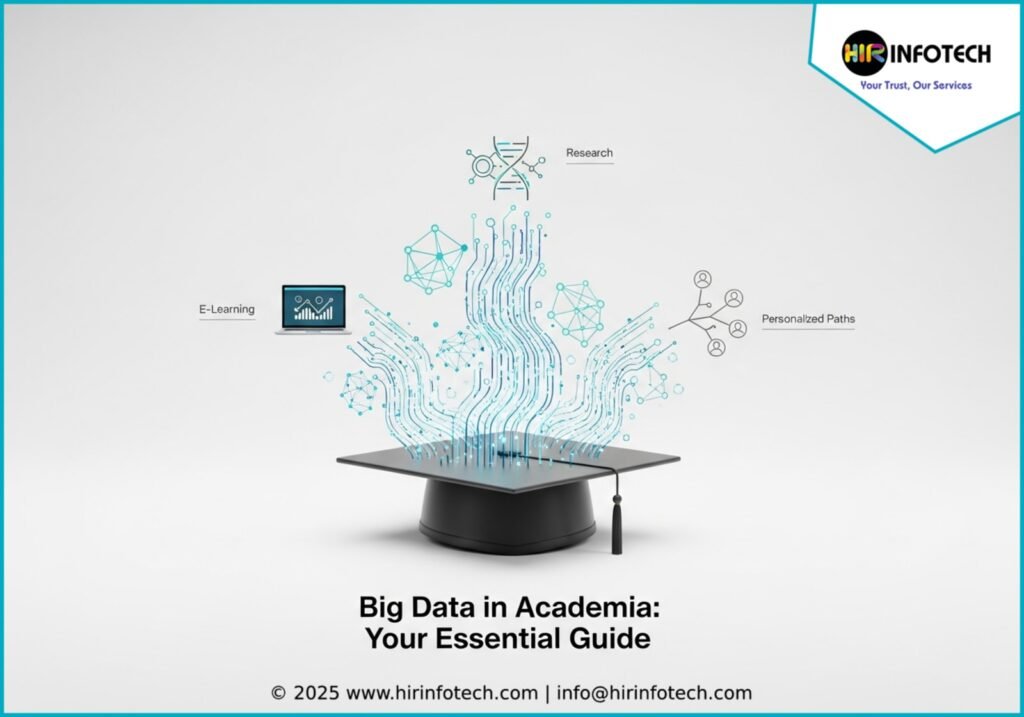
Big data is fundamentally reshaping the academic world, yet its profound contributions often go unnoticed behind the ivy-covered walls of educational institutions. This transformative force is creating unprecedented opportunities and efficiencies for administrators, faculty, and students alike. As we look towards 2026 and beyond, it’s clear that the synergy between big data and academia is not just a fleeting trend but a pivotal evolution in how we learn, teach, and conduct research.
For mid- to large-sized companies that depend on frequent web scraping and data extraction, understanding this shift is crucial. The same technologies revolutionizing academia can provide the competitive edge needed in the business world. This post will explore the seismic impact of big data on higher education and what it means for the future of data-driven industries.
The New Wave of E-Learning Powered by Big Data
Online education has come a long way from the days of dial-up modems and clunky interfaces. The journey over the past few decades has been one of remarkable growth, largely fueled by advancements in data science. Today’s students have instant access to a world of information, a stark contrast to the early struggles of internet-based learning.
Big data is the engine driving the development of sophisticated e-learning platforms. By analyzing vast datasets on student interactions, learning patterns, and content effectiveness, institutions can create highly personalized and adaptive educational experiences. This data-driven approach ensures that online learning is not just a convenient alternative but a powerful and effective mode of education.
- Personalized Learning Paths: Data analytics allows e-learning platforms to tailor coursework to individual student needs, identifying strengths and weaknesses to provide targeted support.
- Enhanced Engagement: By understanding how students interact with course materials, educators can optimize content for maximum engagement and retention.
- Predictive Analytics: Institutions can now use data to identify at-risk students and intervene proactively, significantly improving student success and retention rates.
Empowering Educators to Tailor the Learning Experience
Faculty members are among the primary beneficiaries of the big data revolution in academia. The ability to collect and analyze student data provides educators with invaluable insights, allowing them to move beyond a one-size-fits-all teaching model and personalize their instruction.
In the context of e-learning, this “Big Learning Data” encompasses a wide range of information, from course materials developed by instructors to the wealth of data generated by students throughout their educational journey. This includes data from Learning Management Systems (LMS), social networks, and multimedia interactions. By harnessing this data, educators can gain a deeper understanding of their students’ learning processes and adapt their teaching strategies accordingly.
This shift towards data-driven pedagogy is not just about improving individual student outcomes; it’s about creating a more dynamic and responsive educational ecosystem. As educators become more adept at using data to inform their teaching, they can contribute to a culture of continuous improvement within their institutions.
Revolutionizing Research Methodologies Across Disciplines
Research is the cornerstone of academia, and big data is providing researchers with powerful new tools to tackle complex challenges. From the humanities to the hard sciences, data-driven research is opening up new frontiers of knowledge and innovation.
Streamlining Participant Recruitment for Studies
One of the most significant hurdles in research has always been the recruitment of suitable participants for studies, especially for focus and control groups. The need for homogenous and symmetrical groups often makes this a time-consuming and challenging process.
Big data has dramatically simplified this task. Researchers can now mine vast datasets from social media, government databases, and other sources to identify individuals who meet specific criteria for their studies. This ability to pinpoint and contact potential participants has streamlined the research process and enabled studies that would have been impossible in the past.
- Targeted Recruitment: Web scraping and data extraction allow researchers to efficiently identify and contact potential study participants who fit specific demographic and psychographic profiles.
- Diverse Sample Populations: Access to a wider pool of potential participants helps to ensure more diverse and representative samples, leading to more robust and generalizable research findings.
- Ethical Considerations: While big data offers powerful recruitment tools, it also raises important ethical questions about privacy and consent that researchers must navigate carefully.
To learn more about how data is transforming research, this article from Nature provides valuable insights into the use of web scraping in academic research.
Transforming Data Categorization and Analysis
The meticulous organization and analysis of research data are critical for ensuring the accuracy and validity of study findings. In the past, this was a painstaking and often manual process. Big data techniques have revolutionized this aspect of research, enabling scholars to process and analyze massive datasets with unprecedented speed and efficiency.
Algorithmic solutions now allow researchers to extract and analyze vast amounts of information in minutes, a task that would have previously taken months or even years. These data-driven methodologies are being applied across a wide range of fields, from particle physics to economics, to uncover new insights and accelerate the pace of discovery.
For companies engaged in data-intensive work, the parallels are clear. The same techniques that are transforming academic research can be leveraged to gain a competitive advantage in the business world. Whether it’s market research, sentiment analysis, or competitive intelligence, the ability to efficiently extract and analyze large datasets is a game-changer.
The Future is Data-Driven: Embracing the Transformation
The integration of big data into academia is not without its challenges. Issues of data privacy, security, and the need for new skills and infrastructure must be addressed. However, the potential benefits are too significant to ignore. As institutions continue to invest in data analytics capabilities, we can expect to see even more profound transformations in the years to come.
The big data market is projected to experience substantial growth, driven by advancements in AI, predictive analytics, and cloud computing. This will further accelerate the adoption of data-driven approaches in both academia and industry. For businesses, staying ahead of this curve is not just an option; it’s a necessity.
For a deeper dive into the future of big data and its impact on various industries, check out this insightful article from Forbes.
Frequently Asked Questions (FAQs)
1. What is the role of big data in personalizing education?
Big data enables personalized learning by analyzing student performance data to tailor coursework to individual needs. Predictive analytics can also identify at-risk students, allowing for early interventions to improve outcomes.
2. How is big data changing the landscape of academic research?
Big data is revolutionizing academic research by providing powerful tools for data collection, analysis, and interpretation. It allows researchers to work with massive datasets, uncover hidden patterns, and accelerate the pace of discovery across all disciplines.
3. What are the ethical considerations of using big data in academia?
The use of big data in academia raises important ethical concerns, particularly around data privacy, consent, and the potential for bias in algorithms. Institutions must establish clear guidelines and robust security measures to ensure the responsible use of data.
4. How can businesses leverage the same data solutions used in academia?
Businesses can use web scraping and data extraction services to gather market intelligence, track competitor activities, and understand consumer sentiment. These insights can inform strategic decisions and provide a significant competitive advantage.
5. What is web scraping and how is it used in academic research?
Web scraping is the automated process of extracting data from websites. In academic research, it is used to collect large datasets for analysis, such as social media trends, public opinion, and economic indicators.
6. What are the key challenges in implementing big data solutions in higher education?
Key challenges include the need for significant investment in infrastructure and technology, the development of data science skills among faculty and staff, and navigating the complex ethical and privacy issues associated with student data.
7. How does big data contribute to improving student retention rates?
By analyzing various data points, such as academic performance and engagement with campus resources, universities can identify students who are at risk of dropping out. This allows for timely interventions and personalized support to help them succeed.
Unlock the Power of Data with Hir Infotech
The transformative power of big data is undeniable, both in academia and the business world. To stay competitive, your organization needs a reliable partner who can provide accurate and timely data solutions. At Hir Infotech, we specialize in web scraping, data extraction, and a range of data-related services designed to meet the needs of mid to large companies.
Our team of experts is dedicated to providing high-quality, actionable data that can drive your business forward. Whether you need to monitor competitors, analyze market trends, or gather leads, we have the expertise and technology to deliver the results you need.
Ready to harness the power of your data? Contact Hir Infotech today to learn how our data solutions can help you achieve your business goals.
#BigData #DataAnalytics #HigherEducation #EdTech #Research #WebScraping #DataExtraction #BusinessIntelligence #FutureOfWork #HirInfotech