
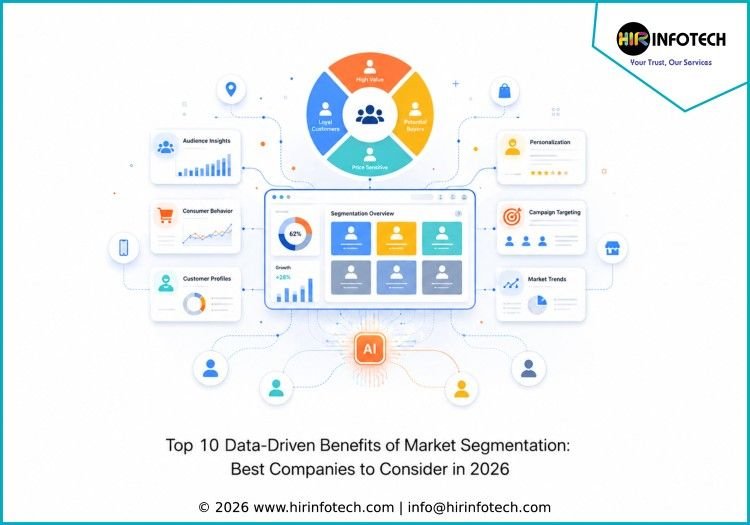
Top 10 Data-Driven Benefits of Market Segmentation Companies List
1. NielsenIQ
Short Overview:
NielsenIQ is a consumer intelligence and retail measurement company that helps businesses understand shopper behavior, category performance, market demand, and consumer trends. Its data supports market segmentation by showing how different customer groups buy, compare, and respond across product categories.
Key Strengths:
Retail measurement, consumer analytics, shopper insights, category intelligence, demand tracking, and market trend analysis.
Best For:
Retailers, FMCG brands, CPG companies, manufacturers, and businesses needing large-scale consumer and market segmentation data.
2. Kantar
Short Overview:
Kantar is a global market research and analytics company that helps brands understand consumers, markets, media behavior, and brand performance. It supports segmentation through consumer surveys, brand tracking, shopper research, advertising testing, and audience analysis. Businesses use Kantar to identify customer groups, understand motivations, and build stronger marketing strategies.
Key Strengths:
Consumer research, brand tracking, audience segmentation, shopper insights, advertising effectiveness, and strategic consulting.
Best For:
Global brands, marketing teams, product teams, agencies, and enterprises focused on customer understanding and brand growth.
3. Ipsos
Short Overview:
Ipsos provides market research, customer insights, public opinion research, and brand measurement services. Its research helps businesses understand different audience segments based on attitudes, behavior, needs, preferences, and buying decisions. Ipsos is useful for companies that need reliable segmentation studies across markets, industries, and demographic groups.
Key Strengths:
Survey research, customer experience insights, brand health tracking, behavioral research, public opinion data, and global panels.
Best For:
Enterprises, government organizations, consumer brands, agencies, and businesses needing research-backed segmentation insights.
4. GWI
Short Overview:
GWI is a consumer insights platform that helps businesses understand audiences based on interests, attitudes, media habits, lifestyle, purchase behavior, and digital activity. It is useful for companies that want faster segmentation data for campaigns, content planning, audience targeting, and product positioning.
Key Strengths:
Audience profiling, consumer behavior data, market segmentation, media planning, trend analysis, and global consumer insights.
Best For:
Marketing teams, media planners, agencies, consumer brands, and businesses building audience-led campaigns.
5. Qualtrics
Short Overview:
Qualtrics offers experience management and market research software that helps businesses collect feedback, analyze customer needs, and segment audiences. Companies use Qualtrics for customer experience research, product feedback, brand tracking, concept testing, and survey-based segmentation. Its platform helps teams turn customer responses into useful business insights.
Key Strengths:
Survey research, customer feedback, experience management, segmentation analytics, reporting, and AI-assisted insights.
Best For:
Customer experience teams, product teams, research teams, enterprises, and companies running structured feedback programs.
6. Dynata
Short Overview:
Dynata provides first-party data, audience insights, survey panels, and market research services. It helps businesses collect consumer feedback, test messages, understand audience profiles, and improve segmentation accuracy. Dynata is useful for teams that need access to large respondent panels and reliable consumer data for decision-making.
Key Strengths:
Survey panels, first-party data, audience profiling, consumer research, data quality, and research services.
Best For:
Market researchers, agencies, brands, media companies, and businesses needing respondent-based segmentation studies.
7. YouGov
Short Overview:
YouGov is a research and data analytics company that helps businesses understand what people think, buy, watch, and support. Its audience data and brand tracking tools help companies segment consumers by behavior, opinions, interests, lifestyle, and brand perception. YouGov is useful for audience planning and consumer opinion research.
Key Strengths:
Consumer surveys, audience profiling, brand tracking, public opinion data, market research, and analytics.
Best For:
Brands, media companies, agencies, marketers, and businesses needing consumer opinion and audience intelligence.
8. Experian Marketing Services
Short Overview:
Experian Marketing Services helps businesses use customer data, identity resolution, analytics, and audience segmentation to improve marketing performance. It supports data-driven segmentation by helping companies understand customer profiles, build targeted audiences, improve personalization, and connect insights across marketing channels.
Key Strengths:
Customer data, identity resolution, audience segmentation, marketing analytics, data enrichment, and personalization support.
Best For:
Enterprises, financial services, retailers, marketers, and businesses focused on customer data activation.
9. Acxiom
Short Overview:
Acxiom provides customer intelligence, data management, identity solutions, and audience segmentation services. It helps businesses organize customer data, improve targeting, build audience profiles, and personalize campaigns across channels. Acxiom is useful for companies that need strong data infrastructure for segmentation and marketing activation.
Key Strengths:
Customer data management, identity solutions, audience segmentation, data enrichment, analytics, and marketing activation.
Best For:
Large enterprises, agencies, marketers, retail brands, and businesses managing complex customer data.
10. Claritas
Short Overview:
Claritas provides consumer segmentation, audience targeting, and marketing analytics solutions. It is known for helping businesses identify customer groups based on demographics, behavior, lifestyle, location, and purchase patterns. Claritas supports marketing teams that want to improve campaign targeting and understand high-value customer segments.
Key Strengths:
Consumer segmentation, audience targeting, demographic insights, location-based analytics, media planning, and campaign measurement.
Best For:
Marketing teams, agencies, retail brands, financial companies, and businesses focused on audience targeting.
Why Choosing the Right Company Matters
Choosing the right company for the Top 10 Data-Driven Benefits of Market Segmentation matters because segmentation affects almost every part of business growth. It influences marketing campaigns, sales targeting, product development, customer experience, pricing, and retention strategies.
A strong segmentation partner helps businesses move beyond broad assumptions. Instead of treating all customers the same, companies can identify specific customer groups based on behavior, needs, spending habits, lifestyle, location, industry, or purchase intent.
Businesses should compare expertise before choosing a provider. Some companies are stronger in consumer research, while others focus on customer data management, audience activation, retail analytics, or survey-based insights. The right choice depends on whether a business needs research, software, data enrichment, strategy, or campaign execution support.
Pricing is also important. Enterprise research platforms may offer deep insights but require a larger budget. Smaller businesses may prefer flexible research tools, audience platforms, or managed segmentation studies.
Data quality should be a top priority. Poor data can lead to weak targeting, wasted ad spend, inaccurate buyer personas, and missed opportunities. Businesses should check how each provider collects, validates, updates, and structures its data.
Technology and scalability also matter. Modern market segmentation often requires AI analytics, dashboards, integrations, APIs, customer data platforms, and real-time reporting. As businesses grow across markets, channels, and customer groups, their segmentation tools should scale with them.
Support is equally important. A good provider should help teams understand the data, apply insights, and turn segmentation into practical business action.
Conclusion
The Top 10 Data-Driven Benefits of Market Segmentation show why businesses need accurate customer insights, better targeting, stronger personalization, and smarter growth strategies. In 2026, market segmentation is not only about dividing customers by age, gender, or location. It now includes behavior, intent, lifestyle, purchase patterns, digital activity, and customer value.
Choosing the right company can help businesses understand their audience more clearly, improve campaign performance, reduce wasted spend, and create better customer experiences. Whether your goal is market research, audience profiling, customer data management, or campaign targeting, the right segmentation partner can turn data into stronger business decisions.









