
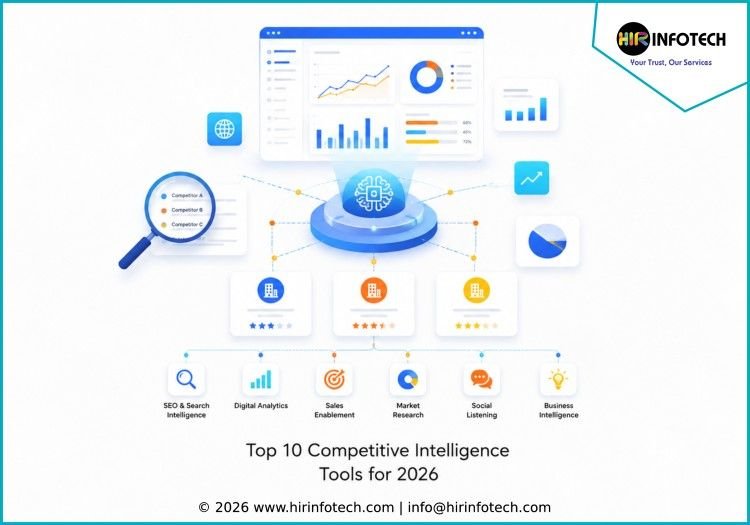
Top 10 Competitive Intelligence Tools for 2026
1. Crayon
Short overview:
Crayon is a competitive intelligence platform built to help businesses track competitors, market movements, messaging changes, product updates, and sales enablement insights. It collects competitive data from multiple sources and helps teams turn that information into useful battlecards, alerts, and reports.
Key strengths:
Crayon is strong in competitor monitoring, sales battlecards, market alerts, content tracking, and competitive insights. It helps sales, marketing, and product teams stay updated without manually checking competitor websites every day.
Best for:
B2B companies, SaaS teams, sales enablement teams, product marketers, and enterprises that need structured competitive intelligence workflows.
2. Klue
Short overview:
Klue is a competitive enablement and intelligence platform designed for sales, marketing, and revenue teams. It helps companies collect competitor insights, organize battlecards, track market updates, and deliver competitive knowledge to sales teams at the right time.
Key strengths:
Klue offers battlecards, competitor profiles, market monitoring, sales enablement workflows, and team collaboration features. It is especially useful when sales teams need clear talking points against competitors.
Best for:
Revenue teams, product marketers, sales teams, and B2B companies that want competitive intelligence connected to sales performance.
3. Similarweb
Short overview:
Similarweb is a digital intelligence platform that helps businesses analyze competitor websites, traffic sources, audience behavior, keyword trends, referral channels, and online market performance. It is widely used by marketing, strategy, e-commerce, and growth teams to understand how competitors perform online.
Key strengths:
Similarweb is strong in website traffic analysis, competitor benchmarking, audience insights, market research, keyword intelligence, and digital channel analysis. It helps teams understand where competitors get traffic and how markets shift online.
Best for:
Digital marketers, e-commerce brands, agencies, SaaS companies, investors, and growth teams that need digital competitive intelligence.
4. Semrush
Short overview:
Semrush is a popular SEO and digital marketing platform used for competitor analysis, keyword research, content strategy, backlink tracking, PPC research, and website audits. Businesses use Semrush to understand competitor visibility across search engines and improve their own organic and paid marketing performance.
Key strengths:
Semrush offers SEO competitor analysis, keyword gap research, backlink analysis, advertising research, content tools, and website performance tracking. It is useful for businesses that depend on search traffic and digital visibility.
Best for:
SEO teams, content marketers, digital agencies, PPC teams, and businesses focused on online growth.
5. Ahrefs
Short overview:
Ahrefs is a powerful SEO and competitor research tool known for backlink analysis, keyword research, website audits, rank tracking, and content analysis. Businesses use Ahrefs to study competitor websites, identify high-performing pages, analyze link profiles, and find content opportunities.
Key strengths:
Ahrefs is strong in backlink intelligence, competitor SEO research, keyword discovery, content gap analysis, and website auditing. It helps businesses understand why competitors rank and where new SEO opportunities exist.
Best for:
SEO professionals, content teams, agencies, affiliate marketers, and businesses that want deeper organic search intelligence.
6. AlphaSense
Short overview:
AlphaSense is a market and competitive intelligence platform that helps businesses search across business documents, research reports, earnings calls, news, expert insights, and company information. It is useful for teams that need deeper market research and strategic intelligence beyond basic website tracking.
Key strengths:
AlphaSense provides AI-powered search, market research, company insights, financial intelligence, trend monitoring, and document analysis. It helps executives and analysts find relevant information faster.
Best for:
Corporate strategy teams, financial analysts, investors, enterprise leaders, and companies needing high-level market and competitor research.
7. Contify
Short overview:
Contify is a market and competitive intelligence platform that helps businesses track competitors, customers, industries, and market trends. It collects information from digital sources and turns it into structured insights for business teams. Contify is useful for companies that want customized intelligence feeds and dashboards.
Key strengths:
Contify offers competitor tracking, market monitoring, industry news tracking, custom dashboards, intelligence feeds, and alerting. It helps teams reduce manual research and stay updated on market changes.
Best for:
Enterprises, strategy teams, product marketers, research teams, and businesses that need customized competitive intelligence.
8. Kompyte
Short overview:
Kompyte is a competitive intelligence automation platform that helps businesses monitor competitor changes, create battlecards, track messaging, and support sales teams with competitive insights. It is designed to make competitor tracking easier for revenue and product marketing teams.
Key strengths:
Kompyte provides automated competitor tracking, sales battlecards, website monitoring, competitive alerts, and content analysis. It helps teams respond faster when competitors update products, pricing, or messaging.
Best for:
Sales teams, product marketing teams, SaaS companies, and businesses that need competitor updates connected to sales enablement.
9. SpyFu
Short overview:
SpyFu is a competitor research tool focused on SEO and PPC intelligence. Businesses use it to analyze competitor keywords, ad history, organic rankings, paid search campaigns, and domain performance. It is especially useful for teams that want practical search marketing insights at a more accessible price point.
Key strengths:
SpyFu offers competitor keyword research, PPC analysis, SEO ranking data, domain comparison, and ad campaign insights. It helps businesses understand which keywords and ads competitors are using.
Best for:
Small businesses, SEO teams, PPC marketers, agencies, and startups that need affordable competitive search intelligence.
10. Meltwater
Short overview:
Meltwater is a media intelligence and social listening platform that helps businesses monitor brand mentions, competitor activity, industry conversations, news coverage, and social media trends. It supports competitive intelligence by showing how brands are discussed across digital and media channels.
Key strengths:
Meltwater offers media monitoring, social listening, sentiment analysis, brand tracking, competitor mentions, and reporting. It helps companies understand public perception and competitor visibility.
Best for:
PR teams, brand managers, marketing teams, communications teams, and businesses tracking competitor reputation and media presence.
Why Choosing the Right Company Matters
Choosing the right tool from the Top 10 Competitive Intelligence Tools for 2026 matters because every business tracks competitors differently. Some companies need SEO data, while others need sales battlecards, market reports, social listening, pricing updates, or digital traffic insights.
Businesses should compare expertise, pricing, data quality, technology, support, and scalability before choosing a provider. A startup may need affordable keyword and PPC research, while an enterprise may need advanced dashboards, integrations, alerts, team workflows, and custom intelligence feeds.
Data quality is one of the most important factors. Competitive intelligence is only useful when the information is accurate, updated, and easy to act on. Poor data can lead to wrong decisions, weak positioning, missed opportunities, and wasted marketing budget.
Technology also matters. The best competitive intelligence tools help teams automate monitoring, organize insights, create reports, and share updates across departments. This is important for sales, marketing, product, leadership, and strategy teams that need fast access to reliable competitor information.
Scalability is equally important. As a business grows, it may need to monitor more competitors, markets, regions, keywords, products, campaigns, and customer segments. The right platform should support that growth without making the workflow complicated.
Conclusion
The Top 10 Competitive Intelligence Tools for 2026 help businesses understand competitors, market shifts, digital performance, customer behavior, and growth opportunities more clearly.
Crayon, Klue, Similarweb, Semrush, Ahrefs, AlphaSense, Contify, Kompyte, SpyFu, and Meltwater each offer different strengths. The best choice depends on whether your business needs SEO intelligence, sales enablement, market research, media monitoring, digital analytics, or complete competitor tracking.









