
Author name: s940m874bi9jjiq5xpiu

Uncategorized

How to Use AI to Score Scraped B2B Prospects

How to Use AI to Score Scraped B2B Prospects Introduction Scraping B2B prospects gives you raw lead data. The challenge is knowing which prospects deserve your sales team’s limited time. AI-powered lead scoring solves this by automatically ranking scraped leads based on their likelihood to convert. Instead of manually qualifying hundreds or thousands of prospects, machine learning models analyze firmographic fit, behavioral intent signals, and engagement patterns — delivering a prioritized queue of high-value opportunities ready for outreach. What Is AI-Powered B2B Lead Scoring? AI-powered lead scoring leverages machine learning and advanced algorithms to assess potential clients, estimating their likelihood of conversion . By examining historical interactions, company information, and engagement patterns, it streamlines the evaluation process so sales teams can focus on the most promising prospects more efficiently and accurately . Unlike traditional rule-based scoring — which assigns arbitrary points to job titles, email opens, and form submissions — AI models learn from your historical conversion data. They identify which combinations of firmographic fit, behavioral depth, intent signals, and engagement recency actually predict closed-won outcomes . The B2B lead scoring market is growing rapidly, from  1.93billionin2025to 1.93billionin2025to2.38 billion in 2026 at a compound annual growth rate of 23.3 percent . Major trends driving adoption include predictive lead scoring algorithms, behavioral and intent data analysis, integration with CRM and marketing automation platforms, and real-time lead prioritization models . The Core Data You Need Before Scoring AI scoring models require structured input data. Before scoring, ensure your scraped prospect data includes these dimensions. Firmographic data includes company size, industry sector, annual revenue, geographic location, and organizational structure. For multi-market operations across the USA, Germany, United Kingdom, France, Italy, Spain, Australia, and Canada, location-specific scoring calibrations improve accuracy . Technographic data covers current technology stack — CRM systems, marketing automation tools, cloud providers, and software platforms. This is particularly valuable for SaaS and technology vendors targeting companies using complementary or competing solutions. Behavioral data includes engagement signals from your website — pricing page visits, demo requests, content downloads, webinar attendance, email opens, and support ticket volume — weighted by recency and frequency to reflect genuine buying interest, not just surface-level activity . Intent data captures off-site buying signals from sources like G2, Bombora, LinkedIn, trade directories, and industry event registrations. This identifies in-market prospects before they engage directly with your brand . Method 1: Predictive AI Scoring with Machine Learning Models Predictive AI scoring models are trained on your historical CRM data. The model analyzes which attributes correlate with closed-won outcomes in your past deals, then applies those patterns to new scraped prospects. The implementation workflow starts with data preparation. Export 12 to 24 months of historical CRM data including won and lost opportunities, firmographic attributes, behavioral engagement scores, and sales interaction history. Clean and normalize the data, handling missing fields and outliers. Model training uses machine learning algorithms — gradient boosting, random forest, or neural networks — to identify predictive patterns. The model learns which combinations of attributes actually predict conversion, not which ones you assume matter. Scoring new prospects involves feeding each scraped lead through the trained model. The output is a probability score, typically from 0 to 100, representing the estimated likelihood of conversion. Leads scoring 80 and above are hot leads for immediate sales outreach. Scores 50 to 79 are warm leads for nurture sequences. Scores below 50 are cold leads for automated marketing only. For B2B companies implementing predictive lead scoring with CRM integration, reported results include 27 percent acceleration in deal closure times, 20 to 35 percent reduction in customer acquisition cost, and up to 77 percent improvement in lead generation ROI . Method 2: LLM-Based Intent Scoring from Behavioral Data Large Language Models can score leads by analyzing the semantic intent of behavioral signals. Unlike traditional scoring that treats all form fills equally, LLMs understand the context and urgency behind prospect actions. The Lead Sense AI framework demonstrates this approach, combining Large Language Models, semantic embeddings, and machine learning classifiers to analyze and score incoming sales interactions . The system takes raw text from email sources, extracts semantic intent features, and assesses purchase intent, urgency indicators, and sentiment features to output a lead score . Experimental results show that LLM-based semantic understanding dramatically outperforms keyword-based intent detection methods. The hybrid LLM plus machine learning architecture provides scalable, real-time, objective lead qualification . For scraped prospect scoring, this method works by analyzing the content of prospect interactions — email responses, support ticket language, social media mentions — to detect intent signals. A prospect asking detailed pricing questions or mentioning competitor comparisons scores higher than one requesting basic information. Method 3: Ideal Customer Profile Scoring Using AI Agents Ideal Customer Profile scoring compares each scraped prospect against your defined ICP criteria. AI agents can automate this comparison at scale, evaluating hundreds of attributes per prospect. The LeadGraph actor on Apify demonstrates this approach. It scrapes leads from sources like LinkedIn, HackerNews, and Google Maps, then scores them against your ICP configuration . The ICP configuration includes target sectors (SaaS, fintech, devtools), company size range (minimum to maximum employees), target job roles (CTO, VP Engineering, Head of Product), relevant keywords (API, cloud, Kubernetes), target locations (United States, Europe), and technology stack (React, Node.js, AWS) . The actor uses Groq or OpenAI models to evaluate each lead against these criteria, returning a score indicating fit. You can also provide ICP documents describing your ideal customer profile in natural language. For example: “Our product helps B2B SaaS companies automate outbound sales. Our best customers are VP of Sales and Head of Growth at Series A to C companies with 20 to 200 employees, typically in the US or Europe. Companies that are a poor fit include consumer apps, gaming, agencies, and companies with fewer than 10 employees” . Method 4: Enrichment and Scoring n8n Workflows For teams preferring low-code automation, n8n provides workflow templates that combine enrichment and scoring into a single pipeline. The Lead Enrich and Score workflow
Uncategorized

Recommended Lead Sources for Scraping Procurement Managers in the UK and Germany

Recommended Lead Sources for Scraping Procurement Managers in the UK and Germany Introduction Finding reliable lead sources for procurement managers in the UK and Germany requires a strategic approach. These professionals are decision-makers with significant purchasing authority, but they are also difficult to reach through generic outreach. Web scraping provides a scalable method to extract contact data from targeted sources — but you need to know where to look. This guide covers the most effective online platforms, directories, and event sources for scraping procurement leads in Europe’s two largest B2B markets. Why Procurement Managers Are Valuable Lead Targets Procurement managers control supplier selection, contract negotiations, and vendor relationships across industries including manufacturing, retail, logistics, healthcare, and technology. In the UK and Germany, procurement functions are well-established, with professionals often holding titles such as Procurement Manager, Category Buyer, Sourcing Manager, Supply Chain Manager, and Procurement Excellence Lead . These roles are characterized by high-value decision-making authority, structured vendor evaluation processes, and long-term supplier relationships. For B2B service providers — including logistics, software, raw materials, and consulting — reaching procurement managers is essential for enterprise sales. The challenge is that procurement professionals are often shielded from generic sales outreach. They rely on professional networks, industry events, and trusted directories to discover new vendors. Scraping the right lead sources ensures you appear where they are already searching. LinkedIn: The Primary Source for Procurement Professional Data LinkedIn is the most comprehensive source of procurement manager contact and profile data for both the UK and Germany. The platform hosts millions of professional profiles with current job titles, company affiliations, locations, and often direct contact methods. Targeting UK Procurement Managers on LinkedIn For the UK market, LinkedIn’s advanced search filters allow targeting by job title (Procurement Manager, Category Buyer, Sourcing Lead), location (United Kingdom, or specific cities like London, Manchester, Birmingham), and industry (retail, manufacturing, logistics, healthcare). Job postings on LinkedIn also reveal active hiring for procurement roles, indicating departments with current needs and budgets . A practical scraping approach involves using LinkedIn’s search parameters with keywords like “procurement manager,” “buyer,” or “sourcing specialist,” combined with location filters for the UK or Germany. The results return profiles with names, current companies, titles, and public activity. However, LinkedIn has strict anti-scraping measures. Professional scraping services use rotating residential proxies and request throttling to avoid blocks while extracting publicly visible profile data. Targeting German Procurement Managers on LinkedIn For Germany, the same approach applies with German-language keywords. Use “Einkäufer” (buyer), “Beschaffungsmanager” (procurement manager), “Lieferkettenmanager” (supply chain manager), or “Logistikleiter” (logistics manager). Location filters set to Germany or specific cities like Berlin, Munich, Hamburg, Frankfurt, or Oberhausen return localized results . Recent job postings from German procurement roles provide additional intelligence. For example, JD.com recently posted a Procurement Logistics Manager position in Oberhausen, Germany, seeking candidates with 5+ years of European logistics procurement experience and deep knowledge of warehousing, trucking, and last-mile courier services . Scraping such postings reveals active procurement departments and their specific needs. Business Directories: Official and Industry-Specific Sources Business directories are often overlooked but provide high-quality, structured data for scraping. These platforms have local authority, regular updates, and verified company information including phone numbers, emails, addresses, and industry classifications. UK Business Directories TheWholesaler is a UK-based wholesale directory covering home goods, kitchenware, and lifestyle products. It offers company phone numbers, websites, and social media links, making it suitable for direct outreach to procurement contacts in retail and wholesale sectors . Spend Matters Vendor Directory lists procurement technology and service providers with UK office addresses, phone numbers, and executive contacts. For example, HICX, a supplier management platform, is listed with its London address and direct phone contact for its leadership team . AnyData Solutions, an analytics platform for procurement, is listed with its Brighton, London address and direct contact email . These directories are scrapeable for company-level procurement contacts. German Business Directories FirmenWissen is a German company database providing registered address, legal form, business status, and industry classification. It is particularly valuable for manufacturing sector leads and due diligence research . Das Telefonbuch is the German telephone directory platform. It allows searching by city or product keyword and returns phone numbers, websites, emails, and addresses for companies. For procurement targeting, search for company names in your target industry, extract the contact information, then identify procurement contacts through follow-up research . Trade Events and Conference Attendee Lists Industry events bring procurement professionals together in person. Scraping event websites, speaker lists, and sponsor directories yields qualified leads of professionals actively engaged in their field. Procurement Events in the UK The CWS Summit Europe returns to London in May 2026, bringing workforce management and procurement leaders together. Attendees include professionals responsible for external staff, independent contractors, and project-based consulting mandates — all procurement decision-makers . Procurement Events in Germany The Procurement Summit in Germany focuses on digitalization and innovation in procurement. The event features speakers, panel discussions, and workshops with procurement experts from leading companies. Attendee lists, speaker bios, and sponsor directories from such events are valuable scraping targets . DPW Amsterdam, while based in the Netherlands, draws over 1,700 procurement professionals from 65 countries including the UK and Germany. The 2025 conference featured CPOs from Henkel, Google, and Unilever. The 2026 event moves to the RAI Amsterdam Convention Centre on September 30 to October 1, 2026. Scraping speaker lists, sponsor companies, and registered attendee data (where publicly available) yields high-quality procurement leads . Industry-Specific Platforms for Supply Chain and Logistics Procurement managers in logistics and supply chain roles are concentrated on industry-specific platforms and job sites. UK Logistics Procurement Sources Schenker Deutschland AG posted a Head of Procurement role covering the UK, Ireland, and Benelux regions, based in Tilburg. This reveals that logistics procurement leaders for the UK market are often recruited through cross-border roles. Scraping logistics job boards and company career pages for procurement titles yields targeted leads . Spend Matters lists procurement technology vendors with UK presence. Companies like HICX (London) and AnyData Solutions (Brighton,

Uncategorized

What is Cheaper: Buying B2B Leads or Scraping Custom Lead Lists in 2026? A Cost and ROI Breakdown

What is Cheaper: Buying B2B Leads or Scraping Custom Lead Lists in 2026? A Cost and ROI Breakdown Introduction Choosing between buying B2B leads and building custom scraped lead lists directly impacts acquisition cost, data quality, and sales efficiency. For businesses operating across global markets like the USA, UK, Germany, and beyond, the decision is no longer just about price—it’s about long-term pipeline value and scalability. What is Cheaper: Buying B2B Leads or Scraping Custom Lead Lists? The debate between purchasing ready-made B2B leads and building custom scraped databases has become central to modern sales and marketing operations. While both approaches aim to deliver prospects faster, their cost structures, quality levels, and long-term ROI differ significantly. To understand which is cheaper, businesses must look beyond upfront pricing and evaluate total cost of ownership, including data freshness, conversion rates, compliance risk, and scalability. Understanding the Two B2B Lead Generation Models Buying B2B Leads Buying leads typically means purchasing pre-collected contact data from vendors, marketplaces, or lead databases. These lists are usually categorized by industry, job title, company size, or geography. The appeal is speed—you get immediate access to thousands of contacts without building infrastructure. However, the data is often: Scraping Custom Lead Lists Custom lead scraping involves extracting data directly from targeted sources such as directories, search engines, business listings, and niche platforms. Instead of relying on generic databases, businesses define exact parameters: This approach is more tailored and often integrated with enrichment and verification workflows. Cost Structure of Buying B2B Leads At first glance, buying leads appears cost-effective due to its simplicity. Pricing is typically structured as: Direct Costs Hidden Costs While upfront pricing seems predictable, hidden costs often emerge: Operational Impact Sales teams often spend additional time cleaning and validating purchased lists, which increases internal labor cost per lead. Cost Structure of Scraping Custom Lead Lists Custom scraping typically shifts cost from data purchasing to infrastructure and execution. Direct Costs Development or Setup Costs Depending on complexity, businesses may invest in: Maintenance Costs Long-Term Efficiency While initial setup may appear expensive, marginal cost per lead decreases significantly at scale, especially for continuous lead generation pipelines. Hidden Costs and ROI Factors Most Businesses Overlook When comparing both approaches, hidden costs often determine true affordability. 1. Data Freshness Purchased leads degrade quickly. Scraped data can be updated continuously, ensuring higher accuracy. 2. Conversion Efficiency Higher-quality targeting in scraped lists often leads to: 3. Compliance Risk Buying leads may introduce GDPR, CAN-SPAM, or regional compliance risks depending on source quality. Custom scraping allows more control over data sourcing methods. 4. Scalability 5. Time-to-Value Buying Leads vs Scraping: Which is Actually Cheaper? The answer depends on business stage and usage pattern. Short-Term Campaigns Buying leads is often cheaper for: The lower upfront investment makes it attractive for quick wins. Long-Term Growth Strategy Scraping becomes cheaper when: Over time, scraping reduces cost per lead significantly due to reusable infrastructure. At Scale Comparison In most enterprise scenarios, scraping delivers lower long-term cost per qualified lead. Quality vs Cost Trade-Off Cheapest does not always mean best value. Purchased Leads Quality Challenges Scraped Leads Quality Advantages High-quality data typically reduces downstream sales cost, making it more cost-efficient even if upfront investment is higher. Compliance and Risk Considerations Compliance plays a major role in determining true cost. Buying Leads Scraping Leads Non-compliance costs (fines, deliverability issues, brand risk) can far exceed savings from cheaper data. Which Model Works Best in 2026? In 2026, B2B lead generation is increasingly driven by: Emerging Trend: Hybrid Models Many companies now combine: This hybrid approach balances cost efficiency and operational speed. Decision Framework: How to Choose the Right Option Businesses should evaluate based on: 1. Budget Horizon 2. Sales Strategy 3. Data Sensitivity 4. Internal Capability 5. Growth Stage Frequently Asked Questions 1. Is buying B2B leads cheaper than scraping? Buying leads is cheaper upfront, but scraping is usually more cost-effective long-term due to better targeting and scalability. 2. Why do purchased leads often convert poorly? They are frequently outdated, overused, or not aligned with specific buyer intent, leading to lower engagement rates. 3. Is scraping B2B leads legal? Yes, when done in compliance with data protection laws and ethical sourcing guidelines applicable in each region. 4. What industries benefit most from custom scraping? Industries with high competition and niche targeting needs, such as SaaS, IT services, consulting, and B2B manufacturing. 5. Can companies combine both methods? Yes, many businesses use purchased leads for speed and scraped data for precision and scaling. 6. Which method gives better ROI? Scraping generally delivers higher ROI over time due to improved targeting, lower acquisition costs, and better data freshness. Conclusion Choosing between buying B2B leads and scraping custom lead lists ultimately comes down to balancing short-term cost with long-term value. While purchased leads offer quick access at a lower upfront price, their quality and scalability limitations can increase overall acquisition costs. Scraping, on the other hand, requires more setup but delivers stronger targeting, better data freshness, and lower cost per qualified lead at scale. In 2026, businesses focused on sustainable growth increasingly favor custom scraping strategies as part of their broader B2B data infrastructure. The most effective approach often depends on sales goals, internal capability, and growth stage—but for companies prioritizing ROI and precision, custom lead scraping is becoming the more cost-efficient long-term investment.

Uncategorized

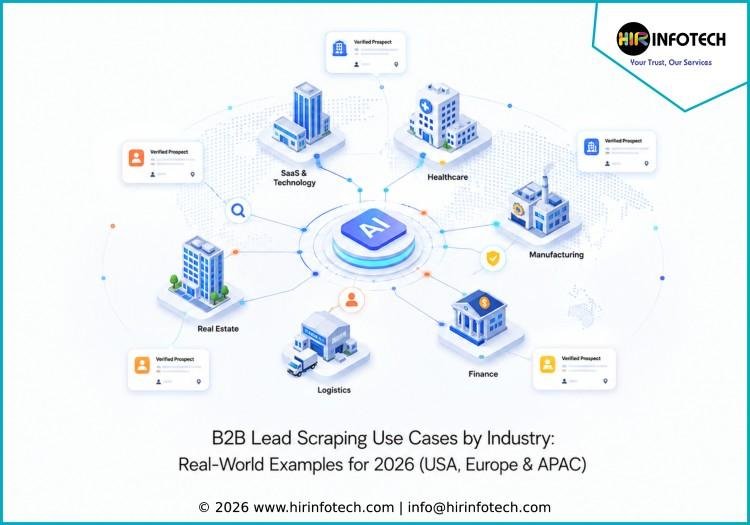
B2B Lead Scraping Use Cases by Industry: Real-World Examples for 2026 (USA, Europe & APAC)

B2B Lead Scraping Use Cases by Industry: Real-World Examples for 2026 (USA, Europe & APAC) Introduction B2B lead scraping has become a core growth engine for modern sales and marketing teams across global markets like the USA, UK, Germany, and APAC regions. As competition intensifies in 2026, businesses increasingly rely on structured, real-time lead data to identify buyers faster, improve outreach accuracy, and scale revenue pipelines efficiently. What Is B2B Lead Scraping and Why It Matters in 2026 B2B lead scraping is the process of extracting publicly available business data from online sources such as company directories, search engines, professional networks, and industry listings. This data typically includes company names, decision-maker contacts, job titles, email patterns, industry classifications, and geographic details. In 2026, the importance of lead scraping has increased significantly due to: Modern sales teams no longer rely solely on static databases. Instead, they use continuously updated scraped data to build dynamic prospecting pipelines tailored to specific industries and regions. Why Industries Rely on B2B Lead Scraping Different industries use lead scraping not just for volume, but for precision targeting. The goal is to identify companies showing buying signals such as hiring trends, technology adoption, expansion activity, or funding events. Key advantages include: SaaS & Technology Industry Use Cases The SaaS and technology sector is one of the largest adopters of B2B lead scraping due to its fast-paced sales cycles and subscription-based models. Common Use Cases: Example Scenario: A cybersecurity SaaS company scraping enterprise IT directories in Germany and the USA can identify firms expanding cloud infrastructure and target them with security upgrade solutions. This allows sales teams to engage prospects at the exact moment of digital transformation. E-commerce & Retail Industry Use Cases E-commerce businesses use lead scraping to expand supplier networks, B2B partnerships, and wholesale opportunities. Common Use Cases: Example Scenario: A logistics SaaS platform scraping UK and Netherlands e-commerce stores can target fast-growing Shopify brands that need fulfillment automation tools. This helps vendors reach businesses during scaling phases when logistics needs are urgent. Real Estate Industry Use Cases Real estate firms and property technology companies rely heavily on structured business data to identify investors, developers, and agencies. Common Use Cases: Example Scenario: A commercial property analytics company scraping listings in Canada and Australia can identify firms expanding office portfolios and target them with data-driven valuation tools. Lead scraping helps real estate businesses anticipate market activity instead of reacting to it. Finance & Fintech Industry Use Cases The financial services sector uses lead scraping for high-value, compliance-sensitive B2B outreach. Common Use Cases: Example Scenario: A fintech API provider scraping financial directories in Switzerland and Hong Kong can identify banks modernizing payment systems and offer integration solutions. This improves conversion rates due to highly relevant targeting. Healthcare & Life Sciences Industry Use Cases Healthcare organizations use lead scraping for research partnerships, procurement, and B2B healthcare solutions. Common Use Cases: Example Scenario: A medical software company scraping healthcare networks in France and Italy can identify hospitals adopting digital patient management systems. This enables targeted outreach for compliance-ready software solutions. Manufacturing & Industrial Industry Use Cases Manufacturing firms use lead scraping to identify suppliers, buyers, and industrial partners across global supply chains. Common Use Cases: Example Scenario: A machinery exporter scraping manufacturing directories in Poland and Germany can identify factories upgrading production lines and target them with automation equipment. This ensures better alignment with capital investment cycles. Logistics & Supply Chain Industry Use Cases Logistics companies depend on lead scraping to identify shipping demand and optimize B2B partnerships. Common Use Cases: Example Scenario: A global freight company scraping trade directories in the USA and Thailand can identify businesses with high international shipping volume and offer tailored logistics solutions. Marketing Agencies & B2B Service Providers Marketing agencies and service providers use lead scraping more aggressively than most industries to continuously feed sales pipelines. Common Use Cases: Example Scenario: A digital marketing agency scraping companies in Spain and Ireland can identify businesses with outdated websites and pitch redesign + SEO services. This improves outbound campaign efficiency significantly. How hirinfotech Supports B2B Lead Scraping Use Cases In today’s competitive B2B landscape, structured and accurate data extraction is essential for scaling outreach across multiple industries and regions. hirinfotech operates in this space by supporting businesses that need reliable B2B lead scraping solutions tailored to specific market requirements. The approach focuses on building industry-aligned datasets that help sales and marketing teams target the right decision-makers instead of relying on generic lead lists. Whether it is SaaS companies looking for CTO-level contacts, real estate firms targeting developers, or logistics providers identifying exporters, the emphasis remains on relevance and usability of data. hirinfotech’s lead scraping workflows typically align with multi-region targeting strategies across the USA, Germany, UK, France, Canada, Australia, and APAC markets. This enables businesses to expand into new geographies while maintaining consistent data quality standards. Beyond extraction, the emphasis is also on structuring and organizing data in a way that integrates easily into CRM systems, sales automation tools, and outbound marketing workflows. This is especially important for companies operating in fast-moving sectors where lead freshness directly impacts conversion rates. By aligning scraping strategies with industry-specific needs, hirinfotech supports businesses in reducing manual prospecting effort and improving the accuracy of their outbound campaigns. The result is a more efficient pipeline that focuses on high-intent prospects rather than broad, unqualified lists. Frequently Asked Questions (FAQs) 1. What industries benefit most from B2B lead scraping? Industries like SaaS, finance, real estate, logistics, manufacturing, and marketing agencies benefit most due to their high outbound sales dependency. 2. Is B2B lead scraping legal for business use? Yes, when used to collect publicly available business information and in compliance with data protection regulations in relevant regions. 3. How is scraped B2B data used in sales teams? Sales teams use it for prospecting, CRM enrichment, outbound email campaigns, and identifying decision-makers in target companies. 4. Why is lead scraping better than buying static databases? Scraped data is more updated, customizable, and

Uncategorized

How Do I Avoid Duplicate and Outdated Contacts in Scraped Lead Lists in 2026?

How Do I Avoid Duplicate and Outdated Contacts in Scraped Lead Lists in 2026? Introduction Scraped lead lists can help businesses scale outreach faster, but poor-quality data creates serious operational problems. Duplicate entries, outdated contacts, invalid emails, and inaccurate company information can damage campaign performance and waste sales resources. In 2026, businesses across the USA, Europe, Canada, Australia, and Asia are placing far greater emphasis on lead data accuracy, verification, and ongoing maintenance. Why Duplicate and Outdated Lead Data Is a Serious Business Problem Lead scraping remains a widely used approach for B2B prospecting, market research, recruitment outreach, SaaS sales, and partnership development. However, raw scraped data is rarely ready for immediate use. Businesses commonly face issues such as: These problems affect nearly every stage of the sales and marketing process. For example, duplicate records inside a CRM can cause: Outdated contacts are even more damaging because they directly reduce campaign effectiveness and waste outreach budgets. In competitive B2B markets such as the USA, Germany, the United Kingdom, Canada, and Australia, inaccurate lead data can quickly affect sales efficiency and brand credibility. Why Scraped Lead Lists Become Outdated So Quickly Lead databases naturally decay over time. In many industries, employee movement is constant. People frequently change: Organizations also: In fast-moving industries, contact data may become partially outdated within a few months. This is especially true for: Businesses operating across multiple countries often face additional complications due to: Without proper data validation processes, scraped lead lists lose value quickly. Common Causes of Duplicate Contacts in Lead Scraping Multi-Source Scraping A contact may appear on: If records are merged without normalization rules, duplicates multiply rapidly. Variations in Contact Formatting The same person may appear as: Company names may also vary: Without standardization, systems treat these as separate records. CRM Import Errors Many businesses repeatedly upload lead files into their CRM without: This creates long-term database clutter. Outdated Legacy Data Older prospecting lists are often reintroduced into active campaigns without revalidation. This causes overlaps with newer datasets. Best Practices to Avoid Duplicate Contacts in Scraped Lead Lists Use Unique Identifiers During Data Collection The most reliable deduplication strategy starts before data enters the database. Businesses should use unique matching identifiers such as: Professional lead scraping workflows typically combine multiple identifiers to improve accuracy. For example: This reduces false duplicates significantly. Normalize Data Before Importing Data normalization standardizes formatting before records are stored. This includes: Normalization improves duplicate detection across large datasets. Implement Automated Deduplication Rules Modern lead management systems use automated deduplication workflows. These rules can: Businesses handling enterprise-scale lead scraping often run scheduled deduplication processes weekly or daily. Separate Raw Data From Production Data A common mistake is pushing scraped data directly into sales systems. Instead, businesses should maintain: This layered approach improves data quality control and reduces contamination inside operational systems. How to Prevent Outdated Contacts in Lead Databases Verify Emails Before CRM Upload Email verification is now a standard requirement for B2B lead generation. Verification systems help identify: This protects sender reputation and improves outreach performance. Use Real-Time Data Enrichment Data enrichment tools help update: This is especially useful for businesses targeting multiple international markets. For example, companies targeting decision-makers in Germany, Switzerland, France, and the Netherlands often rely on enrichment to maintain localization accuracy. Apply Recency Filters Not all scraped data has equal value. Businesses should prioritize: Many organizations now use freshness scoring models to rank lead reliability. Schedule Ongoing Data Hygiene Audits Lead databases should never remain static. Regular audits help identify: In 2026, many sales operations teams run automated hygiene audits monthly to maintain CRM quality. Compliance Considerations for International Lead Scraping Businesses operating across the USA, United Kingdom, Germany, France, Ireland, Switzerland, Australia, Canada, Hong Kong, and other regions must also consider data privacy compliance. Key considerations include: Lead scraping without proper verification and governance can create both operational and compliance risks. Responsible businesses now focus heavily on: How Professional Lead Scraping Services Improve Data Quality Many organizations eventually discover that internal scraping workflows become difficult to scale. Professional lead scraping and data processing services often provide: This becomes particularly important for businesses managing: How Hirinfotech Supports Cleaner and More Reliable Lead Data As businesses scale outbound prospecting, maintaining clean and reliable lead data becomes increasingly important. Hirinfotech supports organizations that require structured web scraping, lead verification, and custom data processing workflows designed for modern B2B operations. The company focuses on helping businesses reduce duplicate and outdated contacts in large prospecting datasets through scalable lead management processes tailored to operational requirements. Depending on project scope, its workflows may include: For organizations managing international outreach across the USA, United Kingdom, Germany, France, Canada, Australia, Ireland, Switzerland, Hong Kong, and other global markets, maintaining clean lead data is essential for campaign efficiency and CRM accuracy. Rather than focusing only on collecting large volumes of contacts, modern lead generation strategies increasingly prioritize data reliability, relevance, and operational usability. Businesses often require cleaner datasets that align with sales workflows, outbound automation systems, and compliance expectations across multiple regions. For companies relying on scalable B2B outreach, structured lead data management can significantly improve campaign quality, reporting accuracy, and overall prospecting efficiency. Key Indicators of a High-Quality Lead List Businesses evaluating scraped lead data should look for: Lead quality matters far more than raw lead volume. A smaller, verified, well-maintained dataset typically produces stronger business outcomes than a large unverified contact database. Frequently Asked Questions How often should scraped lead lists be updated? Most B2B lead databases should be reviewed and refreshed every 30 to 90 days, depending on the industry and target market. Fast-moving industries usually require more frequent updates. What is the best way to remove duplicate contacts from lead lists? Using unique identifiers such as email addresses, LinkedIn URLs, and company domains combined with automated deduplication rules is generally the most reliable approach. Why do scraped lead lists contain outdated contacts? People frequently change jobs, companies update websites, and business directories become outdated. Without continuous verification and enrichment,

Uncategorized

What Type of B2B Data Should You Collect for Outbound Sales Campaigns in 2026?

What Type of B2B Data Should You Collect for Outbound Sales Campaigns in 2026? Introduction Outbound sales campaigns are becoming more data-dependent every year. In 2026, businesses targeting decision-makers across the USA, United Kingdom, Germany, Canada, Australia, and other global markets need more than just contact lists. High-performing outbound campaigns rely on accurate, segmented, and context-rich B2B data that supports personalization, timing, compliance, and conversion quality. As competition increases across global B2B markets, companies are investing heavily in structured data collection workflows that improve sales targeting, outbound efficiency, and CRM reliability. Why B2B Data Quality Matters More in 2026 Outbound sales has evolved far beyond mass cold emailing. Buyers now expect relevance, personalization, and contextual outreach. At the same time, stricter privacy regulations and growing competition have made poor-quality data expensive and risky. Businesses that invest in structured and verified B2B data often benefit from: Poor data, on the other hand, can damage sender reputation, waste SDR resources, and create compliance concerns, especially when targeting regions such as the European Union, Switzerland, the UK, and Canada. The Core Types of B2B Data for Outbound Sales Campaigns Not all B2B data serves the same purpose. Effective outbound campaigns usually combine multiple data categories to improve targeting accuracy and personalization. Firmographic Data Firmographic data describes the characteristics of a company. This is often the foundation of B2B lead targeting. Key Firmographic Data Points For example, a SaaS provider targeting mid-market fintech companies in the USA will need different data filters than a manufacturing supplier targeting enterprises in Germany or France. Firmographic segmentation helps sales teams narrow their outreach toward organizations that are more likely to need their services. Contact and Decision-Maker Data Having the right company is not enough. Outbound campaigns also depend heavily on identifying the correct decision-makers. Useful Contact-Level B2B Data In 2026, role-based targeting has become increasingly important because buying decisions are often shared across multiple stakeholders. Outreach strategies now frequently involve operations leaders, procurement managers, marketing directors, data teams, and technology executives simultaneously. Intent Data Intent data helps identify companies actively researching relevant products, services, or business problems. Common Intent Signals Intent-based targeting helps outbound teams prioritize prospects with stronger buying potential instead of relying only on static lead lists. For businesses running outbound campaigns across competitive markets such as the United States, the United Kingdom, or Australia, intent signals can significantly improve campaign timing and conversion efficiency. Technographic Data Technographic data focuses on the technologies a company currently uses. This information is highly valuable for: Examples of Technographic Data Understanding a prospect’s technology environment helps sales teams tailor messaging around compatibility, migration, integration, or operational improvements. For example, a business offering HubSpot integrations may prioritize companies already using Salesforce, Shopify, or Marketo. Behavioral and Engagement Data Behavioral data tracks how prospects interact with digital touchpoints. Useful Engagement Indicators This data can help outbound teams identify warmer opportunities and build more personalized outreach sequences. Instead of sending generic messaging, sales teams can align communication with actual prospect interests and recent activity. Geographic and Regional Data Location-based segmentation remains essential for international outbound campaigns. This is particularly important when targeting: Common Geographic Data Fields For example, outreach approaches that work in the USA may require different messaging structures, privacy considerations, or localization strategies for Germany, France, or the Netherlands. Compliance and Consent-Related Data Outbound campaigns in 2026 must balance lead generation with regulatory compliance. Depending on the target market, businesses may need to consider: Collecting and managing compliance-related data helps businesses reduce legal risk while maintaining responsible outreach practices. This has become especially important for companies operating across multiple international markets simultaneously. How Businesses Use B2B Data to Improve Outbound Results High-quality B2B data supports almost every stage of outbound campaign execution. Better Prospect Segmentation Detailed segmentation allows teams to build more focused outreach lists based on: More refined segmentation usually leads to higher engagement and more relevant conversations. Personalized Outreach Campaigns Modern outbound campaigns depend heavily on personalization at scale. With accurate B2B data, teams can personalize: This improves response rates while reducing the appearance of mass outreach. Sales and Marketing Alignment Shared B2B data structures help marketing and sales teams operate more efficiently. Consistent data improves: This becomes especially valuable for enterprise organizations managing outbound campaigns across multiple countries or business units. Common Problems With Poor B2B Data Many outbound campaigns underperform because the underlying data is incomplete or outdated. Common Data Problems These problems can reduce campaign effectiveness and negatively affect sender reputation. For businesses targeting enterprise buyers, inaccurate data can also damage credibility during early sales interactions. What Businesses Should Prioritize When Collecting B2B Data Not all data points are equally valuable. The right priorities depend on the sales model, industry, and campaign objectives. Accuracy and Verification Data should be regularly verified and refreshed to reduce bounce rates and improve outreach reliability. Relevance to the Sales Process Collect only the data that directly supports segmentation, personalization, qualification, or sales execution. Excessive or irrelevant data often creates CRM clutter without improving campaign outcomes. Scalability Outbound campaigns often evolve rapidly. Businesses should ensure their data collection processes can scale across markets, industries, and account volumes. Integration Readiness B2B data becomes more useful when integrated with: Structured data pipelines improve operational efficiency and reporting consistency. How Hirinfotech Supports B2B Data Collection for Outbound Campaigns As outbound sales strategies become increasingly data-driven, businesses often require more than simple lead databases. They need scalable, targeted, and structured data collection processes aligned with real sales objectives. Hirinfotech supports businesses with customized B2B data scraping, lead research, and data extraction services designed around outbound campaign requirements. The company works with organizations looking to build targeted prospect datasets across industries, technologies, and international markets including the USA, United Kingdom, Germany, Canada, Australia, France, and other global regions. Key Service Capabilities Its capabilities include: For businesses managing high-volume outbound campaigns, reliable data preparation can improve personalization, reduce wasted outreach, and support cleaner CRM operations. Hirinfotech’s service approach is particularly relevant for companies that

Scroll to Top